Rosacea is a common skin condition that affects more than 415 million people globally.
It is characterized by redness and visible blood vessels on the face. Small, pus-filled bumps may also appear.
Despite its high prevalence, rosacea is a poorly understood skin condition that is often mistaken for other conditions like acne.
There are four types of rosacea, each of which comes with its own set of symptoms:
Erythematotelangiectatic rosacea (ETR)
Symptoms: Facial redness, flushing, and visible blood vessels.
Papulopustular (or acne) rosacea
Symptoms: Acne-like breakouts, swelling, and redness.
Phymatous/Rhinophyma rosacea
Symptoms: Thickening and redness, mostly on the nose. Often coexists with other types.
Ocular rosacea
Symptoms: Redness in the eye, along with irritation and swollen eyelids.
Facial redness: A persistent redness on the face, especially around the central part. Small blood vessels become visible.
Swollen, red bumps: Pimples are seen across the face, and the swollen bumps may also contain pus.
Eye problems: Mainly seen in cases of ocular rosacea. This results in swollen, often irritated, and dry eyes.
Swollen nose: Associated with rhinophyma rosacea, the skin under the nose thickens and starts to swell. This is more seen in men than in women.
The HLA genes are primarily involved in immune function. Certain changes in these genes can cause the body to misdirect immune responses. Rosacea occurs when the misdirected immune attacks result in the inflammation of blood vessels.
rs763035 SNP and the Risk of Rosacea
rs763035 is an SNP in the HLA-DRB gene. The T allele is associated with an increased risk of rosacea.
People with the CT and TT types are at an 1.2 times and 1.6 times more likely to develop rosacea than the people with CC types.
Another gene complex called the glutathione-S transferases (GSTs) is also associated with the risk of rosacea. GST is involved in regulating oxidative stress in the body. Certain GST variants reduce the ability to protect the skin from damage due to oxidative stress, thus making it prone to rosacea.
Foods You May Need To Avoid
Several foods could trigger flare-ups. It is preferred that these are limited or avoided:
1. Alcohol - Even a tiny amount of alcohol (champagne, vodka, beer, gin, and bourbon) has resulted in flare-ups in a majority of patients.
2. Hot beverages - Drinking hot beverages can cause the vessels on the face to dilate, causing a blushed appearance.
3. Spicy foods - Most spicy foods contain the chemical ‘capsaicin.’ Eating foods that contain this chemical can worsen symptoms. Avoid jalapenos, chilies, or tabasco peppers.
4. Dairy - Common culprits are milk, sour cream, yogurt, and cheese.
It is also recommended to avoid foods that contain high amounts of histamine and cinnamaldehyde, like chocolate, nuts, cinnamon, and foods pickled with vinegar.
Rosacea-friendly Foods
Foods that reduce inflammation, healthy fats, probiotics, and fiber-rich foods may help or reduce the severity of some rosacea symptoms. These include:
1. Whole foods like oatmeal and brown rice
2. Nuts, fatty fish, rich in omega-3 fatty acids
3. Berries, rich in antioxidants
4. Yogurt, sauerkraut, miso are probiotic foods
5. Fiber-rich foods like bananas, onions, leeks, garlic, and whole grains
An entrepreneur can be defined as someone who comes up with a business idea and turns it into a working business model. Entrepreneurs range from small business owners to people who started multi-million dollar companies.
TThere’s a famous quote by Reid Hoffman, an American internet entrepreneur, that goes like this “An entrepreneur is someone who jumps off a cliff and builds a plane on the way down.” This goes to say that entrepreneurs take several risks and face uncertainties during the course of launching their idea successfully. They see possibilities and solutions that others don’t. They think outside the box. They take action and make a change in this world for the better.
Entrepreneurship involves the whole process of designing, launching, and running a business. It is also about solving big problems and transforming the world. Entrepreneurship potential is a key factor that determines your chances of self-employment.
Several characteristics define a successful entrepreneur. These include self-belief, open-mindedness, efficiency, strategic planning, a flair for leadership, and risk-taking ability. /p>
Entrepreneurship potential is determined by several factors, including environmental factors, genetics, and your capabilities as a person.
Entrepreneurship is of immense importance in the economic development of society. It
Studies have shown that 30 to 35% of the entrepreneurial traits are heritable. Though this implies that environmental factors contribute to the rest of the major 70%, 1/3rd of the fraction is a significant number. People with certain genetic types have a higher likelihood of being entrepreneurs.
The RNF144B gene carries instructions for the production of Ring Finger Protein 144B. This protein is involved in protein modification pathways. Research shows that changes in this gene influence entrepreneurship potential.
rs6906622
rs6906622 is a single nucleotide polymorphism or SNP in the RNF144B gene. Individuals with the minor allele T are found to have a higher probability of being self-employed.
The SV2C gene carries instructions for the production of Synaptic Vesicle Glycoprotein 2C. It plays a role in controlling secretion by neural and endocrine cells. Changes in the SV2C gene are found to influence entrepreneurship potential.
rs2358531
rs2358531 is an SNP in the SV2C gene. People with the AA genotype of this SNP are more likely to be self-employed.
Certain characteristics that are key to entrepreneurial success include creativity, passion, industry knowledge, leadership skills, and the ability to take calculated risks.
Economic and environmental factors that influence entrepreneurship potential include the strength of the business idea, the location of the business, the political and regulatory environment, and access to early finance, modern technology, law and order assistance, transportation facility, business associations, market channels, and a good network of people.
Succeeding as an entrepreneur is tough but not impossible. The journey can be full of obstacles , but following these suggestions will help you overcome those obstacles and establish your business.
- Overcome your fear of failure. Though you may not get everything right the first time, and your failures make others doubt your ability, persevere courageously till you reach your goal.
- Seek out opportunities to improve your leadership skills.You can volunteer to lead fundraisers or coach a children’s group. Start clubs in areas you are interested in and organize club activities to reach more people.
- Try finding a mentor, you can get inspiration from. Mentors can help you with things that seem new and difficult to you initially. They may already have experience in the industry and can help you avoid common mistakes.
- Learn new things and keep up with modern trends in the industry.
- Problem-solving is an essential skill for any entrepreneur. Look for different ways to solve problems put forth to you.
- Sales is an important aspect of every business. You will be able to develop a better understanding of the market and its demand when you get involved in sales.
https://www.ncbi.nlm.nih.gov/pubmed/26004676
https://pubmed.ncbi.nlm.nih.gov/21774895/
https://www.researchgate.net/publication/276202145_ENTREPRENEURIAL_POTENTIAL_WHAT_DO_WE_KNOW_ABOUT_IT
https://link.springer.com/article/10.1007/s11187-010-9308-1
https://www.researchgate.net/publication/273445422_Economic_and_Environmental_Factors_Leading_to_Entrepreneurial_Success
A lentigo (plural: lentigines) is an area of the skin that is flat or slightly raised and pigmented, usually tan, brown, or black. Lentigines are mostly seen in areas of the body that are exposed to the sun frequently. They are irregular in shape and vary in size.
They are more commonly seen in the middle age and older population, and the number of spots tends to increase with age. They appear suddenly or grow in size over the years.
Lighter-skinned people have a higher chance of getting these sunspots. Increased exposure to the sun, multiple sunburns, phototherapy, and radiation therapy can increase your risk for lentigines.
Based on where the lentigines appear on your body and their cause, the different types of lentigos are
1. Lentigo simplex - the most common type found on your arms, legs, and trunk. They are often seen from childhood and can fade away with time.
2. Solar lentigo - mostly seen in people older than 40 years. The UV radiation in the sun rays causes this pigmentation to occur as spots on sun-exposed areas. These are also called age spots.
3. Inkspot lentigo - seen in lighter-skinned people who have sunburns
4. PUVA lentigo - seen after PUVA (psoralen and ultraviolet A radiation) therapy used to treat psoriasis and eczema
5. Radiation lentigo - seen in places exposed to radiation therapy, usually in cancer treatment
Sunspots are not itchy and do not have any other symptoms. They just appear on your skin on exposure to UV radiation. They are usually not a cause for medical concern unless they are triggered by an underlying syndrome.
Certain inherited syndromes are associated with lentigines and can increase your risk of getting them. These include:
Cowden syndrome
Noonan syndrome
Peutz-Jeghers syndrome
Xeroderma pigmentosum
Bannayan-Riley-Ruvalcaba syndrome
The geographical location is the link between evolution and lentigines. There appears to be an evolutionary purpose of freckles in humans. People who lived in places with higher sun exposure had a darker skin color. This is due to the excess production of melanin, which protects the skin from the harmful effects of ultraviolet radiation (UVR). Lighter-skinned people often have ancestry that evolved with less exposure to sunlight. When these people are exposed to more sunlight than usual, pigmentations like sunspots occur.
This gene contains instructions for the production of melanocortin-1 receptor. This receptor is activated by the Melanocyte Stimulating Hormone (MSH), one of the two hormones that regulate pigmentation. This receptor is mainly found on the surface of melanocytes, cells that are involved in melanin production. They are also found in certain immune cells of the body.
This receptor controls which form of melanin is produced by melanocytes. Normally, eumelanin, the lighter pigment, is produced, but when there are certain changes in this gene, pheomelanin, the darker pigment is produced by the cells.
Variations in this gene are associated with differences in hair and skin color. Several SNPs associated with the MC1R gene are primarily linked to fair skin, red or light hair, and freckles.
rs2228479
rs2228479, also called Val92Met or V92M, is an SNP found in the MCR1 gene. The A allele of this SNP is associated with a higher risk of developing sunspots.
It is also associated with an increased risk of sunburns and red hair.
The IRF4 gene contains instructions for the production of interferon regulatory factor 4. These proteins are mainly involved in the body’s response to infection by viruses.
This gene is also found to be strongly associated with pigmentation, sensitivity to sun exposure, freckles, blue eyes, and brown hair color.
rs12203592
rs12203592 is an SNP found in the IRF4 gene.
The T allele is the risk allele and is associated with a higher sensitivity to sun exposure, freckles, and brown hair
The C allele is the protective allele and is associated with a lower risk of sunspots and melanoma.
Increased exposure to ultraviolet (UV) light
Exposure to UV light causes the skin cells to produce more melanin. This causes pigmentation and increases your risk of developing sunspots.
Indoor tanning
Tanning beds also increase your exposure to UV light and can influence the appearance of sunspots.
Phototherapy
Phototherapies like PUVA (psoralen and ultraviolet A) treatment used to treat eczema and psoriasis can lead to the appearance of PUVA lentigines.
Radiation therapy
Radiation therapy in the course of cancer treatment can also make you more likely to get lentigines.
Lentigines are typically not harmful and are not a cause for medical concern. They do not have to be treated, but you can follow certain measures to lighten them.
Cryotherapy: Liquid nitrogen or nitrous oxide solution is used to freeze the sunspots. It only takes a few minutes.
Chemical peels: These can be a little painful and cause a burning sensation on your skin. This involves applying an acid solution on the sunspots that turns into a wound that peels off.
Laser resurfacing: A laser beam is used to remove the layers of skin under the sunspot. The area is allowed to heal for about 10-20 days, and new skin grows.
Intense Pulse Light (IPL): Pulses of light energy target the melanin and destroy it by heating, which results in the removal of the colored spots. This takes only about 30 minutes and causes very little to no pain.
Sunscreen: Sunscreen of SPF 50 or above can help prevent sun spots by protecting your skin from exposure to UV rays.
OTC products: Bleaching creams that contain hydroquinone or retinoids can be used to lighten the sunspots
Home remedies: Aloe vera, licorice extract, apple cider vinegar, green tea bags, lemon juice, milk, or honey can be used on the skin to lighten the sunspots.
https://www.healthline.com/health/lentigo#types
https://medlineplus.gov/genetics/gene/mc1r/#function
https://dermnetnz.org/topics/lentigo/
https://www.healthline.com/health/sunspots-on-face#risks
https://www.ncbi.nlm.nih.gov/pmc/articles/PMC3704782/
https://www.ncbi.nlm.nih.gov/pubmed/11487574
Skin glycation is a condition where sugar molecules attach themselves to the collagen proteins in your skin, making the skin stiff and inflexible.
The attachment of sugars to the collagen fibers results in the release of Advanced Glycation End-products (AGEs).
AGEs make the skin rigid and contribute to skin aging. Glycation is a normal process that starts after the age of 20 and intensifies with time. Consuming sugary foods and drinks seems to accelerate the condition.
As AGEs get accumulated in your skin, your skin starts aging quickly. Excessive AGEs in the body are also bio-markers for other health conditions like diabetes, renal diseases, and Alzheimer’s disease.
The GLO1 gene contains instructions for the production of the glyoxalase 1 (GLO1) enzyme. This enzyme protects the body from different types of AGEs. A decrease in enzyme production can increase AGEs in the body and lead to the glycation of the skin.
A Single Nucleotide Polymorphism or SNP in the GLO1 gene is associated with GLO1 enzyme production. The TT and CT genotypes of rs1049346 SNP cause a decrease in GLO1 enzyme activity in the blood and increases the chances of skin glycation.
Overexposure to UV radiation increases the chances of developing intense glycation. Studies show that younger individuals with no prior AGE accumulation had increased accumulation of AGEs in the areas of the skin exposed to UV rays
Both active and passive smoking can accelerate the production of AGEs in the skin and quicken the process of glycation. Smoking also results in other aging symptoms, including the formation of pigmentation and wrinkles.
What you eat and how you eat matter to your skin.
- Sugary food and drinks increase the AGE count
- Fried foods have higher amounts of AGEs than steamed or boiled foods
- Foods higher in Glycemic Index (GI) increase AGE production
Up to 30% of AGEs you ingest can get absorbed by the body and result in skin glycation and other health conditions.
As expected, the amount of AGEs in younger individuals is lesser than that of older men and women. AGE count increases as you age.
Advanced and chronic diabetes mellitus can promote the formation of AGEs in the body. These result in glycation in the skin.
The most obvious recommendation to prevent glycation is to consume lesser sugar. Be aware of hidden sugars in all the foods that you eat. Check out other names for sugars mentioned in the back of food and beverage packs, and stay away from them too.
Stress can make glycation symptoms worse and aid in quickening the skin aging process.
Use a good quality SPF-based sunscreen. Reapply the product liberally every 3-4 hours if you are outdoors. Using caps, scarves, gloves, and hats to prevent UV radiation from affecting the skin is also a smart move.
Get help to quit smoking. This will make your skin healthier.
Sleep helps regulate your insulin levels. Sleep deprivation can decrease glucose tolerance, and this increases the chances of developing glycation. It is recommended to get 6-8 hours of deep sleep a day.
If you have diabetes, make sure the HbA1c values are at the lower end and that there are no sudden spikes and falls in blood sugar levels.
Certain natural food sources seem to eliminate AGEs in the body and prevent glycation. Some of them are pomegranates and wild berries.
Most commercial anti-AGE skincare products contain two ingredients - alisin and aminoguanidine. Both do help bring down AGE levels in the skin to some extent. None of the products work 100%, though. It is advised to get a professional recommendation before trying out any skin products.
https://www.ncbi.nlm.nih.gov/pmc/articles/PMC3583887/
https://pubmed.ncbi.nlm.nih.gov/22268395/
https://www.news-medical.net/health/Glycation-and-Skin-Aging.aspx
Anger is one of the basic emotions and a natural, instinctive response to threats.
It is a part of the body’s “fight, flight or freeze” response that helps protect us from any threats or danger.
Anger is a way to express your negative feelings, and it is completely normal to feel angry at times.
It can even motivate you to solve the problem you’re facing.
A problem arises when people are not able to control their reactions and handle their anger.
Excessive anger can cause problems and even affect physical and mental health.
This can lead to anger issues that need to be managed.
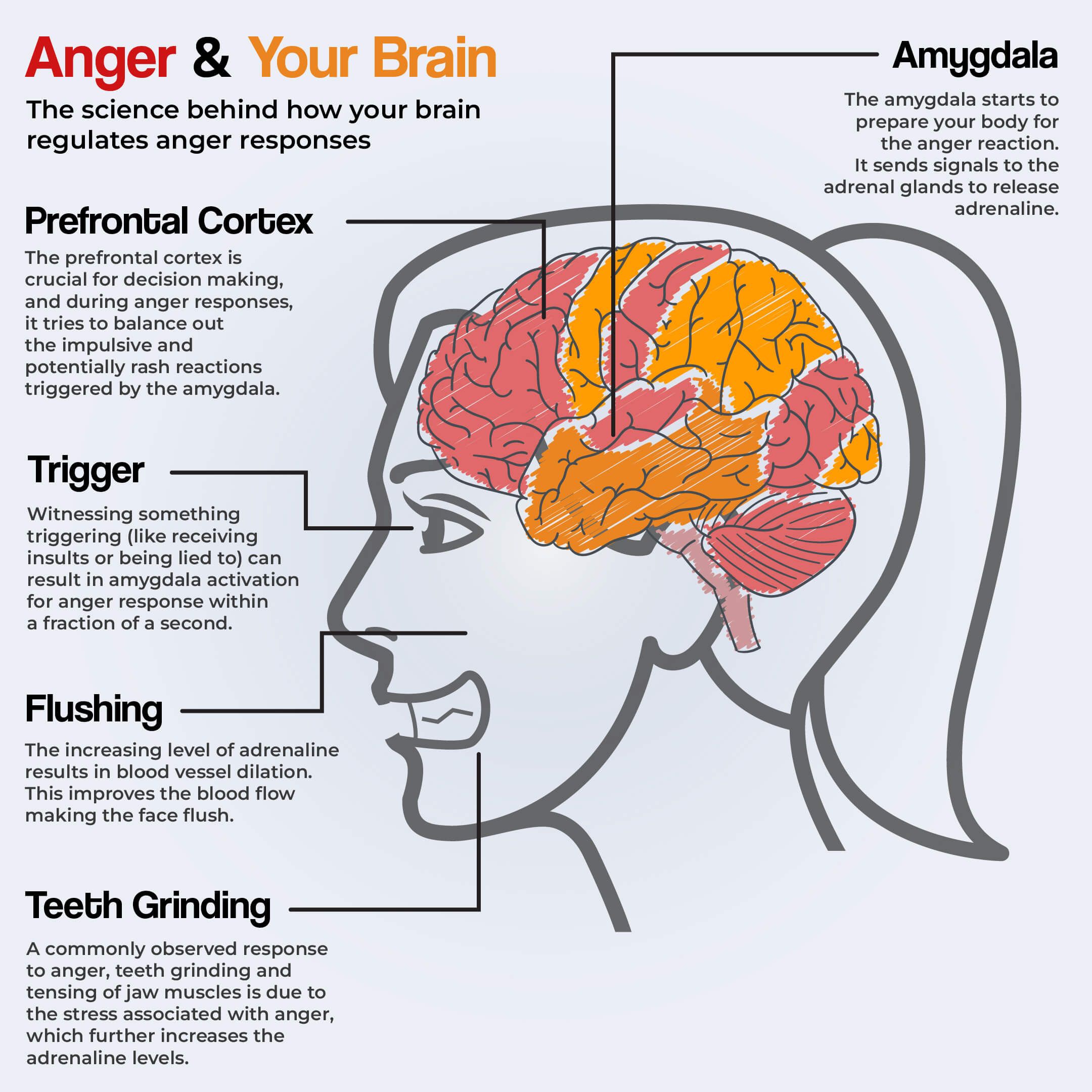
Triggers of anger vary from person to person, and each person may react differently. Common triggers include:
Certain events or circumstances can lead you to experience anger.
Anger manifests in many ways, and you display certain signs that show your anger.
Various signs and symptoms accompany anger responses. These include:
Researchers have found that anger can run in families.
Genetics influences behaviors such as anger to a certain extent. Researchers at the University of Pittsburgh found that certain genetic changes may influence anger.
The 5-HTR2A gene contains instructions to produce the 5-HT2A receptor, which is responsible for post-synaptic serotonin signaling.
A growing number of studies suggest that the 5-HT gene system differentially regulates different types of aggression.
rs6311
rs6311 is a genetic change or a single nucleotide polymorphism (SNP) on the 5-HT2RA gene.
The GG genotype of rs6311 is associated with anger and aggression-related behavior.
Further, a Japanese team has identified an association between this SNP and impulsive reactions.
Having an angry reaction is common, but how you handle it matters. Letting your anger go out of control can lead to problems.
There are several strategies to manage your angry reaction.
https://www.apa.org/topics/anger
https://www.psychologytoday.com/us/basics/anger
https://www.mayoclinic.org/healthy-lifestyle/adult-health/in-depth/anger-management/art-20048149
https://www.medicalnewstoday.com/articles/326155
https://journals.plos.org/plosone/article?id=10.1371/journal.pone.0087257
https://pubmed.ncbi.nlm.nih.gov/10513148/
https://www.sciencedaily.com/releases/2007/03/070309103136.htm
The term "self-esteem" describes a person's subjective sense of self-worth or value.
It is the opinion you have about yourself or how much you like and appreciate yourself.
This is integral to a person's identity.
Self-esteem is often referred to as self-worth, self-regard, or self-respect also.
It includes all the beliefs about yourself, like the appreciation of how you look and feel, your behavior, and how you feel about specific attributes or abilities that you have.
The right level of self-esteem is needed.
Too much or too low self-esteem can be harmful.
A high level of self-esteem, taking into account a realistic point of view, is considered to be ideal.
Self-esteem is important for self-motivation and achieving success.
Studies show that high, realistic self-esteem is important for maintaining good mental health.
It is also crucial for the development of a child.
Children need to be treated with kindness, love, and respect early to develop positive self-esteem.
The experiences that a child faces during their growing years are vital to shaping their self-esteem levels.
Employees with a better sense of self-worth are found to focus better, require less time off, and get along better with their team members.
People of certain genetic types have a higher likelihood of having better self-esteem and may exhibit characteristics such as being appreciative, encouraging, positive, accepting of other people, speaking up, helpful, and focused on solutions rather than problems.
The OXTR gene carries instructions for the production of the oxytocin receptor protein.
This protein acts as a receptor to oxytocin and binds to it.
Oxytocin is a hormone and neurotransmitter - chemical messengers that transmit signals between neurons.
It plays a role in female reproductive functions.
Oxytocin also impacts social functions and emotions such as self-esteem, bonding behavior, empathy, trust, and optimism.
rs53576
rs53576 is a single nucleotide polymorphism or an SNP in the OXTR gene.
Individuals with the GG genotype were found to have higher self-esteem and be more empathetic and optimistic.
Carriers of the A allele were found to have a risk for negative mood states.
Gender
Young girls are found to have lower self-esteem than boys.
Family environment
Children who grow up without basic needs or in the presence of psychologically troubled adults are at a higher risk of developing self-esteem problems.
Discrimination
Discrimination based on age, sex, disability, or race negatively affects self-esteem.
Children with physical disabilities or other challenges may struggle more with self-esteem than others.
The kind of people you interact with, your job, and comments or thoughts you hear from people around you impact self-esteem.
Too much self-esteem can strain personal relationships, and the person may lack empathy and not understand the problems the other person is going through.
Too little self-esteem affects mental health.
Mental health may deteriorate, and the person may feel depressed and make bad choices.
People with healthy levels of self-esteem will take better care of themselves and make decisions that will enhance rather than break them.
They tend to have a positive outlook on life and feel confident.
It is okay to have low self-esteem from time to time. That's a part of life. Prolonged periods of low self-esteem can pose a problem and may lead to
- Depression
- A feeling of hopelessness
- Suicidal thoughts
- Mental disorders
- Drug or alcohol abuse
- Decrease in productivity
Healthy levels of self-esteem are necessary to maintain mental health, boost self-confidence, and have a good, quality life. There are ways by which you can address self-esteem issues and boost self-esteem.
https://www.healthline.com/health/self-esteem
https://www.mayoclinic.org/healthy-lifestyle/adult-health/in-depth/self-esteem/art-20045374
https://www.verywellmind.com/what-is-self-esteem-2795868
https://www.psychologytoday.com/intl/basics/self-esteem
https://www.ncbi.nlm.nih.gov/pubmed/25564674
https://academic.oup.com/her/article/19/4/357/560320
https://www.pnas.org/content/108/37/15118