Gene By Gene was co-founded in 2000 by Bennett Greenspan and Max Blankfeld, with its headquarters in Houston, Texas. Currently, the company is headed by Dr. Lior Rauchberger as part of a merger with a leading Australian genomics firm, myDNA. The company’s labs are CAP, CLIA, NYSDoH, CA, and AABB accredited.
Gene By Gene laid the foundations of DNA-based ancestry and genealogy as FamilyTreeDNA (FTDNA). The first company of its kind, FTDNA, collaborated with National Geographic’s Genographic Project as their testing provider.
The company was the first lab to offer DNA-based ancestry and genealogy services as its subsidiary, FamilyTreeDNA, since 2000. It has now expanded its services to clinical, forensic, and research genetics. Amid the COVID-19 pandemic, Gene By Gene has opened its door for COVID-19 testing services too. The company caters to a wide range of individuals - clinicians, consumers, and researchers - worldwide.
For starters, clinicians, consumers, and researchers alike can register with the company. Upon registration, they can browse from a list of tests to place an order. The account dashboard has five tabs for browsing.
Clinicians can add as many patient profiles as they want.
Clinicians can opt for a carrier screening test for other members of the patients’ families, too, if needed.
Gene By Gene’s clinical testing services includes the following:
The clinical testing services of Gene By Gene can be availed either as a healthcare provider (for your patient) or a consumer.
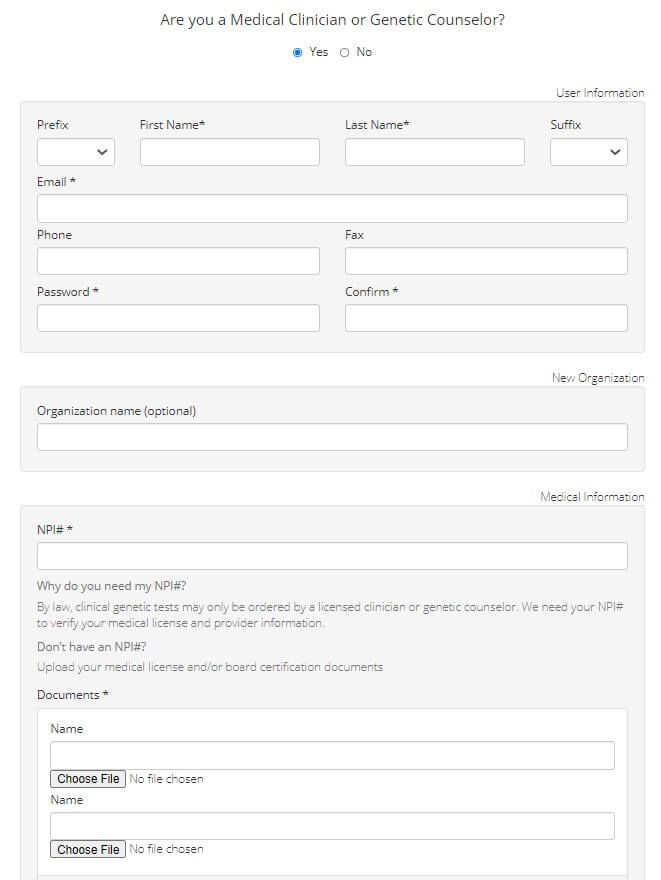
Image: Registration for genetic counselors/medical clinicians
The company provides Investigative Genetic Genealogy (IGG) services to law enforcement organizations through its subsidiary, FamilyTreeDNA. The company has its in-house lab and many genetic genealogists who discreetly identify individuals. They do so by matching them to unknown samples of DNA from cases involving homicides or sexual assault. This is brought about by familial matching within the FamilyTreeDNA database.
Law enforcement officials can submit their case along with evidence for review to the company. The staff reviews the case and checks for sample suitability before proceeding with testing.
Gene By Gene offers a wide range of DNA testing services, including paternity, maternity, immigration, and legal testing.
Gene By Gene offers a range of sequencing and microarray services for researchers from academic institutions, pharma companies, and hospital and medical research centers. The labs are CAP/CLIA accredited, and services are HIPAA compliant. Services provided are:
The lab uses Illumina NovaSeq 6000 for WGS and WES services. The data is provided as FASTQ. For Fragile X service, carrier status is checked using AmplideX, FMR1.
This test is used to determine the alpha tryptase copy number. It can be requested by healthcare providers, researchers, and consumers to check for serum tryptase levels. Suppose consumers order a test themselves; in that case, the test request form must be approved and signed by the consumer’s healthcare provider.
* Note: Alpha tryptase is produced by the gene TPSAB1 and beta tryptase by genes TPSAB1 and TPSAB2. Individuals with one copy of inherited α-tryptase on the gene sequence have normal serum tryptase levels.
Understanding results:
Eligibility criteria for testing:
For more information: https://genebygene.com/tryptase/#resources https://genebygene.com/tryptase/#w-tabs-1-data-w-pane-1
The FamilyTreeDNA website of Gene By Gene has an additional feature of the Health report. This report includes:
Upon receiving the report, a free-of-cost, half an hour telemedicine appointment with a consulting physician (or a genetic counselor) is scheduled to give the consumer a proper interpretation of their report.
Xcode Life’s Gene Health Report - 55 Traits, $50 - No DNA test required
| Test | Pricing |
| Court Admissible Paternity Test | $425 |
| Personal Paternity Test | $189 |
| Court Admissible Maternity Test | $475 |
| Immigration Relationship Testing | Pricing NA |
| General Wellness (Affiliated with MyDNA) | $199 |
The company claims to respect consumer privacy and does not sell or rent out personal information of any kind to a third party without the consumers’ consent.
The company only collects and stores consumer data to operate effectively and provide the best experience of its products. Personal information includes, but is not limited to, names, phone numbers, physical or mailing addresses, email addresses, and genetic test results.
The company uses the stored data to communicate about test progress and results and marketing communications occasionally. One can opt out at any time.
The information is stored in the company headquarters, adjacent to the Genomics Research Center in Houston, Texas.
In addition to Gene By Gene’s Privacy Policy, FamilyTreeDNA adheres to the Genetic Genealogy Guidelines proposed by the Genetic Genealogy Standards Committee in January 2015.
For more information, read Gene By Gene’s privacy policy.
In 2018, in collaboration with Dr. Barbara Rae Venter, Gene By Gene helped law enforcement officials arrest the “Golden State Killer” through its investigative genetic genealogy services.
In January 2021, Gene By Gene went for a merger with Australian genomics firm myDNA headed by Dr. Lior Rauchberger.
| Gene By Gene | Xcode Life | |
| Type of genetic testing | DNA kits | DNA raw data analysis |
| Ancestry reports | Offered (by FTDNA) | Not offered |
| Health report | Offered | Offered |
| Pharmacogenomic report | Not offered | Offered |
| Raw data upload | Only autosomal DNA data from AncestryDNA, 23andMe and MyHeritage | DNA raw data from all major providers accepted. Comprehensive list |
| Number of reports | 2 | 10 |
| Report updates | No | Quarterly updates |
| Price | Tests: $99-$475 | Reports: $30-$50Bundles: $160-$199Price details |
| Sample reports | NA | Available as detailed report walkthrough videos |
Hydroxychloroquine is a derivative of chloroquine that has both anti-inflammatory and antimalarial activities. It is also used as an antirheumatic agent (used to treat joint pain) in systemic lupus erythematosus and rheumatoid arthritis.
The exact mechanism of hydroxychloroquine action is unknown. It has been documented that its activity hampers the parasite’s ability to break down hemoglobin, preventing its normal growth and replication.
Studies have also shown that it inhibits the stimulation of toll-like receptor (TLR) 9 family that induces inflammatory responses by activating the innate immune system.
Several in vitro studies have confirmed the effectiveness of hydroxychloroquine on severe acute respiratory syndrome (SARS) virus. Multiple clinical trials are currently being conducted to identify the effect of hydroxychloroquine on COVID-19.
The IL-10 gene contains instructions for the production of a cytokine protein, which plays an anti-inflammatory and immunomodulatory role in lymphocytes. A study in mice documented that the cytokine functions as an essential immunoregulatory in the intestinal tract. Genetic variations in this gene may alter the production of IL-10 and influence the susceptibility to autoimmune diseases.
rs1800896 and Hydroxychloroquine Response
The rs1800896 is a single nucleotide polymorphism or an SNP in the IL-10 gene associated with the regulation of IL10 production.
Studies have shown that rs1800896 is associated with susceptibility to asthma, inflammatory bowel disease, and other chronic infections.
In a case-control study on patients with SLE (Systemic Lupus Erythematosus), people with TT genotype responded better to hydroxychloroquine.
Various existing drugs are being explored in clinical trials for their potential against COVID-19, including Hydroxychloroquine, Lopinavir/ Ritonavir, and VPM1002 (recombinant BCG vaccine).
So far, a newly developed antiviral called Remdesivir is the only drug approved worldwide to treat COVID-19 patients.
Certain genetic variations can affect the metabolism, efficacy, and side effects of drugs. Identifying such variants will help healthcare professionals prescribe the right medication to achieve the best possible beneficial outcomes while avoiding adverse effects.
The BCG (Bacille Calmette-Guerin) is a vaccine that uses a live attenuated strain derived from an isolate of Mycobacterium Bovis, which has been used worldwide against tuberculosis. It is known to provide only partial and inconsistent immunity. The discrepancy in immunity levels between individuals may be due to different BCG vaccine strains, prior exposure to environmental mycobacteria, and host genetics.
It is considered a biologic response modifier, a type of immunotherapy that, when administered, increases immunity to build up the body’s resistance against the disease.
A recent study published in The Journal Of Clinical Investigation analyzed the blood of 6,000 healthcare workers in the Cedars-Sinai Health System for evidence of antibodies against SARS-CoV-2 with their medical history. They documented that workers who had received BCG vaccinations in the past (nearly 30% of of the study population) were significantly less likely to test positive for SARS-CoV-2 antibodies in their blood or to report having had infections with coronavirus or coronavirus-associated symptoms over the prior six months than those who had not received BCG. The authors speculated that the BCG-vaccinated individuals might have been less sick and produced fewer antibodies or mounted a more efficient cellular immune response against the virus.
Studies have shown the correlation of certain genetic variants in innate immunity genes and BCG-induced immune responses after vaccination.
The TLR1 gene encodes a protein that belongs to the Toll-like receptor (TLR) family. It plays an essential role in pathogen recognition and activation of innate immunity. They recognize small molecular motifs (pathogen-associated molecular patterns) expressed on infectious agents and mediate the production of cytokines necessary for the development of effective immunity.
Studies have documented that genetic variants in the TLR pathway that regulate cellular function are associated with susceptibility to some infections, including TB.
rs3923647 and BCG Vaccine Response
The rs3923647 is an SNP in the TLR1 gene. The T allele has been associated with a better immune response upon BCG vaccine administration.
Dexamethasone is a corticosteroid medication used for rheumatic disease, skin infections, hypersensitivity reactions, eye infections, ulcerative colitis, and chronic obstructive pulmonary disorder. Dexamethasone is a glucocorticoid. Glucocorticoids act as an anti-inflammatory drug.
The National Health Service in the UK and the National Institutes of Health (NIH) in the US recommend dexamethasone for patients with COVID-19 who need either mechanical ventilation or supplemental oxygen (without ventilation).
In a clinical trial conducted in the UK, treatment with dexamethasone was shown to reduce mortality rates by a third among COVID-19 patients on ventilators.
The F2RL1 (also known as protease-activated receptor 2) gene contains instructions for the production of a receptor that belongs to the G-protein coupled receptor 1 family of proteins. When activated, they stimulate vascular smooth muscle relaxation, dilate blood vessels, increase blood flow, and lower blood pressure. It is also essential for the inflammatory response, as well as innate and adaptive immunity.
rs2243057 and Dexamethasone response
The rs2243057 is a single nucleotide polymorphism or an SNP in the F2RL1 gene. According to a study, dexamethasone-treated patients with A allele carriers were associated with adverse pleiotropic effects, including osteonecrosis and thrombosis as compared to G allele carriers.
Coronavirus disease 2019 (COVID-19) is a highly contagious, potentially fatal respiratory illness caused by a coronavirus (SARS-CoV). It was first identified in Wuhan, China, in December 2019, and later it rapidly spread across the world. On March 11, 2020, the World Health Organization (WHO) declared COVID-19 as a pandemic disease.
COVID-19 is likely to transmit through:
1. Respiratory droplets when an infected person coughs or sneezes
2. By touching surfaces contaminated by the virus and then touching the eyes, nose, or mouth.
3. From close contact with an infected person.
The symptoms of COVID-19 can vary in severity - from very mild to severe illness.
In about 80% of affected people, it causes only mild symptoms.
Some common symptoms include:
1. Shortness of breath or breathing difficulties
2. Fever or chills
3. Cough
4. Fatigue
5. Muscle or body aches
6. Headaches
7. Sore throat
8. Loss of taste or smell
9. Congestion or runny nose
10. Nausea or vomiting
These symptoms may appear between two and fourteen days after exposure to the virus. Children have similar but usually milder symptoms than adults. Older adults and people who have severe underlying medical conditions like heart or lung disease or diabetes are at higher risk of more serious complications from COVID-19.
According to the Chinese Center for Disease Control (CCDC), COVID-19 death cases were already suffering from 10.5% cardiovascular disease, 7.3% for diabetes, 6.3% for chronic respiratory disease, 6.0% for hypertension, and 5.6% for cancer.
Genes can determine an individual’s susceptibility to infectious diseases such as COVID-19. They also influence the chances of developing complications from these infections.
Some individuals who get infected remain asymptomatic. Some may develop mild symptoms, while others experience severe symptoms that require hospitalization. These inter-individual differences might be influenced by both genetic and non-genetic factors (environmental/lifestyle).
Research studies have documented that the SARS-CoV-2 virus enters the body by interacting with the ACE2 protein present on the outer surface of certain cells. Certain variants of the ACE2 gene may prevent the SARS-CoV-2 virus from entering cells, thus decreasing a person’s vulnerability to the virus. Variants in LZTFL1, ABO, ACE2, HLA, DPP9, OAS3, IFNAR2, TYK2, and other genes have also been correlated with COVID-19 severity.
A recent genome-wide association study of COVID-19 has shown a significant association of COVID-19 severity with a multigene locus at 3p21.31 and the ABO blood group locus at 9q34.2.
The LZTFL1 gene contains instructions to produce a protein that is widely expressed in the cytoplasm (the fluid that fills the cells) and cilia (hair-like projection found on the surface of the cells). It is involved in protein trafficking (transport) to the ciliary membrane. It functions as a tumor suppressor by interacting with E-cadherin and the actin cytoskeleton, thereby regulating the transition of epithelial cells to mesenchymal cells [ECM].
rs11385942 and COVID-19 Severity
The rs11385942 is an indel (insertion-deletion) variation located in the intronic region of the LZTFL1 gene. Studies have shown that the frequency of minor risk allele (A) was higher among patients receiving mechanical ventilation than those receiving supplemental oxygen only. This finding indicates that this risk allele confers a predisposition to the most severe forms of COVID-19.
The ABO gene contains instructions to produce an enzyme called glycosyltransferase that transfers specific sugar residues to H substance and is responsible for the formation of antigens in blood group A and B. Certain variants in the ABO gene are associated with an increased risk for certain cancers and cardio-cerebrovascular disease.
Furthermore, recent studies have documented that blood groups may play a key role in determining the susceptibility and severity of COVID-19. According to a study, people with A blood group are associated with an increased risk of acquiring COVID-19, whereas people with O blood group are associated with a lower risk.
rs657152 and COVID-19 Severity
The rs657152 is a C>A polymorphism in the ABO gene, which may influence several biological molecules, including LDL cholesterol, liver-derived alkaline phosphatase, and interleukin-6, thus contributing to the occurrence and development of the disease.
Based on a GWAS that studied COVID-19 severity, the rs657152 risk allele (A) was significantly associated with a higher risk of a severe COVID infection.
rs657152 and COVID-19 Severity
The rs657152 is a C>A polymorphism located in the intronic region of the ABO gene, which may influence several biological molecules, including LDL cholesterol, liver-derived alkaline phosphatase, and interleukin-6, thus contributing to the occurrence and development of the disease.
Based on a GWAS that studied COVID-19 severity, the rs657152 risk allele (A) was significantly associated with a higher risk of a severe COVID infection.
The human body’s largest microorganism population resides in the intestine and is collectively called the gut microbiota/microbiome. Every individual’s microbiome is unique and is influenced by genetic, environmental, or lifestyle factors.
The gut microbiome contains a complex community of microbes that live within the gastrointestinal (GI) tract, and many of these microbes are found to be beneficial to health. Some of them, however, can be harmful and promote infections and diseases. It plays an essential role in human health and influences the development of chronic diseases ranging from metabolic disease to colorectal cancer. There is extensive research investigating the biological functions of the gut microbiota in influencing lung disorders that include asthma, chronic obstructive pulmonary disease, chronic bronchitis, lung cancer, pleural effusion, and viral infection. It is also recognized that viral infections in the respiratory tract cause a disturbance in the gut microbiome.
Some Bifidobacterium strains are considered essential probiotics and are used in the food industry. Different strains of bifidobacteria may exert a range of beneficial health effects, including the regulation of intestinal microbial homeostasis, inhibition of pathogens and harmful bacteria that colonize in the gut mucosa, and regulation of immune responses. It also improves the gut mucosal barrier and lowers levels of endotoxin in the intestine.
The MCM6 gene contains instructions for the production of the protein minichromosome maintenance complex component (MCM). They are essential for the initiation of eukaryotic genome replication. It contains two of the regulatory regions for the LCT gene. This gene produces the lactase enzymes that are required for the digestion of lactose in milk.
Variants in these genes are often associated with lactose intolerance in adult life. The variants result in a decreased ability of the epithelial cells in the small intestine to digest lactose due to the decline in the lactase enzyme.
Research studies have shown the association between _LCT/MCM6_ variants and the abundance of bifidobacterium in the gastrointestinal tract.
rs4988235 and Tendency of Bifidobacterium growth
The rs4988235 is a single nucleotide polymorphism or an SNP in the MCM6 gene. Individuals carrying the homozygous CC variation have been found to be lactose intolerant/ lactose non-persistent, compared to those with the TT or TC variant, which have been correlated with lactase persistence.
Multiple studies have found that rs4988235 has been associated with Bifidobacterium abundance in the gut. As bifidobacterium assimilates lactose as a preferred carbon source for growth, it is reasonable that subjects with the CC genotype have a higher Bifidobacterium abundance in their gut.
The rs4988235 SNP is mainly documented as an essential locus related to lactase activity in the European population.