The methylenetetrahydrofolate reductase (MTHFR) mutation report provides information about the common polymorphisms in the MTHFR gene, which are associated with increased levels of homocysteine in the blood.
MTHFR is a gene that codes for the enzyme called methylenetetrahydrofolate reductase (MTHFR). This enzyme is responsible for the conversion of inactive folate to active folate. A variation in this gene in some people can disrupt this conversion and lead to various health problems.
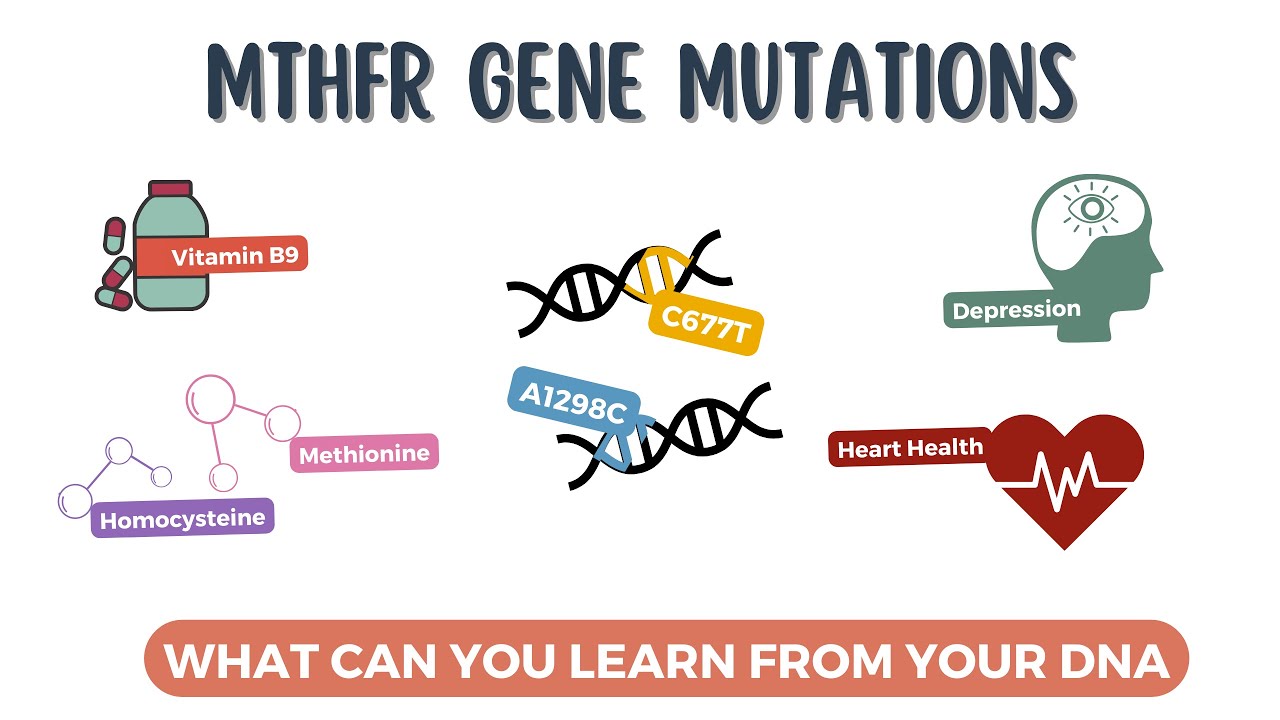
Some signs of MTHFR polymorphisms are cardiovascular and thromboembolic diseases, anxiety, bipolar disorder, colon cancer, and chronic pain.
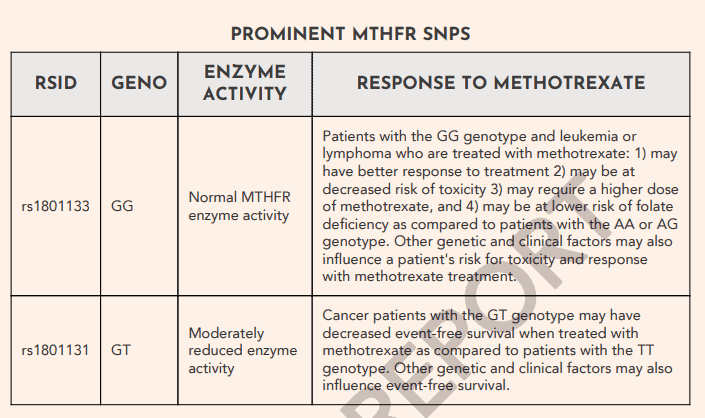
Not all MTHFR gene variations are associated with significant MTHFR enzyme activity. There are two important MTHFR SNPs, rs1801133 and rs1801131, associated with the MTHFR enzyme activity. These variations affect approximately 1 in 4 people significantly and about 1 in 2 people mildly.
Information about the variant of these two highly significant genes is present in the table titled “Prominent MTHFR SNPs.”
The MTHFR enzyme activity is provided as a bar diagram below the table titled Prominent MTHFR SNPs. It is based on the two prominent SNPs.

Apart from the two important MTHFR SNPs, there are other variations in the MTHFR gene which are associated, in varying degrees, with MTHFR enzyme activity. Information about these SNPs is included in the table titled “Other MTHFR SNPs.”

The presence of a large number of homozygous (2 risk variants- red color) of high ranking SNPs may be associated with lower enzymatic activity and higher homocysteine levels.
Certain SNPs are found to have a higher impact, and variations in these SNPs may have a greater impact on health. The ‘Rank’ is indicated as ‘high,’ ‘medium, and ‘low’ depending on the potential impact. Please bear in mind that the Rank is a theoretical value and not experimentally verified.
The column ‘normal’ (e.g., C) is the variant associated with normal enzyme activity, while the column ‘risk’ (A) is the variant associated with reduced enzyme activity. ‘Geno’ refers to your genotype.
Disclaimer: As always, please bear in mind that human traits are a result of complex interactions between multiple genes and multiple environmental factors. The findings presented in this report are of a preliminary nature and are not considered clinically- or medically- actionable.
Eggs have been a part of our diet for thousands of years now. Being high in protein and several vitamins, eggs are rated as one of the most nutritious foods on the planet. However, new research from the University of South Australia shows that excess egg consumption can increase your risk of diabetes.
Diabetes mellitus, commonly known as diabetes, results in high blood sugar. The insulin hormone is responsible for regulating blood sugar levels. With diabetes, your body either doesn’t make enough insulin or can’t effectively use the insulin made.
In the United States, 27.9 and 32.7 percent of the population have diagnosed and undiagnosed diabetes, respectively.
Untreated diabetes can increase the risk of dangerous complications, including stroke and heart disease.
According to The American Diabetes Association, eggs are a good choice for people with diabetes - primarily because one large egg contains only around 0.5 g of carbohydrates. However, eggs are high in cholesterol - one large egg contains nearly 200 mg of cholesterol.
If you have diabetes, it is recommended to limit your egg consumption or consume only the whites.
The University of Australia, along with the China Medical University and Qatar University, assessed egg consumption in a large sample of Chinese adults. They found that “people who regularly consumed one or more eggs per day (equivalent to 50 grams) increased their risk of diabetes by 60 percent.”
The prevalence of diabetes in China has now crossed the global average of 8.5%. According to the study, China has experienced a nutritional shift, with many people moving from a plant-based diet to processed diets that include meat and other animal-based foods over the last few years.
Egg consumption has also been steadily increasing. From 1991-2009 the number of people consuming eggs in China has nearly doubled.
The effect of egg consumption on glucose was determined by measuring the fasting blood glucose levels. The researchers discovered that “higher long-term egg consumption (greater than 38 grams per day) increased the risk of diabetes among Chinese adults by approximately 25 percent.”
Additionally, people who consumed more than 50 grams of egg had a 60% increased risk for diabetes. This effect was more pronounced in women than men.
Shorter and lower-heat cooking methods help retain most of the egg’s nutrients.
So, boiled or poached eggs without added salt are healthier than frying them in butter or unhealthy oil.
The egg whites are high in protein and low in cholesterol.
Your diet can help both managing and preventing diabetes. Some diabetic-friendly foods include:
Vitamin D is a fat-soluble vitamin required by all living beings for bone health, calcium absorption, and brain function. This vitamin is also known as calciferol.
Most of the vitamin D is obtained naturally from sunlight. While melanin (the skin pigment) protects the skin from the harmful effects of ultraviolet rays, excess melanin can also hinder the absorption of vitamin D from the sunlight.
According to a study published in the Journal of Nutrition, healthy vitamin D levels in mother during pregnancy can positively affect the child’s IQ (Intelligent Quotient). The higher the vitamin D levels, the greater the IQ scores during childhood.
The sunlight consists of two kinds of UV-rays - UVA, and UVB. UVA doesn’t have much of a biological role. Only UVB helps in the synthesis of vitamin D in the skin.
Melanin has photoprotective action - It protects the skin from the harmful effect of ultraviolet radiation. However, higher melanin levels can lead to lower production of vitamin D3.
Darker skin tone is associated with higher levels of melanin.
For light-skinned people, an exposure time from 20-30 min, for two-three times a week, is enough to produce around 20,000 IU of vitamin D3, while for dark-skinned people, the exposure time needs to increase by 2-10 fold to get the same level of vitamin D3.
The baby in-utero (in the womb) receives its vitamin D supply for brain development from the pregnant mother.
The melanin production is higher in black women - so there are a higher number of cases of vitamin D deficiency among them.
According to the study, 80% of black pregnant women in the U.S. may have vitamin D deficiency.
Among the study participants, approximately 46% of the mothers were deficient in vitamin D during their pregnancy, and vitamin D levels were lower among black women compared to white women.
After controlling several other factors that influence IQ, a study examined the relationship between vitamin D levels in pregnant women and IQ in children.
It was observed that higher vitamin D levels in pregnancy were associated with higher IQ in children ages 4 to 6 years old.
The recommended daily intake of vitamin D is 600 international units (IU). However, on average, Americans consume less than 200 IU in their diet.
In most cases, vitamin D deficiency has an easy fix. Even if it is difficult to get enough sun exposure, vitamin D supplementation is an effective alternative to meet your requirements.
For years, diets called for the elimination of fats, urging us to move towards low-fat alternatives. While, like any other nutrient, overdoing fats can lead to weight gain, cutting out dietary fats need not necessarily result in weight loss. Replacing bad fats (trans fats, saturated fats) with good fats (mono and poly-unsaturated fats) comes with benefits that extend beyond weight loss. This article covers everything there is to know about incorporating monounsaturated fats in your diet.
Fats are an important component of any meal as they help in absorbing fat-soluble vitamins and minerals.
They also store energy within the body, protect vital organs, and help in muscle movement.
Fats are chains of carbon and hydrogen, and depending on the length of these chains and the arrangement of these atoms, they are classified into different types of fats.
The “mono” in monounsaturated fats represents the single double bond that is found in its chemical structure.
Owing to this chemical structure, monounsaturated fats are often liquid at room temperature.
Anthropologists claim that the diet of early humans was more similar to that of modern chimpanzees. They consumed fruits, vegetables, leaves, flowers, and meat. It is believed that meat was first consumed about 2.6 million years ago.
However, our early ancestors engaged in scavenging food rather than hunting. They consumed the edible portions of flesh that were left behind by the predator. Jesicca Thompson, an anthropologist from Yale University, says that the early humans consumed bone marrow stuck in between the bones of the dead animal rather than the “meat.” The marrows are rich in fat content. Thompson claims that it was around this time that humans started adding fat-rich food to their diet.
Modern-day diet has monounsaturated fats in vegetable and seed oils. A study confirmed that the first use of vegetable oil, particularly olive oil, was seen around 8000 years ago in the Middle East. But it was in the 1600s when people started making oil from vegetables.
The 1800s saw the widespread use of vegetable oil as the commonly used whale oil became expensive. In the process of making affordable soaps using cottonseed oil, two industrialists in Cincinnati took the opportunity to introduce it in the food industry. In a few years, animal fats were replaced by vegetable cooking oils, and we can still find them in our kitchens today.
Studies observed that people from the Middle East or the Mediterranean countries had a lower risk of heart diseases, despite consuming a fat-rich diet. Further investigation showed that their diet included olive oil and other seed oils as their main source of fat and not animal fat. This could mean that the health benefits come from unsaturated fats rather than saturated fats from animals.
A study consisting of around 840,000 adults aged 4-30 years found that the consumption of monounsaturated fats reduced the risk of heart disease by 12%, compared to the control group (little to no monounsaturated fats consumption)
Monounsaturated fats improve overall health by:
Sources of monounsaturated fats are olive oil, peanut oil, avocados, nuts, safflower, and sunflower oils.
Weight gain is caused when the calories consumed are greater than the calories burnt.
All fats provide the same amount of energy, which is about nine calories per gram.
Based on your lifestyle and your basal metabolic rate, including the right amount of fat in your diet, can help with weight management.
Even though weight gain/loss is a simple equation of calories in and out, the quality of the food you eat as part of your diet is very important.Some studies have shown that if calorie intake remains the same, diets high in MUFAs lead to weight loss and could even be more effective than a high-carb diet.
It is recommended to use monounsaturated fats as a replacement to saturated or trans-fats as much as possible.
The 2015 Dietary Guidelines for Americans suggest that fats should be limited to 25 to 30% of the total daily calories; this includes all types of fats.
This gene is involved in the control of fat metabolism (break down) and insulin sensitivity (how well your body responds to insulin) in the body.
Changes in this gene directly affect anti-diabetic, anti-atherogenic (preventing fatty deposit formation), and anti-inflammatory activities.
The gene codes for a protein called the adiponectin, that is involved in aids fatty acid breakdown. Higher the adiponectin levels, more efficient the fatty acid breakdown.
Decreased adiponectin levels are thought to play a central role in obesity and type 2 diabetes.
Changes in lifestyle, such as incorporating exercise and a following balanced diet, that result in weight loss, can lead to an increase in adiponectin concentration and increase insulin sensitivity.
A study found that a variation rs17300539 in the ADIPOQ gene can lead to a difference in blood adiponectin levels.
Individuals with a G allele have lower blood adiponectin levels when compared to those with an A allele. Carriers of the A allele (AA/AG), therefore, had lower weight, BMI, waist, and hip circumferences.
While considering the monounsaturated fats intake of greater than 13% of the total energy intake, the A allele carriers had a considerably lower BMI compared to GG carriers.
This shows a relationship between the effect of a gene on monounsaturated fats intake and weight.
NR1D1, also known as Rev-ErbA alpha, is present in the liver, skeletal muscles, adipose (fat) tissues, and the brain in mammals.
Adipogenesis is the process by which adipocytes, or fat cells are formed.
Rev-ErbA alpha includes adipogenesis and could be a potential target for novel anti-obesity treatments.
A study analyzed the association between NR1D1, monounsaturated fats intake, and weight in North American and Mediterranean populations.
People with the AA and AG types had a lower waist circumference and a decreased risk for obesity than people with the GG type.
The A allele occurrence was also significantly low in the ‘abdominally obese’ group.
There was also a significant interaction for obesity with NR1D1 and monounsaturated fats intake in the Mediterranean population.
Individuals with the A allele had higher protection against obesity with diets rich in monounsaturated fats. (>55% of total fat).
PPARG is a gene predominantly present in adipose tissue. It plays a role in adipocyte differentiation (converting one type of cell to another), regulating glucose levels, and insulin signal transduction (communication between two cells).
A change in this gene has been studied to play a role in increased sensitivity to insulin and a more favorable lipid profile.
A study recruited overweight subjects between the ages of 20-65 years in southeastern Spain.
They analyzed the subjects as they underwent a treatment program for obesity.
This included analyzing the diets and the number of calories expended during exercise.
They found a gene-diet interaction between PPARG and monounsaturated fats intake.
People who had the G allele (CG/GG) were significantly less obese than those with the C allele (CC) - when monounsaturated fats intake was high (>56% of total fat).
This difference disappeared in low monounsaturated fats diets.
Overall, in each case, diets with high monounsaturated fats intake (>55% of total fat) resulted in a greater weight loss in individuals.
Most foods have a combination of all types of fats. Foods and oils that have a higher percentage of MUFA are:
Fats are a necessary component in a balanced diet. However, not all types of fats are healthy. While saturated fats are the ‘bad fats,’ the unsaturated fats are ‘good fats.’ Monounsaturated fats or MUFAs are fats joined by a single bond. They help reduce the risk of health conditions like diabetes and cancer. They also enhance insulin sensitivity and, therefore, play a role in weight management. Several genes ADIPOQ, NR1D1, and PPARG, mediate how your body responded to MUFAs in terms of weight gain. People with certain types of these genes tend to benefit more from MUFA consumption in terms of weight loss and can include more MUFA-rich foods in their diets. Some food sources of MUFAs include avocados, olive oil, peanuts, and eggs. Even though MUFAs are present in certain animal sources like red meat, their benefits are negated by the saturated fats in them.
Zinc is an essential nutrient that plays many important roles in the body. It is ‘essential’ because the body cannot produce zinc on its own, and thus, it should be obtained through food sources.
After iron, zinc is the most abundant trace mineral (minerals required in small quantities) in the body.
Zinc boosts the immune system and is important for metabolic function.
It is well known for its role in wound healing and the sense of taste and smell.
It is a part of many enzymes that are required for sending messages across cells in the body.
Zinc absorption from the diet depends on the total amount of zinc present in the food.
It has been found that the more the amount of zinc present in food, the lower the amount absorbed.
This means that zinc is better absorbed when taken in small doses.
Zinc plays an important role in the functioning of immune cells. So a deficiency in this nutrient can lead to a weakened immune response.
Zinc is present in the part of the cell where the formation of DNA and proteins occur. Protein production from DNA is a multi-step process, where zinc plays an important role in each step.
Gene expression is the process where the information in the gene is used to produce proteins and other gene products. Zinc plays a role in regulating how much protein or product is produced by the genes.
Zinc plays a role in the activity of more than 300 enzymes. The ‘zinc-binding’ sites help one compound attach to another in chemical reactions.
Zinc supports normal growth and development during pregnancy, infancy, and adolescence. According to a study, infants with low birth weight saw significant weight gain improvements when supplemented with zinc.
Zinc has anti-inflammatory properties - the ability to reduce inflammation or swelling. So, it can help with skin problems like acne and rashes.
Zinc is available as supplements in various forms, each of which impacts health in different ways.
Zinc sulfate is the least expensive form available; however, it is also the least absorbed by the body. This form is used for acne treatment.
Other forms of zinc include:
Though the importance of zinc in humans was established only in the 1960s, its impact on agricultural production was identified in 1869 itself, when zinc was reported as an important nutrient for the growth of a fungus, Aspergillus niger. In 1914, it was discovered that maize, a common crop, also required zinc for normal growth. By the 1920s, it was established that zinc is needed for the growth of all higher plants.
The years from 1920 to 1950 witnessed the essentiality of zinc in mice, poultry, and swine. However, researchers were still skeptical about the possibility of zinc deficiency in humans. This ended when the first case of zinc-deficiency-induced dwarfism that resulted in delayed sexual maturation was reported in the United States. Subsequent zinc supplementation resulted in improved growth and development.
In 1974, the National Research Council of the National Academy of Sciences declared zinc as an essential element for humans, and in 1978, FDA mandated the inclusion of zinc in prenatal supplements.
In the developing world, nearly 2 billion people may be affected by zinc deficiency. Consumption of cereal proteins high in phytate was identified as the major culprit for this. Phytate/phytic acid is a natural substance found in plant seeds. It is known for impairing the absorption of various minerals like iron and zinc.
The recommended daily intake (RDI) for adults varies between 8 to 11mg. The maximum tolerable amount is 40mg per day.
Several proteins, called the zinc transporters are responsible for the circulation and absorption of zinc in the body. Zinc homeostasis (ability to maintain stable levels of zinc) is managed by zinc intake and output transporters that are coded by SLC30A and SLC39A gene families.
SLC39A4
SLC39A4 codes for zinc transporter ZIP4, which is responsible for the absorption of zinc in the intestines. Differences in the SLC39A4 can alter the structure of the ZIP4 protein and hence affect zinc absorption. Certain types of SLC39A4 gene are associated with lower zinc levels.
SLC30A2
SLC30A2 codes for zinc transporter 2 or the ZNT2 protein. This gene plays a role in neonatal (newborn) zinc deficiency. A type of this gene produces an ‘incomplete’ ZNT2 protein that results in the poor secretion of zinc into the breast milk. Infants that feed on this zinc-deficient breast milk go on to develop zinc deficiency in their later years. Two SNPs of SLC30A2, rs35235055 - also known as c.68T>C - and rs35623192 - also known as c.1018C>T - play a role in lower zinc secretion in breast milk.
SLC30A8
SLC30A8 codes for zinc transporter 8 or the ZNT8 protein. This protein is responsible for transporting zinc inside insulin cells, thereby promoting insulin release. Differences in the SLC30A8 can affect zinc transport. A certain type of this gene plays a role in increasing the risk of diabetes by reducing zinc transport and decreasing insulin secretion. A study on this gene also concluded that zinc supplementation could fix the error in glucose breakdown (by promoting insulin secretion), thereby treating diabetes.
SLC30A8 SNP rs13266634 is associated with the risk of type 2 diabetes. The CC type was found to have the lowest concentrations of zinc. Further, it was noted that zinc supplementation in people having the C type reduced the blood sugar levels.
The same study claimed that “Zinc intake has a stronger inverse association with fasting glucose concentration in individuals carrying the glucose-raising A allele of another SNP rs11558471 (in SLC30A8 gene.)” This meant that as zinc intake increased, a reduction in blood glucose levels was seen.
SLC30A3SLC30A3 codes for zinc transporter 3 or the ZNT3 protein. This protein is required for the transport of zinc into synapses, which are the site of electronic signalling between two nerve cells.
rs11126936 is an SNP in the SLC30A3 gene. A study found that individuals having TT and TG types had higher levels of zinc levels than those with GG.Previously, another SNP rs73924411 in the same gene was found to play a role in regulating zinc levels in people with cognitive impairment.
IL6
White blood cells express cytokines. Cytokines are a group of proteins that are expressed by the immune system. They play an important role in cellular communication, especially during immune responses.
Some of these cytokines are termed as interleukins - abbreviated as IL. IL6 or interleukin 6 is a cytokine that is produced at the site of inflammation. The IL6 gene encodes IL6 protein. This is mainly responsible for the acute phase response (a response that is raised immediately after an injury/infection).
It also has an anti-inflammatory myokine role. Myokine responses are essentially cytokine responses that occur due to muscle contraction.
The levels of IL6 are related to the zinc levels in our bodies.
The relationship between the IL6 gene and zinc levels is reciprocal.
When there’s a zinc deficiency, it affects the IL6 gene, increasing IL6 cytokine production, which lowers zinc levels even further.
rs1800795
Also known as 174 G/C, rs1800795 affects the zinc levels upon dietary consumption of zinc. A study on the European population revealed that people having the GG type of rs1800975 had higher levels of IL6 (and hence, lower levels of zinc) than those with CC type.
According to the World Health Organization (WHO), about one-third of the world’s population suffers from zinc deficiency.
The tolerable upper intake level (UL) - the maximum amount of nutrient intake that is likely to be not risky for health - for zinc is 40 mg per day for healthy adults. Excessive intake of zinc can lead to zinc toxicity.
Although there are no reported zinc toxicity cases from food sources, some zinc supplementation at incorrect doses could cause a problem.
Zinc levels can be determined using a simple blood plasma test or a urine and hair analysis, since zinc is distributed throughout the body.
However, it is difficult to identify zinc levels using laboratory tests alone.
Doctors may assess other risk factors, including genetics and dietary intake, along with blood test results to identify your zinc requirements.
Zinc is important for the growth and development of immune cells, namely the T-cells and B-cells. It also plays a role in immune responses that require antibody production.
Zinc ions exhibit antimicrobial activity and are necessary for the functioning of natural killer cells (another type of immune cells)
Acrodermatitis enteropathica, a rare disease, is associated with zinc deficiency. This condition increases the risk of viral, fungal, and bacterial infections.
The zinc requirements for women increase during pregnancy. Its deficiency can be harmful to the growing fetus.
A study conducted on mice showed that gestational (during pregnancy) zinc deficiency affected the offsprings' immune function, which persisted for three generations.
Zinc helps the formation of cells that are required for bone building. It also slows down the excessive degradation of bones.
Zinc forms a part of many enzymes that are necessary to hold the structure of bones in place.
According to a study, excess zinc excretion plays a role in the development of osteoporosis.
Hair loss in patches is often seen in people with zinc deficiency. This is because zinc plays an important role in a process that leads to the formation of hair follicles.
Collagen is an important protein that gives structure to the skin and protects it against different strains. Zinc is a crucial component of collagenases, the enzymes that form collagen. According to a study, zinc supplementation can help slow down the degradation of collagen.
Since zinc boosts immune function, it also helps prevent infection in older people. In fact, according to a study, people with adequate zinc levels had a 50% lesser risk of developing pneumonia compared to those who had lower levels.
Zinc deficiency could also occur in people with the following conditions:
Zinc is not stored in the body, so it must be included in the diet to ensure sufficient amounts are available. A healthy and balanced diet, which includes zinc-rich foods, will ensure sufficient vitamin and nutrient intake.
Zinc is a trace mineral that is important for its role in immune function, growth and development, and protein production. The role of zinc in human health was only identified in the 1960s, and since then, the FDA has made it mandatory to include it in all prenatal products. The SLC gene family codes for proteins that are responsible for zinc transport and absorption in the body. Studies have shown that rs13266634 in the SLC30A8 gene plays a role in zinc transport into insulin cells. Individuals who have the CC type have decreased transport of zinc to the insulin cells. This results in lowered secretion of insulin, and hence a higher risk for type 2 diabetes. rs35235055 and rs35623192 are two SNPs in SLC30A2 gene that are important for transport of zinc to the breast milk. Lower levels of zinc in breast milk can increase the risk for neonatal zinc deficiency. The recommended daily intake (RDI) for adults varies between 8 to 11mg, with maximum tolerable amount being 40mg per day. Oysters are an excellent source of zinc with one serving providing over 600% of the RDI. Some plant based food sources rich in zinc are tofu, legumes, hemp seeds, and nuts.
Carbohydrates are one of the most prominent food groups in the diet. They are present as sugars, starches, and fiber in food. Glucose molecules are linked together to form starch and fiber. When carbohydrates enter the body, the fiber goes undigested, while the sugar and starch are broken down into glucose. Glucose provides the energy required for bodily functions.
Carbohydrates are commonly associated with weight gain. However, the right kind of carbs in the right amounts can earn a rightful place in your diet.
Carbohydrates are subdivided into three categories depending on the number of sugars present and the nature of the chemical bonds between them.

Although this is the conventional way of classifying carbohydrates, a more useful approach would be to classify them as refined and whole carbohydrates.
Whole carbohydrates include vegetables, legumes, whole fruits, and grains, which are unprocessed and thus have their nutrient content intact.
The stripping of nutrients in refined carbohydrates as a part of processing makes them 'empty calories.' This removal of the nutrients results in rapid absorption and metabolism of these carbohydrates. This results in spiked sugar levels and unstable energy levels.
Previous studies on the development of the brain and other human traits suggest that the shift from plant-based to meat-based diet played a critical role. Since then, a lot of evidence has come to light that indicates the involvement of plant-based carbohydrates in meeting the demands of the growing brain.
Further, the role of cooking in improving the digestion and breakdown of carbohydrates has also been factored in.
According to Mark Thomas, an evolutionary geneticist from University College London, the brain's size started significantly increasing only around 800,000 years ago - which is speculated to be the time period where the usage of fire started.
What does this mean?
Glucose is the main source of energy for the brain. When the cooked vegetables were consumed, the body had to put in much less work to convert the carbohydrates to glucose for feeding the brain.
For example, the starch in cooked potatoes digests 20 times faster than the uncooked ones. This suggests that cooked carbs, which became the major source of energy, contributed to brain growth.
To further investigate the hypothesis, the starch digesting enzyme amylase was studied. An analysis revealed that the genes that produce amylase started evolving to higher numbers around the same time cooking was started.
This was an advantage since more amylase was required to digest the increasing amounts of starch consumed. So, with every mouthful, the brain derived more energy from the starch.
There are still uncertainties about the antiquity of cooking and the reason for the increase in the amylase enzyme gene. However, the above-mentioned correlation cannot be just dismissed as a coincidence!
The AMY1 gene encodes the enzyme amylase, which is responsible for the digestion of starch. Salivary amylase is the enzyme found in your saliva, which begins the process of digesting starch in food. It breaks the insoluble starch into smaller soluble forms. High-AMY1-gene copy number (number of copies of a gene) indicates increased secretion of amylase. This results in a faster breakdown of starch. The difference in the copy number of the AMY1 gene is reported to be the genome's largest influence on obesity. According to a recent study, each copy of AMY1 decreases the risk of obesity 1.2-fold.
rs4244372 is a Single Nucleotide Polymorphism (SNP) in the AMY1 gene. The A allele in this SNP is associated with a lower copy number of AMY1 gene, and hence poor starch metabolism. People who have the AA type may tend to put on more weight on carbohydrates when compared to the people who have the TT or the AT type.
Refined carbohydrates cause sudden spikes in sugar levels. As the sugar levels rise, the body produces insulin to regulate them. Insulin converts excess sugar into fat. A higher spike in sugar levels results in increased insulin secretion, which leaves you with excess stubborn body fat. Various studies show that refined carbohydrates are associated with type 2 diabetes and heart diseases.
Whole carbohydrates, also known as complex carbohydrates, have natural fiber components in them. This fibrous part is easy to digest and thus helps us stay full for a longer time. A balanced diet that is rich in natural fiber helps maintain the blood sugar levels in our body. These foods have a low glycemic load. Glycemic load estimates how much a person's sugar level will rise upon consuming food. A low glycemic load indicates longer digestion time and a smaller spike in blood sugar levels.
An ideal whole carb diet contains seeds (chia seeds and pumpkin seeds), grains (quinoa and oats) with fresh vegetables and fruits. Many nutritionists also advise a switch from white rice to brown rice. This is because brown rice is packed with nutrients that help us prevent heart diseases and type 2 diabetes.
Other than being an important source of energy to the body, carbohydrates also perform the following functions:
Research tells us that a fibrous diet can help maintain a healthy gut. Complex carbohydrates contain a sugar component and a fiber component. Fiber is present in two categories, soluble and insoluble. Soluble fiber helps maintain bowel movements, as well as the consistency of the stool. Insoluble fiber relieves constipation and prevents various digestive tract diseases. Studies also show that a diet rich in fiber helps maintain our blood sugar levels and also benefits our heart.
While refined carbs are not really your heart's best friend, dietary fiber can help maintain blood sugar levels and is heart-healthy. When fiber passes through the intestines, it prevents reabsorption and hence, the buildup of bad cholesterol. This reduces the risk of heart diseases.
Dr. Tamar Polonsky, MD, from the University of Chicago Medicine, said that foods that contain complex carbs "decrease inflammation and help us decrease the risk of plaque buildup in our arteries." Plaque is the deposition of certain substances in the blood vessels that block the blood flow. This buildup is caused by fat, cholesterol, and calcium that is present in the blood. This can potentially lead to a heart attack or stroke. Polonsky advises us to stick to healthier carbohydrates with less fat and cholesterol to prevent these.
Our body stores the extra glucose in the form of glycogen (another sugar), which is very important to us. When there's no available glucose from carbohydrates, the body breaks down the muscles to generate glucose for energy. To prevent muscle mass loss due to starvation, the consumption of adequate amounts of carbs is essential.
Apart from all the impacts on physical health, research suggests that carbohydrates can improve mental health as well. A study from the Archives of Internal Medicine showed that people who were on a low-carbohydrate diet for a year experienced symptoms of depression and anxiety.
The idea behind a low-carbohydrate diet (for weight loss) is that if the body does not receive the extra carbohydrate, no excess fat will be stored. Instead, the fat already present will be burnt for energy.
High-carbohydrate need not necessarily be our enemy. In fact, high carbohydrate foods with adequate fiber are extremely healthy.
All these foods are rich in fiber and help us from feeling hungry frequently. They also help us maintain good gut and heart health.
Carbohydrates are one of the major food groups. There are two types of carbohydrates - whole or complex and refined. Whole/Complex carbohydrates present in food like oats and bananas are healthy, while the refined carbohydrates are "empty calories" that spike your blood sugar levels. The starch in the carbohydrates is digested by the salivary enzyme, amylase, encoded by the AMY1 gene. A higher copy number of the AMY1 gene is considered beneficial, as it results in a faster breakdown of starch. rs4244372 is an SNP in the AMY1 gene associated with the difference in the copy number of the gene. People who have the AA type tend to have a low copy number and hence may be poor digestors of starch. These people are at an increased risk for weight gain on carbohydrate consumption and may benefit from a low-carbohydrate diet. Some low carbohydrate foods include leafy greens, nuts, and olive oil. Animal foods like lean meat and fish are low in carbohydrates. Another option can be switching to a fiber-rich carbohydrate (complex carbohydrates) diet. Fiber is digested slowly and thus keeps you full for longer. Quinoa, buckwheat, berries, and sweet potatoes are good sources of complex carbohydrates.