Folate (vitamin B9, folic acid) is essential for life-sustaining processes of DNA synthesis, replication, and repair and they are naturally present in common foods such as black eyed peas, liver, asparagus, beets, brussels sprouts, and spinach. Folate levels have been associated with birth defects, cardiovascular disease , and many other important healthcare issues . Individuals differ in their ability to metabolise folate, depending on the type of MTHFR gene that they carry. This article will tell you how you can protect your body and mitigate the influence of your genes by making proper food choices.
Methyl folate is essential for the proper function of almost all of the body’s systems and it is involved in the conversion of an amino acid homocysteine into methionine. When you eat foods containing folate, MTHFR ( Methylene Tetra Hydrofolate Reductase) enzyme in your body converts it into methylfolate, an active form of folate. MTHFR enzyme is produced by the MTHFR gene. If you have two “normal” copies of this gene, then you produce fully functioning enzyme, if you have one “normal” copy, the enzyme function is reduced and if you have no “normal” copies, then the function is reduced even further.
If you carry a type “TT” (abnormal) of the MTHFR gene, it leads to lower levels of folate in the blood & reduced enzyme activity, results in elevated levels of homocysteine in the body . Elevated homocysteine level is an independent risk factor of cardiovascular diseases among Indians.
Individuals who carry one copy of the abnormal T-type of the gene can still metabolize folate normally when compared to individuals carrying two copies of the abnormal TT-type of the gene and they are at a higher risk for (hyperhomocysteinemia (elevated levels of homocysteine) in their body.
|
The American Heart Association advocates a supplement regimen of 400 μg of folic acid, 2 mg of vitamin B6, and 6 μg of vitamin B12, if an initial trial of a folate-rich diet is not successful in adequately lowering homocysteine concentrations.
In addition, get your homocysteine levels measured. High homocysteine levels indicate that you may have a methylation issue or folate deficiency.
Want to know more about MTHFR gene, Xcode’s nutrigenetics test can tell you what versions of the MTHFR gene you have in your DNA. You can also learn about how your genes may influence other traits, including your risk for certain diseases. You can write to us at hello@xcode.life.
In the last few decades, the nutritional dogma has been about emphasising small & frequent meals throughout the day. Recent research shows that those who eat less are generally healthier, with improved metabolic health, cognition and live longer than those who eat more. Intermittent fasting is based on the principle of alternating between periods of eating and fasting. Intermittent Fasting is practiced in several ways including periodic multi day fasts to skipping a meal or two on certain days of the week. Most of us already fast every day, while we sleep. Simply extending this fast is referred to as Intermittent fasting. One way of doing this is by having your first meal at noon and last meal at 8 p.m in the evening, thus going on an 18 hours fast every day.
|
From an evolutionary perspective, fasting and food deprivation is one of the factors that could have attributed to the optimal performance of the human brain. Evolution favoured the selection pressure of those individuals who were adept in acquiring food from the limited food sources. Recent research demonstrates the beneficial effect of intermittent fasting and vigorous exercise on brain health. The fact is, until recently, humans did not have guaranteed food supply and may have had to struggle to obtain food for survival. During the course of thousands of years, we have developed the “genetic” ability to use calories wisely and to survive for periods of time without food. This genetic ability is what enables “slow” calorie burning and calorie storage for long periods of time in most people. This is why most people have a tendency to become obese upon consuming excessive food. Our bodies were not built in an environment of excessive food, rather the lack of it.
From that point of view, “simulated” fasting acts to prime the body to a state of calorie deficit, which has been shown by many studies to have several beneficial effects, some of which are listed above. Intermittent Fasting can be performed in a number of ways and it is controversial whether one way is better than others. In some forms, some foods are allowed while some others advise complete fasting. The duration and timings also differ. Given this, one can experiment with a schedule that works best for them. Some suggestions are given below.
|
Are fats good or bad? Which types of fats are good and which types are bad? And how much fat is bad and how much is good? Is fat bad for everyone or only for some or for some more so than others?
These are among the many confusing questions that we encounter everyday. And one can find a variety of confusing information on the internet, from diet plans which recommend overloading on fats to fat avoidance.
For decades, nutritionists and doctors have preached that a low-fat diet is the key to maintaining optimal weight and preventing health problems. But in recent times, research has shown that a diet rich in healthy fats can be better for people, particularly if those fats are used to offset the consumption of foods containing high levels of salt, sugar and refined carbs. Recent U.S dietary guidelines (2015) no longer focus on the restriction of fat in the diet, instead emphasizing the quality of fat
One of the key features that distinguishes humans from other primates is the larger brain size, and a relatively large portion of the our daily energy intake is consumed in the brain. This could have necessitated humans to consume foods with high energy density such as fats, especially long chain polyunsaturated fatty acids, in order to meet the high energy demands of the larger brains. The same could be attributed to our enhanced ability to prefer, detect, digest and metabolise high fat foods, and larger amounts of animal foods compared to other primates. Evidence indicates that the human evolution took place on an omega 3 rich diet found in East- African land-water ecosystems which made it easy to get iodine, vitamin A and omega 3 rich foods both from plants and fish necessary for brain functions. When humans migrated out of Africa, new evolutionary adaptations developed to enable survival in various environments with diverse food sources.
The dietary fats have undergone tremendous changes in terms of quantity and quality over the past 10,000 years. Some of the notable changes in the modern day diet in terms of dietary fat quality are the increased intake of saturated fatty acids, linoleic acid (LA) derived from omega 6 fatty acids and industrially produced trans fatty acids and reduced intakes of omega 3 fatty acids, dominance of more arachidonic acid, derived from LA in the diet. These changes are thought to have a broad impact on one’s health including chronic low grade inflammation leading to metabolic syndrome and its sequelae.
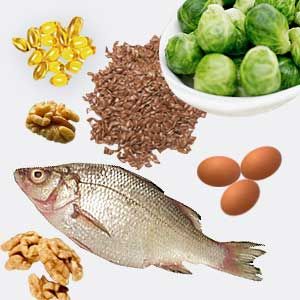
Long chain polyunsaturated fatty acids (LCPUFAs), arachidonic acid (AA), eicosapentaenoic acid (EPA) and docosahexaenoic acid (DHA) provides structure for cells, act as messengers between and within cells, and play a major role in lipid and sugar balance in the body. Our body converts all the shorter length polyunsaturated fatty acids (SCPUFAs) to LCPUFAs by using FADS (fatty acid desaturase) enzyme, produced by the FADS genes such as FADS1 and FADS2.
Plant based fats such as those from foods like vegetable oils, seeds and nuts, are SCPUFAs, the shorter length fatty acids such as alpha linolenic acid (omega 3) and linolenic acid ( omega 6) and need to be converted to LCPUFAs such as EPA, DHA and AA respectively in order to be utilized by our body, whereas animal based fats such as fish, eggs or steak already contains longer length LCPUFAs and our body can readily utilise them without the need for conversion.There are different types of FADS1 gene and the type you carry determines how well the SCPUFAs are converted to LCPUFAs. People carrying the “C” type of this gene have reduced conversion ability, and such people need to get their PUFA from animal sources especially fish or from supplements. Whereas people carrying the “T” type of this gene have efficient conversion ability and they need not rely on animal sources of PUFA to meet their needs.
A recent study done at the Cornell University compared 234 individuals of a primarily vegetarian Indian population and 311 individuals of traditional meat eating American population. Using 1000 genomes project, the study provided evidence that people with long ancestry of plant based diet have developed a mutation in the FADS2 gene, that has helped them convert SCPUFAs to LCPUFAs, hence fulfill their Omega-3 requirements from plant based sources. The study also points out people with FADS2 “vegetarian-gene” type are at higher risk of cardiac disease and cancer when they switch to a non-vegetarian diet.
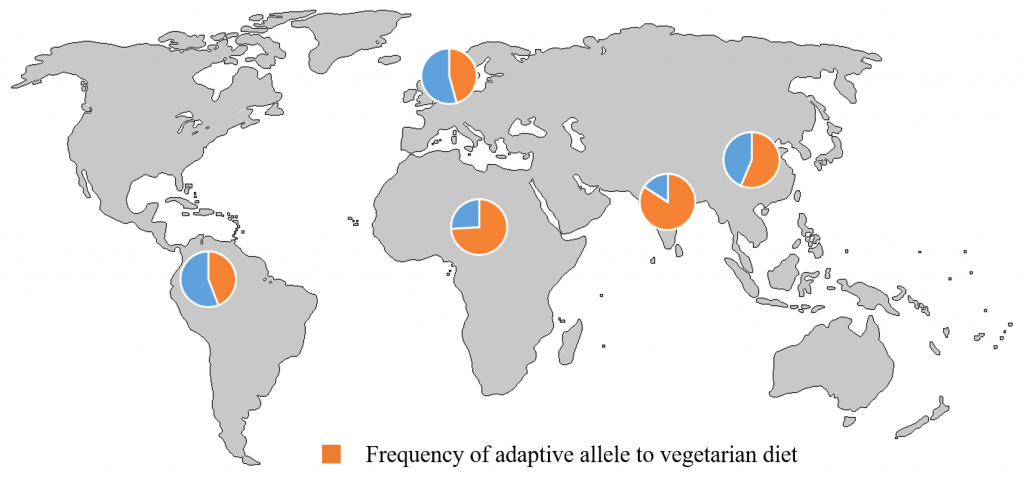
Credit: Kaixiong Ye, Cornell University/Map from www.outline-world-map.com The graph shows the global frequency pattern of an allele adaptive to vegetarian diets. The allele has the highest frequency in Indians, who have traditionally relied heavily on plant-based diets.
Thus, prescribing personalized diets based on the type of FADS genes – insertion type or the deletion type can be an important consideration for precision nutrition and medicine.
Want to know if you have the “the vegetarian gene” Xcode’s nutrigenetics test can tell you what versions of the FADS1 gene you have in your DNA. You can also learn about how your genes may influence other traits, including your risk for certain diseases. You can write to us at hello@xcode.life
We find many tastes inherently appealing across a broad segment of population (eg. sugar). Some tastes are acquired from cultural exposures. Yet, there are some tastes we cannot stand. Genes help us understand some of these strong inherent tastes and distastes that we have. Aversion to brussel sprouts is one of them.
There is clearly a genetic and an environmental aspect to taste preference. Which aspect dominates for what tastes is a subject of scientific research.
How do we taste?Taste is perceived by the taste receptors that are present on the surface of the tongue. Without these receptors, one will not be able to taste food, just as a color blind person is unable to see colors in objects. The type and number of these receptors are “biologically” programmed at birth. Some people have more and some less receptors. People also differ in the type and number of receptors they carry for various tastes.When we eat food, it mixes with saliva and comes in contact with the taste receptors. Taste receptors are connected to the brain through nerves. “Tasting” food is a process that involves the taste receptor on the tongue and the brain. The receptor sends a signal to the brain which then recognizes the taste. The brain recognizes that one has tasted one of the five basic tastes: sweet, sour, salt, bitter, salty, and umami. However, if you lack a specific version of a gene that produces a specific taste receptor, your ability to recognize that taste is reduced or absent.
For instance, TAS2R38 gene gives the taste sensation of bitterness and it makes a protein that interlocks with a chemical called PTC (phenylthiocarbamide), which is similar to the ones found in cruciferous vegetables like cabbages and brussel sprouts. So difference in their ability to taste or not taste PTC explains why some hate and some prefer these vegetables!There are different versions of TAS2R38 gene and which version you carry influences the level of perception of bitterness. People with two copies of PAV type of this gene display maximal perception of bitterness, whereas people with two copies of AVI type of this gene display minimal perception of bitterness. People with one copy of each type, PAV/AVI corresponds to moderate perception of bitterness.
Interesting story behind the “PTC gene”A chemist named Arthur Fox was working with phenylthiocarbamide (PTC) in the lab. His colleague complained about a horrible smelling odor, while Fox couldn’t smell anything! This is when Fox set out to discover why some people could smell and taste PTC while others could not. This incident allowed Fox to connect the dots between people’s genetic material and their ability to sense PTC.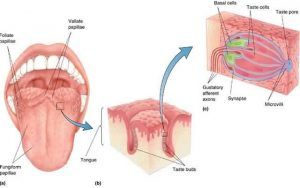
Later the gene for the PTC taste receptor, TAS2R38, was identified in 2003. Although TAS2R38 gene is a critical determinant of whether a person can or cannot taste PTC, other genes and environmental factors such as age, smoking, food/ drink patterns also come into play.There is an evolutionary significance that could be attributed to the sense of taste. Plants initially evolved the ability to produce these toxins to prevent themselves from being eaten. Likewise, humans as well as other animals evolved the ability to avoid these toxins through bitter taste to avoid becoming sick or being killed.
Being able to taste bitterness enables a person to either completely avoid these plants or at least moderate how much is being consumed. So this suggests that people who have maximal perception of bitterness had the evolutionary advantage (by avoiding toxins) over those who have minimal perception. However, not all toxins are bad for everyone. Some toxins only act on some species while benefiting others. So the ability to consume bitter tasting food which is non-toxic but has nutritional and medicinal value was useful during human evolution.
Want to know if you have the “the brussel sprouts gene” Xcode’s nutrigenetics test can tell you what versions of the TAS2R38 gene you have in your DNA. You can also learn about how your genes may influence other traits, including your risk for certain diseases. You can write to us at hello@xcode.life
Harsh summers take a toll on your skin like nothing else. Here’s a quick seven day guide of easy home remedies to get rid of all your skin problems in summer.
From sun tan to clogged pores and pigmentation, summers might be upsetting for your skin. Utilization of unnaturally stuffed creams and lotions can aggravate things. Unpretentious items on your kitchen shelves could be the ideal answers for your skincare misfortunes.
Make use of a warm wash material and press it over your face to open up the pores. Wash and pat dry. Apply a preparation to the skin to decrease the presence of the pores. Take a few minutes to do the ‘cheek bone press.’ Delicately squeeze around your cheeks for a few minutes to expand blood stream and give a solid shine.
At night take a large portion of a papaya and mash it. Apply the papaya paste on your clean face and leave it for 10 minutes. Papayahydrates the skin.
Cleanse your skin using an oscillatory brush moving over in circular motion. It helps to increase the blood circulation. At night time relax your eyes for at least 15-20 minutes by popping an eye mask and unwind in the shower by adding some Epsom salt which might help to increase blood flow.
Cleaning your skin with milk is a perfect cure. The lactic acid in milk lights up the skin. Combine one teaspoon of honey and three teaspoons of olive oil in a vessel. This makes an incredible hand lotion.
Do the ‘jaw line squeeze’ regularly in the morning. Delicately squeeze along the jaw line and up around the jaw line towards the hairline. Repeat this four times. This will elasticize the skin and expand blood stream to the cheek.
Cut open a large portion of a lemon and sprinkle a small amount of sugar on top. Rub the lemon on your clean skin. This works as an excellent toner.
If you work with computer throughout the day, your eyes may get extremely tired. During lunchtime, place two slices of cucumber over the eyes and rest for 15 minutes. Cucumber contains a substance called beta carotene which acts as an anti-oxidant.
Combine two tablespoons of nectar, one tablespoon of lemon juice, one tablespoon of olive oil and a large portion of sugar. Mix it well. Apply the mixture on your face. Leave for 10 minutes and wash off. This pack serves to uproot dead skin cells and lights up your appearance.
Using your ring finger delicately tap towards the hairline along the eye sack. Repeat six times. This will improve your blood circulation and strengthen your lymphatic system.
Place two tea packs in the refrigerator for a few minutes. When cooled, place them on your eyes and leave for five to ten minutes. The juice can help recoil the veins around the eyes and decrease dark rings.
At the end of the day remove your make-up with Vaseline. Cleanse with mild soap and pat dry. Apply moisturizer to hydrate your skin.
You can try these tips regularly to get flawless skin within a week.
Fiore, a holistic anti-ageing skincare regimen brings to you a personalised skincare solution, based on your DNA assessment that can help you get glowing skin.
Since the start of Olympics in 776 BC, running has always been a remarkable event in the world of sport. This Rio 2016 is no exception and set to be another epic feast for running fans. The fundamental dimension of the Olympics is all about “Citius, Altius, Fortius” which translates to “Faster, Higher, stronger” and running itself abides by the same principle.
In the past, stories of sprinting successes by people of Jamaican heritage sparked interest in the genetic advantage that Jamaicans and people with West African ancestry might have, especially when it comes to raw muscle power.
All of the diversity that is visible today among the 7 billion people on earth is the story of human genetic adaptation to their environment. For example, if the ancestors of certain people lived in hot and humid regions with significant sun exposure, they will have stronger skin pigmentation- which protects them from cancer causing UV rays. An example that is relevant to sports performance is that of ancestors who lived at higher altitudes above sea level. These places have lower levels of oxygen than what is found at sea level. As a result, their bodies have adaptations that make them efficient at extracting more oxygen out of the air they breath. All other things being equal, a person from higher altitude will have an advantage over someone from a lower altitude. Similarly, various other adaptations can be seen that offer specific advantages in various aspects of life. Of course, adaptations are only part of the story. The sheer human will to train and outcompete is the other part.
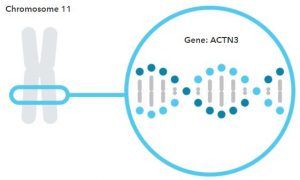
ACTN3 gene is the most widely studied sports performance related gene. The ACTN3 gene encodes instructions for making a specific muscle protein, ?-actinin-3, found exclusively in fast twitch muscle fibres. This protein is essential for greater strength & to protect against muscle damage which provides the benefits needed in speed or power based activity, such as sprinting or weight lifting.
There are different versions of ACTN3 gene and which version you carry determines how much of the alpha-actinin-3 protein you produce in your fast twitch muscle fibres. Some people have a fully functional version that produces lot of alpha- actinin 3, commonly called the R allele. This is associated with a boost in muscle strength and sprint performance. And some people have a non- working version of the gene, commonly called the X allele that prevents it from making this protein and such people lack this protein in their muscles. Lack of this protein does not cause any harm to the body, but it does affect the level of athletic performance. It is probably close to impossible for someone who lacks this protein to reach the elite levels of sports performance especially in power based activities, except for very rare cases.
Studies have indicated that people lacking the R allele of ACTN3 may have an advantage in endurance based sports. Such people also seem to have higher proportion of slow twitch muscle fibres and reduced fatigue which is advantageous in endurance performance.
Want to know if you have the “gene for speed?” Xcode’s fitness genetics test can tell you what versions of the ACTN3 gene you have in your DNA. You can also learn about how your genes may influence other traits, including your risk for certain diseases.