Diabetes is the most challenging health problem of the 21st century with India being the diabetic capital of the world. More than 65 million Indians are affected from type 2 diabetes and the number is expected to double in the next 20 years. The most shocking news is that 270 million Indians are below the poverty line and yet there is an increase in the diabetic peak. Unlike other health conditions, diabetes does not seem to be inherited in a simple pattern, it is twisted and complicated with a combination of genetic make-up and environmental factors. Yet, most people are born with higher susceptibility to develop type 2 diabetes. According to ADA, the risk of developing type 2 diabetes is:
Type 2 diabetes is mainly caused by an interaction between our genetic makeup and our unhealthy lifestyle choices. Type 2 diabetes is a polygenic disorder where numerous genes have been identified as risk factors. The variation in genes confers some impairment in insulin secretion, utilization, and glucose & lipid homeostasis. If you have type 2 diabetes your body does not use insulin properly. This is called insulin resistance. At first, your pancreas will produce extra insulin to make up for it but, over a period of time, it cannot make enough insulin to keep the blood glucose at normal levels.
The root cause of type 2 diabetes is obesity. It runs down the family as they tend to have a similar lifestyle and eating pattern. Obesity is 80% correlated with diabetes. If you have a family history of obesity it becomes difficult to figure out if your diabetes is mainly caused due to lifestyle factors or genetic variations. It is natural that sedentary parents tend to have sedentary children and their unhealthy eating habits are passed on to the next generation. However, studies have shown that in obese individuals, by losing even 4 kg of the body weight, can reduce the risk of developing type 2 diabetes.
Here are 5 alternative healthy foods to knock out type 2 diabetes:
It’s never too late to start caring for yourself and Xcode provides products and services based on metabolic and fitness genotyping. Even if you carry a genetic risk variant, you can still minimize your risk by understanding your genetics and choosing the right food and lifestyle options that are compatible with your genetic makeup. So take action today to prevent and knock out diabetes.
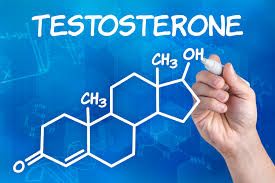
Anyone who has been to the gym clearly know the effects of the male hormone testosterone on the human body. Testosterone is the hormone responsible for “maleness” which includes body hair, facial hair,
voice pitch, aggressiveness and other traits. In professional bodybuilding circuit it’s understood that one must “stack” their “gear” to be able to compete. All the work in the world does not seem to help win competitions without the “gear,” which is the lingo for steroids and growth enhancing substances.
But clearly, within the normal human population, we have a range of testosterone types. Women have much lower testosterone levels than men and within men, a wide range of testosterone levels is observed, between 250 to 1000 nanograms per decilitre. In other words, a person with 1000 testosterone level has 4 times that of someone at 250. If testosterone helps with muscle building, then a guy at 1000 has four times the advantage. In a similar way, if certain activities like exercise lead to elevated testosterone levels, the amount of elevation also varies from person to person. For example, squatting might elevate someone’s testosterone level one time, but same exercise might elevate it twice as much for someone else. You get the point, when it comes to testosterone levels everyone is different in terms of what we start with and how it changes. So what determines one’s baseline testosterone levels and its subsequent increase or decrease? The simple answer is your genes and epigenetics. All aspects relating to human body are either genetic or epigenetic. Genes, as we know is the genetic code itself and epigenetics is how food, hormones, enzymes, drugs, proteins and other elements interact with and modulate the gene expression.
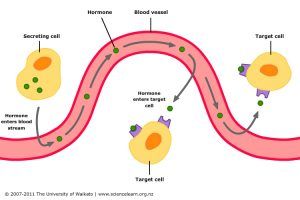
There are multiple genes that are known to regulate sex hormone availability. In a recently published scientific study it was demonstrated that a polymorphism in the gene coding for sex hormone binding globulin leads to a wide range of testosterone levels in individuals.
There are other tests that directly measure the hormone levels but they only indicate the hormone levels at specific time points. Genetics is the science which helps you in understanding your body’s metabolism and thereby assists in determining the best fitness plan to aid in muscle building as it takes into consideration important factors like your testosterone levels. We recommend that you learn about your genetic ability to the hormone level in addition to the direct testing method.
The modern sedentary lifestyle has now made obesity, a national epidemic.
Doctors, nutritionists, and fitness professionals are doing everything they can to encourage people to lead healthier lives.
Why not use your 23andme fitness information from your raw data to learn more about the status of sports-related genes like ACE and ACTN3?
This question has bothered countless people who’ve started exercise programs and has also motivated a major study – “genetics of fitness”.
Scientists have long known that when a group of people follow the same aerobic workout routine, some increase their cardiorespiratory fitness substantially, while others seem to get no benefit at all.
There is no magic workout that works for everybody.
Customization is the key, and over the years it is being commonly used in various fields.
Exercise for your phenotype by knowing your genotype
If healthcare and fitness professionals know a person’s genetic predispositions they can recommend a tailor-made exercise regimen that can maximize results.
By testing specific markers, researchers have discovered that certain traits such as stamina, muscle building, fat burning, energy distribution, etc. are governed by genetics, not effort.
At first, this may sound disappointing as it demonstrates that despite the efforts, some exercises simply do not benefit everyone equally.
Instead, this science clearly casts a light on what people should be doing to maximize their own unique fitness.
For example, the ACTN3 gene is responsible for the development of fast-twitch muscle fiber.
Determining whether someone is better suited towards sprinting-based activities (i.e. short distance running) or endurance-based exercises (i.e. long-distance running) is based on variations in this gene.
This drives home the point that genes can have profound effects on your health and body, even deep within your cells.
By knowing your genes, altering your exercise pattern can lead to better fitness conditions.
Upload your DNA raw data to Xcode Life. Our Gene Fitness Report analyzes aerobic capacity, weight loss/weight gain with exercises, flexibility, lung/heart capacity, and 15 more such categories.
Xcode Life Sciences, consumer health-genomics company has now launched a new programme 100 & Life. The programme that is aimed at helping the Indian population eat the right foods; do the right physical activities; feel the right way and live healthier and longer..
Read More : Link to original article
Genetic risk is the probability of a person developing a particular health condition which tells you how susceptible you are (genetically) to that condition.
Genetic risk for a condition can be evaluated and quantified using certain statistical entities like odds ratio (OR), relative risk (RR), absolute risk (AR) etc, which are calculated based on the status of SNPs (whether present or absent) in a particular individual and the genetic risk contributed by one or more of these SNPs towards the condition.
Xcode’s genetic assessments use Relative Risk to quantify genetic risk.
Relative risk (RR) is the probability of a person carrying the SNP developing the health condition when compared to a person without the SNP developing the same health condition.
Relative risk values are typically derived from odds ratio, which is the probability value that indicates the association between specific SNPs and the health condition and this is obtained from case-control studies.
These values are interpreted for the entire population and given for an individual as relative risk.
Hand-Picked article for you: Worrier Or Warrior? Analyze Your DNA Raw Data For COMT – The Warrior Gene
For example, a person has a relative risk of 2.0 for Diabetes, which implies that the person has two times the risk for developing Diabetes when compared to a normal person (who will be given a relative risk value of 1.0).
Relative risk values below 1 indicate that the person has a reduced risk for that condition.
Typical risk: 0.90 to 1.30
Reduced risk: <0.90
Elevated risk: >1.30
Stroke, a medical condition is characterized by rapid loss of brain function due to a disturbance in the blood supply to the brain. Stroke is sometimes called a “brain attack.” If blood flow is stopped for longer than a few seconds, the brain cannot get the required oxygen and nutrients through blood and eventually brain cells can die, causing permanent damage.
Sometimes referred to as cerebrovascular accident (CVA), stroke cause rapid loss of brain function due to a disturbance in the blood supply to the brain. This can be due to ischemia (lack of blood flow) caused by blockage (thrombosis, arterial embolism), or a hemorrhage (internal bleeding or loss of blood that occurs from the vascular system into a body cavity). As a result, the affected area of the brain cannot function, which might result in an inability to move one or more limbs on one side of the body, inability to understand or formulate speech, or an inability to see one side of the visual field. A stroke is a medical emergency and if untreated, it can cause permanent neurological damage and death.
Genes that have a vital role in regulating the blood & oxygen supply to the brain through formation & disruption of an atherosclerotic plaque are analyzed for variations which when present, imply that a person has increased risk for stroke.