Our unique genetic profile can make some of us more suitable for endurance activities, others for more intense sprinting activities or power training.
Genes involved in ‘endurance type of activities’ minimize muscle fatigue during prolonged period of mild to moderate intensity exercises, while genes involved in ‘sprinting’ relate to power, rapid bursts of energy, and optimum energy utilisation for activities of shorter duration. Depending upon the expression of Endurance/ Sprinting genes a person is categorized as adaptive for either of these.
There are two different types of muscle fibres which are important for these activities, each type being regulated by specific genes. Type I or slow twitch muscle fibres are mainly responsible for improving endurance. In contrast, Type II or fast twitch muscle fibres allow us to perform rapid, high intensity exercises.
It is a proven fact that regular exercise assures health benefits and improves your fitness level. It is noteworthy that genes determine your adaptability for the type, intensity and duration of activity (endurance/sprinting) based on your capacity for aerobic metabolism, extent of muscle fatigue and the time required for its recovery and slow/fast twitch muscle contraction. Therefore, based on specific variations within these genes in a person’s DNA, the type of exercise (endurance/sprinting) suitable for that person can be determined.
Upload your DNA raw data to Xcode Life. The Gene Fitness Report analyses endurance, weight loss or weight gain with exercise, and more than 15+ such traits.
Stretching is one of the most fundamental components of a fitness or exercise regime.
Performing stretching exercises before any fitness activity allows the body to become more flexible and less prone to injury. Stretching after exercise is also equally important. It allows the muscles to get back to their normal form and helps reduce muscle soreness and pain.
Flexibility is attributable to the protein collagen that surrounds cells. In fact, 25-30% of whole body protein is collagen! There are different types of collagens, each regulated by different genes. Collagen type V is important for flexibility. The more the flexible you are, the less you need to stretch before and after exercise. However, the presence of flexibility can lead to reduced exercise performance since more energy is required for muscle stabilising activity.
Flexibility is an indispensable aspect of fitness as it reflects the propensity for exercise-associated muscle injury. Your degree of flexibility and risk for tendinopathy as determined through genes are helpful in deciding the type and duration of your pre and post stretching exercises which would make your fitness regimen more comfortable for you to follow.
SNP or Single Nucleotide Polymorphism can simply be termed as copying error made by cells during the process of making new cells wherein a ‘wrong’ nucleotide is present in the DNA sequence in the place of a ‘correct’ nucleotide. For e.g., let’s assume that the normal sequence of a particular section of DNA in humans is AATGCT. A SNP is when the sequence becomes AATGCA, where the last letter (nucleotide) instead of ‘T’ is replaced with ‘A’. These copying errors are like typographical errors which lead to variations in the DNA. These typos in DNA might affect protein function and structure, when present within genes that form these proteins. These variations in the DNA are the root cause for majority of health conditions, differences in response to drugs or diseases etc.
SNPs can be associated with lifestyle related conditions like diabetes, obesity and stroke. These SNPs also contribute to difference in food metabolism e.g. lactose intolerance.
With over 30 million people diagnosed to be diabetic, India is well on its way to becoming the diabetes capital of the world!
Diabetes mellitus is a metabolic disorder that occurs when the body cannot regulate the production or usage of insulin. Insulin is a hormone that converts sugar, starches, and other food into energy. This energy is either used immediately or stored as fat or glycogen. In a diabetic, the body does not produce enough insulin to move the sugar into cells, and the sugar gets accumulated in the blood.
Type 2 diabetes occurs later in life and hence is referred to as adult-onset diabetes. In type 2 diabetes, the muscle and fat cells in the body become resistant to insulin which causes the pancreas to make more insulin. As long as the pancreas continues to produce insulin to overcome this resistance, blood glucose levels remain normal. However, after several years the resistance of the cells continues to increase and the pancreas begins to produce lesser insulin. This result in hyperglycemia (abnormally high levels of sugar in the blood) and the symptoms of type 2 diabetes start manifesting. Type 2 diabetes is most often seen in obese or overweight people and the elderly.
Type 2 diabetes is asymptomatic in the majority of the cases over a long period of time. If symptoms do occur, they include fatigue, increased hunger (polyphagia), frequent urination (polyuria) and increased thirst (polydipsia), blurred vision, erectile dysfunction, and poor wound healing.
Genes have a role in glucose metabolism, and genetic variations within these genes affect their function, thereby increasing the risk for type 2 diabetes.
Coronary heart disease (CHD) is a heart condition which usually results from plaque build-up inside the coronary arteries, which carry oxygen rich blood to the heart. A plaque formation, which is the deposition of cholesterol, narrows these blood vessels and reduces supply of oxygen and blood to the heart. CHD symptoms include shortness of breath and chest pain (angina), while heart attack is its serious manifestation.
Genes have a vital biological role in heart function, blood vessel health (endothelial function), cholesterol & triglyceride metabolism, inflammatory signaling and blood coagulation. There are certain variations in these genes, which have found to be associated with a high risk for Coronary Heart Disease.
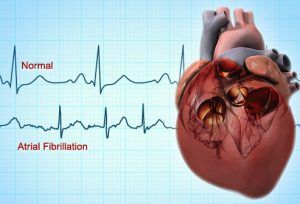
Atrial fibrillation (AF) is the most common type of arrhythmia. An arrhythmia is an abnormality in the heart beat or heart rhythm. During arrhythmia, the heart beat can be either too fast or too slow, or there can be an irregularity in heart rhythm. AF occurs if rapid, disorganized electrical signals cause the heart’s two upper chambers (atria) to fibrillate (contract very fast and irregularly).
Although ,atrial fibrillation itself usually isn’t life-threatening, it is a serious medical condition that sometimes requires emergency treatment as it can lead to other serious complications. Atrial fibrillation may lead to blood clot formation in the heart that may circulate to other organs and lead to blockage of blood flow.
Variations in important genes which have a role in the generation of electrical impulses in the heart muscle, affect the expression of these genes thereby increasing the risk for a disturbance in the contraction of atria leading to their dilation and fibrillation i.e., conferring a genetic predisposition towards AF.
Satiety can be defined as the ‘feeling of fullness’ after eating a meal. For example, have you ever wondered how you fill up with a bowl of oat meal but even three doughnuts leave you feeling hungry? The reason is the comparative satiety levels from the consumption of these foods.
Let us consider in more detail what happens during a meal. At the beginning, eating is rapid, with few pauses between bites. As the meal progresses, eating slows, there are more pauses between bites, and other behaviours such as fidgeting, grooming, or resting increase. A state of satiety is reached when the meal ends. This state is usually associated with a pleasant sensation of fullness or satisfaction. However, unpleasant sensations of nausea and bloating can be associated with satiety following excessive food intake. Of interest is that even when eating has stopped altogether, the introduction of a new food can restart eating.
Genes are involved in the regulation of metabolic rate and energy expenditure which in turn influences body fat accumulation. Some individuals carrying a variation in this gene tend to have “Difficulty in Feeling Full” and are likely to overeat, and overeating in the long run in turn can increase the likelihood for health conditions like obesity.
A genetic test to identify this mutation in an individual followed by appropriate dietary recommendations to overcome this difficulty in feeling full (if mutation is present) will help an individual attain optimal satiety levels.