Nevirapine (Viracept) is a medication used to treat HIV infection.
It is a nucleoside analog reverse transcriptase inhibitor (NRTI).
Nevirapine interferes with the virus's ability to create new HIV copies in the body.
Nevirapine is approved by the U.S. Food and Drug Administration (FDA) to treat HIV-1 infection in adults.
Nevirapine is available as a tablet, capsule, or intravenous formulation.
Nevirapine is a medication used to treat viral infections, including the common cold and the flu.
Using this drug lowers the risk of HIV complications like cancer.
Nevirapine is also used to treat other conditions caused by viruses, such as bronchitis and herpes.
Nevirapine is an antiretroviral medication that inhibits the replication of HIV.
It works by blocking the enzyme (reverse transcriptase) that HIV uses to copy its genetic material.
This slows the virus down and may stop it from multiplying.
Nevirapine is often the first-line treatment for HIV infection.
Two doses of nevirapine (NVP) at birth are recommended to prevent mother-to-child HIV transmission in many developing countries.
The mother should take one dose at the start of labor and one dose to the infant between 48 and 72 hours after delivery.
The most common side effects of nevirapine include
It has many side effects, some of which are serious. Nevirapine can cause
Nevirapine is mostly metabolized in the liver by the CYP3A and CYP2B6 isoenzymes.
It is an inducer of these isoenzymes.
Due to this, other drugs metabolized by these enzyme systems may have lower than usual plasma levels when coadministered with nevirapine.
Some drugs that may interact with nevirapine include orlistat (used to aid weight loss), rifabutin (antibiotic), and warfarin (blood thinner).
Other medications may impact the elimination of nevirapine from your body, which may affect how nevirapine works.
Examples include rifamycins (such as rifampin) and St. John's wort, among others.
This effect is observed the other way around as well.
Nevirapine affects the elimination of other classes of drugs like antiarrhythmics, antiepileptics, and antibiotics.
A small but increasing number of people are allergic to nevirapine, a drug used to treat HIV.
Around 5% of the general population develop severe allergic reactions to the non-nucleoside reverse transcriptase inhibitor (NNRTI) nevirapine.
Approximately 17 to 32% of patients with nevirapine will develop a skin rash, and 13% of these are mild rashes.
Systemic symptoms may also occur.
Drug Rash with Eosinophilia and Systemic Syndrome (DRESS) is well documented with nevirapine.
Stevens-Johnson syndrome (a rare, serious disorder of the skin and mucous membranes) has been recorded in 0.37% of drug users.
Racial differences were noted; for example, thorn rash was 2.8 times more common in Thai adults than white adults.
Some symptoms of nevirapine allergy are:
The genetics of nevirapine allergy is still not fully understood, but it appears that some people are more likely to develop an allergic reaction to the drug than others.
Recent research suggests that individuals with a genetic predisposition can be negatively affected by nevirapine.
The findings reveal that people who carry particular variations in the human leukocyte antigen (HLA) system are more likely to experience a hypersensitive reaction.
HLA-C is a gene that plays an important role in the immune system.
HLA-C is found on the surface of cells in the body and helps identify which cells are supposed to be attacked by the immune system.
This gene can also help determine how strongly the immune system will react to something.
While it was once thought that HLA-C only played a minor role in the immune system, recent studies have shown that this gene is quite important.
rs9461684
rs9461684 is a single nucleotide polymorphism (SNP) or a change near the HLA-C gene region.
Patients with the TT genotype treated for HIV with nevirapine are at a higher risk of developing a rash from the antiretroviral treatment compared to patients with the CC genotype.
| Allele | Implication |
| C | Decreased risk for nevirapine-induced skin rash |
| T | Increased risk for nevirapine-induced skin rash |
rs5010528
rs5010528 is an SNP in the HLA-C gene.
An association between rs5010528 SNP and SJS (Stevens-Johnson Syndrome)/TEN (Toxic Epidermal Necrolysis) susceptibility has been described in sub-Saharan populations.
A multivariate genetic analysis confirmed that the G allele of rs5010528 was assciated with a higher risk for SJS/TEN in a Mozambique HIV population treated with nevirapine.
| Allele | Implication |
| A | Normal risk for nevirapine-induced skin rash |
| G | Increased risk for nevirapine-induced skin rash |
Nevirapine is available in the following forms and strengths:
Take nevirapine only as indicated by your health care provider.
It is not advisable to take more than one dose of nevirapine and change your dose or stop taking it without consulting your doctor.
The risk of developing a serious skin rash is minimized by taking a single dose of immediate-release nevirapine only once per day during the first 14 days of treatment.
If you have not had any serious reactions to nevirapine during the first 14 days, follow your health care provider's instructions for taking immediate-release nevirapine tablets twice a day or switching to extended-release nevirapine.
During the 14-day lead-in period of taking the drug, call the doctor's office right away if you develop a skin rash.
Don't double your medication's dose or switch to taking the medication in extended-release if you have an allergic reaction.
Nevirapine can be taken with or without food.
The extended-release tablets should not be chewed, cut, or divided.
Nevirapine oral suspension is a liquid to be shaken before each use.
Use a dosing syringe or a dosing cup to measure the correct amount.
This drug should not be used if you have liver problems (such as hepatitis B or C, cirrhosis), kidney dialysis, or lactose or galactose intolerance.
An allergy test for nevirapine can help identify your risk of drug induced-skin rash and SJS/TEN.
According to your test results, your doctor may need to modify the dosage or prescribe an alternative drug.
Analyze Your Genetic Response to Nevirapine
https://www.ncbi.nlm.nih.gov/pmc/articles/PMC3093072/
https://www.pharmgkb.org/clinicalAnnotation/981204080
https://pubmed.ncbi.nlm.nih.gov/29762688/
Get Insights On Common Allergies From Your 23andMe, AncestryDNA Raw Data!
It has long been known that people with more friends are happier than those with fewer friends.
This observation is based on the theory that having close relationships makes people feel good and that being happy leads to increased productivity and success.
However, a recent study has shown that this theory may not be entirely correct.
In fact, it might actually be better to have few close friends than many casual acquaintances.
One basic principle of evolutionary biology is that the human brain has developed to function in ancestral environments and not the present one, like all the other organs.
The Savanna principle suggests that human brains may not necessarily be equipped to deal with elements absent in the ancestral environment.
This principle can be better explained with an example.
Research has revealed that rural residents living in industrialized countries tend to be happier than urban residents.
City life seems scarier, more alienating, and depressing for our brains. Town life, however, isn't perceived as threatening or stressful. Why?
It has got to do with the population density.
The brought to light data suggests that ancestors possibly lived in groupings of 150 people.
So the natural size of the neocortex region of the brain responsible for cognition and interaction is equipped for cohabitating 150 people.
It is possible that as population density rises, the brain feels uncomfortable and uneasy.
This could lead to a hampered sense of well-being.
For example, statistics say that job satisfaction decreases as organizational size increases.
The savanna theory of happiness may thus propose that the rising group sizes and population density can negatively impact subjective well-being. In addition, this negative effect may interact with general intelligence and have a stronger effect on the less intelligent ones than the more intelligent ones.
A new research study published in the British Journal of Psychology suggests that the hunter-gatherer lifestyle of our ancestors is the archetypal building block of what makes us happy now.
The study sampled around 15,000 individuals aged 18 to 28.
The people in densely populated areas were noted to have less satisfaction with the quality of their life.
The subsequent finding indicates that the greater the likelihood of close friendships with a particular person, the more satisfying an individual's quality of life is.
There is a caveat to this finding!
For those who are more intelligent and have higher IQs, the sociodemographic correlations between the numbers of friends and life satisfaction were way less pronounced.
In the low-IQ group, this correlation was twice as large.
Thus, we can draw that the higher the IQ, the lesser satisfaction you have with life if you have more friends.
Why is this the case?
Intelligent people are more driven and focused on long-term goals.
They aim farther ahead and are compelled and driven to use their intelligence for something more monumental than themselves.
Take, for instance, someone you went to school with or a friend who started their business.
While chasing their objectives, they prioritized staying focused enough to get results.
They eliminated social interactions as they concentrated on reaching higher and larger goals.
Intelligent people tend to view socializing as a hindrance and obstacle to ultimate success.
A long-term dreamer will prefer to stay at home and pursue their goals and aspirations than watch a football match or party all night with their friends.
However, this doesn't mean they don't respect or value their friends.
But when engaged in intense efforts to rise above, they regard socializing as a diversion and prefer to stay at home and work on their objectives.
Based on evolution, the human brain was formed to meet the ancestral needs for survival.
There were not many people, and the primary mode of continuance was hunting and gathering.
It was vital to have more contacts with extended family members to pass on information and help one another in these circumstances.
Socializing was also considered imperative for reproduction to ensure our survival.
The new demands of contemporary life have drastically affected our relationship patterns with one another.
The intelligent ones are better capable of handling the troubles arising due to new circumstances and complex interrelationships.
Likewise, they are better able to adapt to evolutionary and advanced changes.
Being smart helps surf through modern circumstances at ease and splice ancestral inclinations with present-day settings.
The ability to eliminate the primal need to have social interaction when pursuing your ambitions and dreams can help minimize the influence of urban areas on your well-being.
Intelligent people cherish relationships similar to others, but they put more stock in how they spend their time.
They don't devalue friendships and relationships; they seek pleasure from other pursuits.
The savannah theory of well-being offers a novel defeat to age-old questions about what makes people happy and why.
So, if you have a few close friends and would rather stay at home to Netflix and chill, don't sweat it. You're probably just exceptionally smart!
Dogs are the sweetest pets and man’s most loyal companions. But what if you are allergic to your little furry friend?
Pet allergies are common worldwide, and most people are allergic to cats and dogs.
Dog allergy may take a while to be diagnosed but is extremely easy to manage and prevent.
While most people presume dog hair or fur is responsible for triggering an allergic reaction, dog allergens are found in:
One can develop an allergy to dogs of any breed, regardless of the hair or fur on them.
Dogs secrete proteins found in their dead skin cells, saliva, or urine.
When people with sensitive immune systems come in contact with dog dander, their immune system reacts abnormally and triggers an allergic reaction.
You may be allergic to two dogs of the same breed due to the difference in their secretions or droppings.
The exact cause of dog allergy is unknown, but genetics and the immune system's sensitivity are said to play a role.
In people with low sensitivity to dog allergens, symptoms may not appear for several days after exposure.
Symptoms of dog allergy can be mild, moderate, or severe.
Common symptoms include:
Contrary to popular belief, a study published in the Journal of the British Society for Allergy and Clinical immunology states that exposing newborn babies to dogs does not increase their risk of developing an allergy.
Though still under study, genetics may play an essential role in developing dog allergies.
The Human Leucocyte Antigen or HLA gene system present on chromosome 6 provides instructions to produce proteins that regulate the body’s immune system.
Three classes of HLA gene exist– HLA-DR, HLA-DQ, and HLA-DP.
rs7775228 is a single nucleotide polymorphism or SNP in the HLA-DQ region.
According to a genome-wide association study (GWAS), people with the C allele are more sensitive to dog allergens than those with the T allele.
Since allergy to pets is due to the proteins in their droppings or secretions, a person who is allergic to dogs may or may not be allergic to cats.
This is because though allergy to cats and dogs is due to their dander, the composition of proteins in them varies.
If you own a pet and show frequent signs and symptoms of allergy, your doctor will perform a thorough physical examination, take a medical history and recommend a skin-prick test (a type of allergy test).
During this test, your doctor or allergist will put a small sample of dog protein on your skin and allow the proteins to enter your skin.
If you are allergic to your dog, you will show signs or symptoms of the allergy within 15 to 30 minutes.
Though an allergy test is helpful, it is not always conclusive.
The best way to manage dog allergies is to avoid contact with them by keeping them out of your home or avoiding visiting homes and indoor places with dogs.
If you have to visit a friend or family member with a pet dog, you can speak to your doctor about medications to prevent allergy symptoms.
Some medications that can help you manage your symptoms include:
Some people may find a nasal lavage (nasal saline rinse) effective in clearing allergens in their nasal passages.
You can also use OTC nasal sprays and lavage kits to help you manage allergy symptoms.
Some lifestyle changes that you can make to reduce dog allergens around your home are:
People who live in households with pets may be allergic to their dogs.
Most dog allergies are mild, and people can continue coexisting with their dogs under the same roof.
Though there is no conclusive proof, allergy shots can help build immunity to dog allergies.
These shots are a form of immunotherapy wherein increasing doses of allergy triggers are administered to the individual to build their tolerance level over time.
Some studies also state that infantile exposure to dogs substantially reduces the risk of allergy and asthma in childhood.
This has been attributed to a more diverse community of microbes at home.
You can establish dog-free zones in your home, i.e., specific rooms where dogs are not allowed.
Always wash your hands after playing with your dog and only handle their litter with gloved hands.

Sweating is an essential bodily function that helps keep us cool and our muscles working.
However, when sweating becomes excessive, it can cause several problems.
Excessive sweating can cause dehydration, electrolyte imbalance, and overall body odor.
In some cases, excessive sweating may signify an underlying medical condition.
If you are experiencing excessive sweating, consult your doctor for a diagnosis and treatment plan.
Excessive sweating is a common problem that affects many people.
It is caused by an overactive sweat gland, which produces too much sweat.
Excessive sweating can also be a sign of a health problem and can be uncomfortable and embarrassing.
There are ways to treat excessive sweating, and it is usually manageable.
There are three main types of hyperhidrosis: primary, secondary, and generalized.
Primary hyperhidrosis is caused by a genetic disorder, while secondary and generalized hyperhidrosis are caused by various factors, including anxiety, stress, nervousness, and medical conditions.
Treatment typically involves lifestyle changes or medications.
This type of sweating occurs in specific areas of the body (known as focal areas).
The most common focal areas include hands, feet, underarms, face, and head.
In contrast to primary hyperhidrosis, sweating doesn’t occur in “focal” areas.
It is a result of a medical condition or a medication.
Some medical conditions that cause excessive sweating are:
Excessive sweating is also seen as a side effect of certain medications.
Some of them include:
There are many potential causes of excessive sweating.
Some of the more common ones include anxiety, overactive thyroid gland, pregnancy, and exercise.
However, there is no one definitive cause for excessive sweating.
Various factors contribute to it, including genetics and hormones.
There is no one answer as to why someone might sweat excessively, but genetics may play a role.
Some people are born with genes that make them more likely to sweat, and others may be more sensitive to the effects of heat on their bodies.
People who are genetically predisposed to excessive sweating may need to take measures to keep cool.
The PPC1B gene contains instructions for producing an enzyme called serine/threonine-protein phosphatase PP1-beta catalytic subunit.
It is involved in many cellular processes like:
Studies have revealed that the PPC1B gene is involved in a chemical reaction (called phosphorylation) of a water-specific channel, regulating its ability to maintain water flow.
So, the amount of PPC1B enzyme present could modulate sweat production.
Some people with certain changes in the PPC1B gene have altered enzyme activity and are more likely to sweat excessively.
The PLB1 gene contains instructions for the production of a membrane-associated phospholipase.
This enzyme is involved in the breakdown of lipids.
The PLB1 gene promotes the skin barrier function by the breakdown of lipids into free fatty acids.
It is also known to play a role in semen excretion.
So, researchers postulate that it can also modulate other secretory processes like sweating.
Another missense variant in the ABCC11 gene has been associated with hyperhidrosis for the first time in this study.
Previously, the same variant has been associated with dry versus wet earwax types and axillary osmidrosis - body odor.
If you are sweating more than you usually do, it may indicate an underlying health condition.
Sweating can also be a sign of anxiety or stress.
It can result from a physical illness, such as hyperthyroidism or thyroid cancer.
In some cases, excessive sweating may signify a mental health condition, such as obsessive-compulsive disorder (OCD).
Many people with hyperhidrosis may experience symptoms that overlap with other conditions, such as anxiety, stress, and depression.
A doctor may need to perform a comprehensive physical exam and ask questions about your lifestyle and symptoms to identify hyperhidrosis.
Many treatment options are available, including medications, sweat-releasing clothing, and surgery.
Two commonly used tests to diagnose excessive sweating
There are a variety of methods used to treat excessive sweating.
The most common treatments are antiperspirants, medications, surgery, and botulinum toxin injections (BOTOX).
They work by blocking the sweat glands and preventing the release of sweat.
There are a variety of antiperspirants available, and stronger ones can be purchased over-the-counter or prescribed by a doctor.
Some medications work by curbing sweat production, while others work by cooling the body.
Medications can be prescribed by a doctor or purchased over-the-counter.
Please note that it is important to consult your medical practitioner before starting any medications.
This is an FDA-approved treatment.
Studies also suggest that it can be used on other body parts too.
Surgery is usually reserved for people who have not had success with other treatments.
The following surgeries can stop excessive sweating:
It helps balance the pH levels in your sweat glands and prevents them from over-producing sweat.
The salt helps to draw out toxins and moisture from the skin.
Water-dense fruits and vegetables (grapes, melons, oranges, eggplants, spinach, celery), foods rich in B-vitamins (pork, poultry, bananas, soya beans, peanuts), calcium (milk, kale, fortified soy products and cereals), and fiber (beans, whole grains, avocados, berries, broccoli), and green tea can help manage excessive sweating.
Other remedies include:

A droopy eyelid is characterized by the sagging of the upper eyelid - it droops downwards.
It is also called ptosis, a fancy word for “drooping.”
The edge of the upper eyelid is either lower than it should be or has excess baggy skin.
Sometimes, both these factors contribute to a droopy eyelid.
A multitude of factors contributes to a droopy eyelid.
According to a study, sagging eyelids can run in families, and at least one gene seems to play a role in causing eyelids to sag.
The same study also mentions that inherited factors account for 61 percent of the risk of sagging eyelids.
The H2AFY2 gene contains instructions for the production of core histone macro-H2A.2.
This protein regulates gene expression or how much product a gene produces.
The H2AFY2 gene is expressed in the skin and has been implicated in the systemic lupus erythematosus (an autoimmune skin condition) pathway.
Several studies have already established the role of histones in aging and cell senescence (cell death), which could explain the role of the H2AFY2 gene in eyelid sagging.
Four Single Nucleotide Polymorphisms (gene changes) or SNPs in the H2AFY2 gene are significantly associated with eyelid sagging severity.
These SNPs are located in intronic parts of the H2AFY2 gene and very close to another gene called AIFM2 that induces apoptosis or programmed cell death.
| SNP | Variant Allele | Implication |
| rs16927253 | T | Dominant protective effect towards eyelid sagging |
| rs2271699 | G | Dominant protective effect towards eyelid sagging |
| rs2394654 | C | Dominant protective effect towards eyelid sagging |
| rs3750770 | T | Dominant protective effect towards eyelid sagging |
Doctors mostly do not start treatment for children with congenital ptosis right away.
They check their eyes periodically.
If there’s an indication of amblyopia, the doctors treat it with drops, patches, or glasses.
For adults, the most common treatment option for droopy eyes is surgery.
The surgery involves removing the extra skin and tucking the muscle that lifts the lid.
Another option would be reattaching and strengthening that muscle.
While these procedures are safe in most cases, there could also be some possible complications.
There are chances of surgery not being successful.
Sometimes, the procedure could also overcorrect the problem by leaving the eyelid either too high or too low, requiring further surgery.
Another management option is the ptosis crutch, also called the eye crutch.
It lifts your eyelids so you can see better.
Hydration: Dehydration contributes to saggy eyelids. Therefore, it is important to consume 8-10 glasses of water every day.
Cold compress for the eyes: Placing cucumbers or tea bags can help with the appearance of ptosis by alleviating swollen or puffy eyelids. But they don’t treat ptosis itself.
Diet: Certain foods like grapes and carrots help eye health.
Supplements: Lutein and B12 supplements may help reduce ptosis. However, there’s no concrete scientific evidence proving the same.
Please note that it is important to consult your medical practitioner before starting any supplements.
Eye serum: Eye serums are packed with nutrients, including vitamin C. They help rejuvenate and tighten the eyelids.
Eye exercises: While these exercises may not get rid of ptosis completely, they can help reduce the amount of eyelid droop briefly.
Eyelid massage: Gentle eye massages can help increase circulation and nerve responses.
Eye stimulation: Direct stimulation, either by concentrated eye movement or devices like electric toothbrushes, may help reduce ptosis.
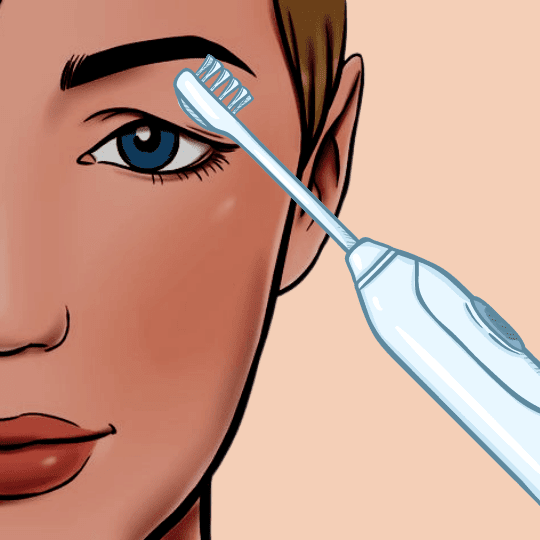
Image: Stimulation of a droopy eyelid with an electric toothbrush
Eyelid resistance training: Blinking while raising your eyebrows and holding them in that position can create resistance for your eyes. This may help strengthen your eyelids.
Gazing: Staring at a particular object with your affected eye/s as long as possible can help reduce ptosis.
Congenital ptosis is not preventable.
Acquired ptosis in some cases (like age, eye trauma, muscle and nerve damage) may not be preventable as well.
Some factors you can change are refraining from alcohol and smoking and maintaining a healthy BMI.
Using spectacles instead of contact lenses and not rubbing your eyes often can also help avoid ptosis.
Shrimps belong to a group of shellfish called crustaceans.
Shrimp allergy is one of the most common food allergies in children and adults.
Shrimp allergy develops when the immune system recognizes certain proteins in shrimps as harmful substances and reacts to them.
This reaction triggers the symptoms of shrimp allergy.
The body’s immune reaction is triggered when the IgE antibodies bind to the proteins in shellfish protein.
There are different proteins (allergens) in shrimp that can cause an allergy.
It is also important to note that an allergy to shellfish like shrimp is confused with an allergy to components like iodine or microbes present in these animals.
Many people who are intolerant to shrimp can confuse this condition with an allergy to the food.
Symptoms of shrimp allergy vary from mild to severe and can affect different parts of the body, including the skin, respiratory system, digestive system, and heart.
Common symptoms of shrimp allergy are:
Shrimp consumption can lead to a severe, potentially fatal allergic reaction called anaphylaxis in some people.
According to a study, in adults with shrimp allergy, the rate of anaphylaxis to shrimp was 42%.
While most people discover their food allergies in their childhood, you can develop an allergy to shrimp as you get older.
Studies estimate that around 60% of people who develop this food allergy get their first reaction as adults.
This may be because not many children eat shellfish.
Shrimp is one of the many shellfish varieties consumed by us.
However, just because you are allergic to shrimp does not mean you will be allergic to all types of shellfish and fish.
It is, however, essential to note that people who may be allergic to crustaceans like shrimp may be allergic to mollusks too.
Speak to your healthcare provider to understand more about your shrimp allergy.
Shrimp allergy is a relatively common food allergy and affects around 2% of the American population.
The exact reason why some people are allergic to shrimp is unknown. However, genetics may have a role to play in the development of shrimp allergy.
The human Leucocyte Antigen (HLA) system is a complex set of genes present on chromosome 6.
These genes give instructions to produce proteins to regulate the immune system.
The HLA system of genes has three classes – HLA-DR, HLA-DQ, and HLA-DP.
rs74995702 is a single nucleotide polymorphism or SNP in the HLA-DR/DQ gene region.
According to a genome-wide association study, people with the G allele of this SNP are at a greater risk of developing shrimp allergy than those with the A allele.
Those with a family history of any allergies are at a higher risk for shrimp allergy.
Among adults, this allergy is more common in women and among children, in boys.
People prone to shrimp allergy who come in close contact with shrimp during cooking, steaming, or frying can develop an allergic reaction.
Fishermen, cooks, shell grinders, workers who process shellfish, and even restaurant staff can develop shrimp allergies due to repeated exposure to it.
Get Insights On Common Allergies From Your 23andMe, AncestryDNA Raw Data!