Sleep fragmentation is one of the symptoms of sleep disorders characterized by repeated, short sleep interruptions during the night, which leads to excessive tiredness during the day.
People with fragmented sleep tend to fall asleep quickly but wake up multiple times during the night for short periods. The other symptoms of fragmented sleep include morning headaches, daytime sleepiness, difficulty in concentrating, and memory lapses.
Fragmented sleep due to situational illness (like a cough or a sore back)is called short-term sleep fragmentation and goes away after some time.
Research studies have documented a greater impact on physical and emotional health when sleep quality and quantity are poor.
How Does Genetics Influence Sleep Fragmentation Risk?
A study reported the genetic and environmental variance in sleep complaints. The proportions were as follows:
1. At 8 years: 63% genetic, 32% non-shared environment
2. At 10 years: 66% genetic, 27% nonshared environment, 7% shared environment
The study also suggests that genetics affects sleep problems more strongly during the preschool/school age (63-69%) . Certain variants in HLA-DQB1, CRY1, and other genes might influence the risk of having fragmented sleep.
The CRY1 gene encodes a protein called flavin adenine dinucleotide-binding, a key component of circadian clock regulation.
Variations in the CRY1 gene are found to be associated with altered sleep patterns.
The rs184039278 is an A>C gain of function mutation located in the CRY1 gene, associated with a prolonged period of circadian molecular rhythms.
A study, Patke, Alina, et al.2017, demonstrated that both CC and AC carriers are strongly associated with late sleep times and sleep fragmentation.
Non-genetic Factors That Influence The Fragmented Sleep Risk
Some sleep-related disorders can result in fragmented sleep. A few examples are:
1. Snoring
2. Obstructive sleep apnea
3. Sleep-maintenance insomnia
4. Restless leg syndrome
Poor sleep is also caused by lifestyle habits such as:
1. Alcohol and caffeine consumption
2. Napping for a long time in the day
3. Exercising close to bedtime
Effects of Sleep Fragmentation on Health
Tips for Managing Sleep Fragmentation
You can follow these tips to have a peaceful night of sleep and avoid sleep fragmentation.
1. Tire yourself out: As fatigue accumulates throughout the day, it’ll be easier to fall asleep in the night.
2. Stay away from distractions: Switch off your phone, wear an eye mask, and shut the windows to prevent your sleep from being disturbed.
Summary
References
https://pubmed.ncbi.nlm.nih.gov/20975052/
https://pubmed.ncbi.nlm.nih.gov/28388406/
https://pubmed.ncbi.nlm.nih.gov/24179306/
Pharmacogenomics, sometimes called as pharmacogenetics, is the study of how genes affect a person’s response to drugs. It is a combination of two fields - pharmacology (the science of drugs) and genomics (the study of genes and their functions).
Just like how genes determine our eye color, height, etc. they also partly influence how our body responds to drugs. Some chemical changes in these genes can elicit unwanted side effects upon drug consumption.
The long-term goal of pharmacogenomic research is to design drugs best suited for each person, in order to avoid these undesirable side effects.
Genes influence multiple steps involved in your response to drugs. They include:
Drug Receptors: Some drugs require a type of protein called the receptors, to which they bind and get activated. Your genes can influence the number and effectiveness of these receptors.
Example: T-DM1 is a drug used to treat breast cancer. This drug works by attaching to a receptor called the HER-2 receptor. However, not all breast cancer cells express this receptor. So, this drug may not be effective for all individuals with breast cancer.
Drug Uptake: Certain drugs are activated only after they are taken into the cells and tissues. If your genetic makeup leads to reduced uptake of the drug, it may accumulate in other parts of the body.
Example: Statins are a class of drugs commonly used to treat high cholesterol levels. For the drug to work, it must be transported to and taken up by the liver efficiently. SLCO1B1 gene influences this process. A change in this gene results in a reduced transport of statins to the liver. This can result in statin buildup in muscles resulting in pain and weakness.
Drug breakdown/metabolism: If your genetic makeup results in a faster breakdown of drugs, it gets clear from the body faster. This may warrant an increased dosage of the drug or a different drug. On the other hand, if your drug metabolism is slow, it stays in your body for a longer period. In this case, a lower dosage may do the work.
Example: Amitriptyline is an antidepressant drug. Two genes, namely, CYP2D6 and CYP2C19, are involved in its metabolism. If you carry a change that slows down or boosts the metabolism, you may need to alter the drug dosage accordingly.
Patients can respond differently to the same medicine.
Commonly used drugs to treat some medical conditions need not be effective for everyone. Some examples are:
- Antidepressants drugs (SSRIs) are ineffective in as many as 38% of patients who are prescribed these drugs
- Asthma drugs are ineffective in as many as 40% of patients who are prescribed these drugs
- Diabetes drugs are ineffective in as many as 43% of patients who are prescribed these drugs
- Arthritis drugs are ineffective in as many as 50% of patients who are prescribed these drugs
- Alzheimer’s drugs are ineffective in as many as 70% of patients who are prescribed these drugs
- Cancer drugs are ineffective in as many as 75% of patients who are prescribed these drugs
- Cardiac Arrhythmias drugs are ineffective in as many as 40% of patients who are prescribed these drugs
Source: Brian B Spear, Margo Heath-Chiozzi, Jeffrey Huff, Clinical application of pharmacogenetics, Trends in Molecular Medicine, Volume 7, Issue 5, 2001, Pages 201-204, ISSN 1471-4914, https://doi.org/10.1016/S1471-4914(01)01986-4.
The purpose of pharmacogenomic testing is to find out if a medication is right for you. A pharmacogenomic test will help in knowing:
Efficacy - Whether a medication may be an effective treatment for you.
Dosage - What is the best dose for you for specific medications.
Toxicity - Whether you could have serious side effects from a medication.
CYP enzymes or the Cytochrome P450 enzymes are the major drug-metabolizing enzymes in the body. The P450 enzymes contain a protein called heme (iron-containing compound) and are commonly present in hepatocytes (cells of the liver). This is why drugs are mostly broken down or metabolized in the liver.
From a clinical perspective, the most commonly tested CYPs are:
- CYP2D6
- CYP2C9
- CYP2C19
- CYP3A5
Changes in CYP enzymes can influence the metabolism and clearance of drugs.
The CYP450 Test categorizes individuals into one of the four known metabolic profiles, called “predicted phenotypes.”
What are the limitations of a CYP test?
- Pharmacogenomic research is still in its infancy. Therefore, tests are available only for certain drugs.
- Any change in medication will require a new CYP test - this is because different enzymes are responsible for metabolizing different drugs
- The test reveals how genes affect the drugs and not what the drug does to the body (for example, we cannot determine how the drugs change certain receptors in the brain to alleviate the symptoms)
- Some drugs are metabolized and cleared by more than one CYP enzyme. For example, antidepressant drugs like the SSRIs (Selective Serotonin Reuptake Inhibitor) are metabolized by serotonin receptor molecules as well. This can limit the predictive value of the test.
Who should take the PGx test ?
If you answer yes to any of the below questions, you are an ideal candidate for a PGx test.
1. Are you currently taking four or more medications monthly?
2. Have you or anyone in your family ever been hospitalized for taking medication?
3. Have you or anyone in your family ever felt ill after taking a new medication?
4. Has your doctor changed your dose of medication due to a lack of response or a reaction to the medication?
5. Do you take your prescribed medication, and you still aren’t feeling better?
6. Are you taking or is your doctor considering prescribing to you pain medicine, tamoxifen, or Plavix?
7. Do you take herbal supplements regularly in addition to your medication?
References:
The COMT gene is responsible for producing an enzyme called catechol-O-methyltransferase. This enzyme helps in the breakdown of catecholamines, thereby inactivating them. Catecholamines, termed as fight or flight hormones, include dopamine, epinephrine, and norepinephrine. They are produced in response to stress. They are responsible for increasing heart rate, blood pressure, breathing rate, muscle strength, and alertness. They also play a role in increasing blood flow to major organs like the brain, heart, and kidneys.
COMT is one of the enzymes involved in the breakdown of dopamine in the brain. This occurs in the prefrontal cortex of the brain. This part of the brain is involved in cognitive function and decision making.
COMT gene comes in two main variants - one that breaks down dopamine quickly and the other one that breaks it down slowly.
One variant produces high levels of the enzyme, which breaks down dopamine faster, leading to its lower levels in the brain.
The other variant produces lower levels of the enzyme, which results in slower breakdown of dopamine, resulting in its higher levels in the brain.
The COMT gene variants are influenced by the allele present at rs4680.
rs4680, also called Val158Met, is a well studied SNP in the COMT gene.
The G allele here is associated with higher COMT enzymatic levels compared to the A allele.
The presence of two A alleles at rs4680 results in lower enzyme activity. This leads to dopamine build-up in the brain. People with the AA type are more susceptible to stress, anxiety, and pain and are called “worriers.”
The presence of two G alleles at rs4680 leads to elevated enzymatic levels. This results in faster breakdown of dopamine. People with the GG type clear dopamine quickly at times of stress and can fight it out better. They are referred to as the “warrior.”
There’s also a third and much less discussed variant. Here, there’s one copy of the A allele and one copy of the G allele at rs4680. People with the AG type have lower dopamine levels than the AA type and higher levels than the GG type.
They are assigned a status that’s between a worrier and a warrior. The outcome of AG genotype can be as follows:
A higher likelihood of warrior personality (compared to AA type);
A higher likelihood of worrier personality (compared to GG type)
| Genotype | Implication |
| AA | Higher levels of dopamine |
| AG | Intermediate levels of dopamine (lower than AA genotype and higher than GG genotype) |
| GG | Low levels of dopamine |
Despite the negative connotation to the word “worriers,” these people are at certain advantages as well. They are known to be:
- better verbal memory and reading comprehension
- a more positive outlook towards life
Dopamine promotes the feeling of pleasure and reward, which can help with better attention and memory. Some ways of boosting dopamine levels include:
- Increasing protein intake
- Consuming probiotics
- Exercising
- Enough sunlight exposure
- Getting adequate sleep
Higher dopamine levels have been associated with addiction and mental disorders like ADHD, obsessive-compulsive disorder, and schizophrenia. The “reward” feeling elicited by dopamine makes you want ‘more of something.’ When the levels of dopamine are higher than normal, this behavior can result in addiction.
- Inhaling lemon essential oil speeds up the breakdown of dopamine and contributes to anti-anxiety and antidepressant effects.
- Tryptophan and 5-HTP are two amino acids that deplete excess dopamine. They are available as supplements. However, it is important to consult a qualified medical practitioner before getting started on any supplements.
- Licorice root, a common ingredient in candies, is being studied for its antidotal properties for cocaine addiction, as it blocks dopamine production. However, the US FDA mentions that licorice containing food must be consumed in moderation.
- Vitamin B6 is a cofactor required for dopamine synthesis. Dopamine toxicity has been managed in animals by vitamin B6 administration.
1. COMT gene encodes the enzyme catechol-O-methyltransferase that is involved in the metabolism of catecholamines like dopamine, epinephrine, and norepinephrine.
2. COMT gene has two variants - one that breaks down dopamine quickly, and the other that breaks it down slowly.
3. rs4680, also known as Val158Met, is an SNP in the COMT gene. The G allele of this SNP is associated with higher enzymatic levels compared to the A allele.
4. People with AA type have higher levels of dopamine. They don’t perform well under stress and are called worriers. People with the GG type have lower dopamine levels. They perform better in stressful situations and are called warriors.
5. The third type, AG, is associated with intermediate dopamine levels. People with the AG type are assigned a status that is between a worrier and a warrior.
6. Levels of dopamine can be increased naturally by getting adequate sleep, exercising, sunlight exposure, consuming probiotics, and more protein.
7. Inhaling lemon essential oil, consumption of licorice root, and other supplements can help deal with high dopamine levels.
1. https://www.snpedia.com/index.php/Rs4680
2. https://www.ncbi.nlm.nih.gov/pmc/articles/PMC3991696/
3. https://pubmed.ncbi.nlm.nih.gov/24782743/
4. https://pubmed.ncbi.nlm.nih.gov/24853458/
5. https://pubmed.ncbi.nlm.nih.gov/24225542/
6. http://www.haskins.yale.edu/Reprints/HL1712.pdf
7. https://pubmed.ncbi.nlm.nih.gov/17687265/
8. https://pubmed.ncbi.nlm.nih.gov/16780969/
9. https://www.sciencedaily.com/releases/2009/02/090218223504.htm
10. https://pubmed.ncbi.nlm.nih.gov/2035239/
Orig3n was co-founded by Robin Smith and Kate Blanchard in 2014. Headquartered in Boston, Massachusetts, the company prioritizes personalized cures.
It provides a range of DTC (direct-to-consumer) DNA tests, houses its on-site laboratories for analysis of samples, provides services on a mobile app, and manages a vast human cell bank where regenerative therapies are researched.
Currently, Orig3n has moved its services to Seaport Diagnostics.
Vitamins DNA Test
Orig3n’s Vitamins DNA Test examines the extent of genetic influence on the absorption of vitamins and minerals from food. Additionally, it also recommends food items that need to be added to the diet. The Vitamins DNA Test also comes with a personalized vitamins plan.
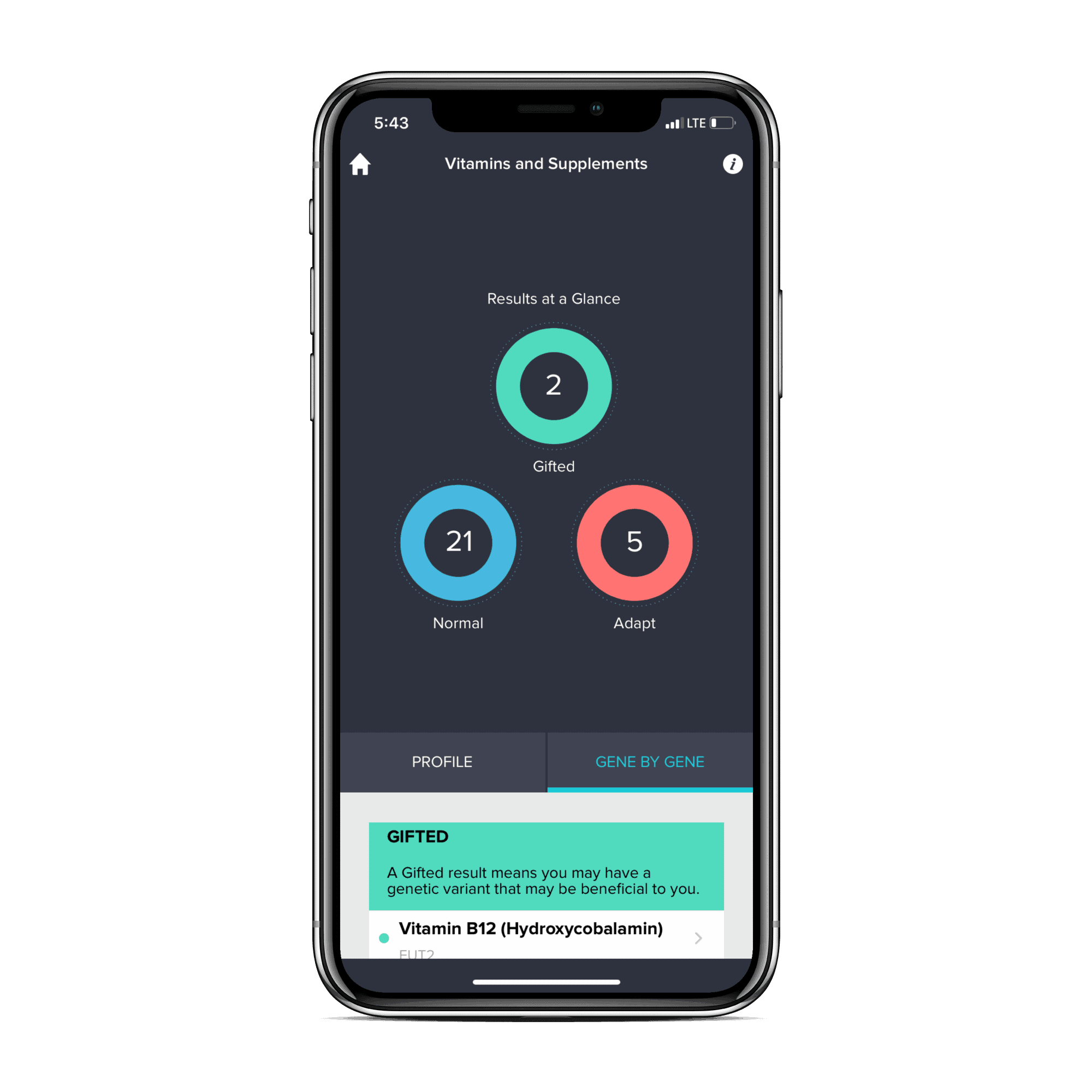
Image: Orig3n's (Seaport) Vitamin DNA test result snippet
Personalized Vitamins
Orig3n’s most unique offering is its Personalized Vitamins service. This service is entirely based on each client’s genetic makeup and hence is personalized for each client. Additionally, all the required vitamins and minerals are packaged in one tablet for each dosage. The Vitamins DNA Test service is provided free upon getting a subscription to personalized vitamins.
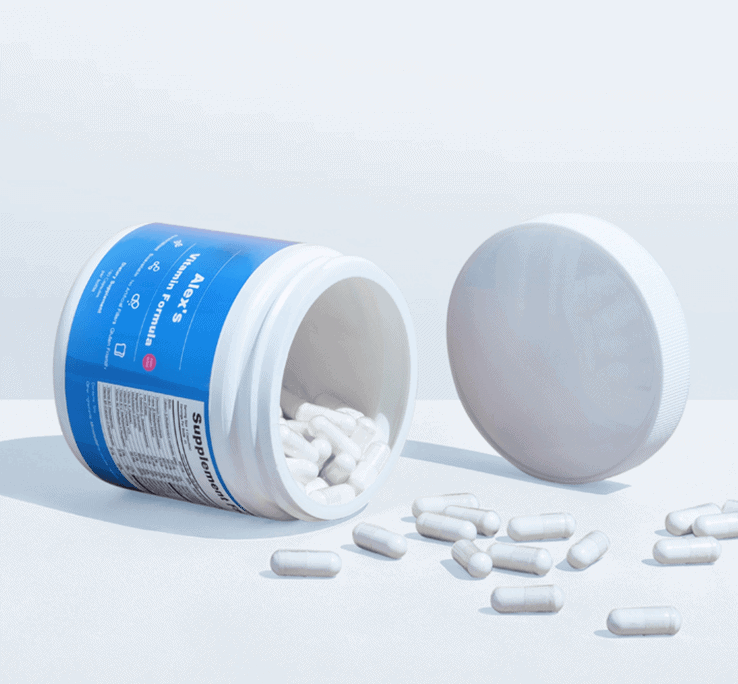
Image: Orig3n's (Seaport) Personalized Vitamins test result snippet
Fitness DNA Test
Orig3n provides a Fitness DNA test that analyzes genes that affect fitness potential and offers insights to gain maximum benefits from the workout regime. A subset of Fitness DNA tests can be found as Joint Care DNA Test, Metabolism DNA Test, and Recovery & Renewal DNA Test.

Image: Orig3n's Fitness Test Kit
Check Out: Xcode Life’s Gene Fitness Report - 24+ traits - $30
Nutrition DNA Test
Orig3n's Nutrition DNA Test aims to deliver insights into the genetic influence on how the body reacts and absorbs nutrients from food. Additionally, it gives personalized information about foods that may be beneficial or harmful to you. Orig3n also provides a subset of Nutrition DNA tests, such as Hunger & Weight DNA Test, Lactose Intolerance DNA Test, and Caffeine Tolerance Test.
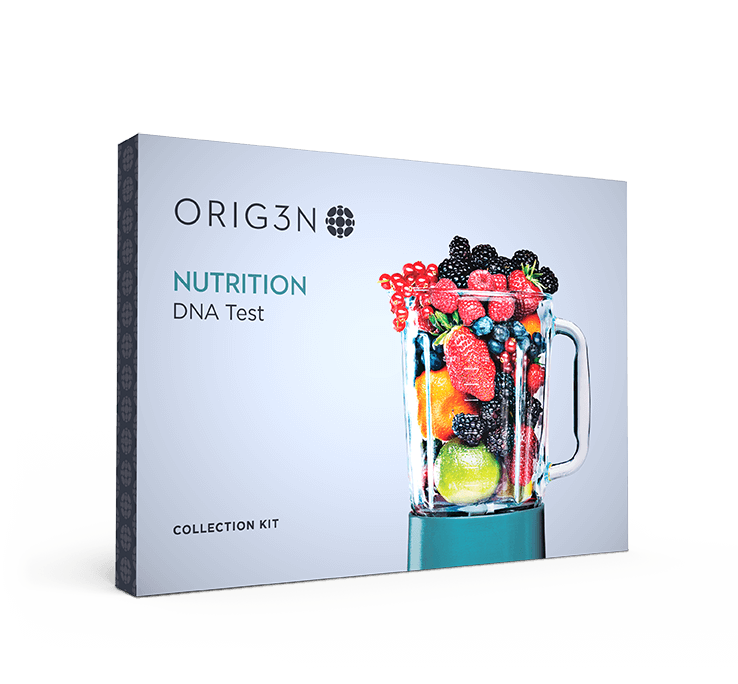
Image: Orig3n's Nutrition Test Kit
Check Out: Xcode Life’s Gene Nutrition Report - 45+ traits - $40
ALDH2 Deficiency DNA Test
The ALDH2 Deficiency DNA Test informs about changes in the ALDH2 gene and its influence on how the body breaks down acetaldehyde.
When you drink alcohol, it gets converted to aldehyde first, which in turn gets converted into acetic acid for elimination. Aldehyde is a harmful intermediate that needs to be immediately broken down.
ALDH2 produces an enzyme called aldehyde dehydrogenase that breaks down acetaldehyde (toxic) produced.
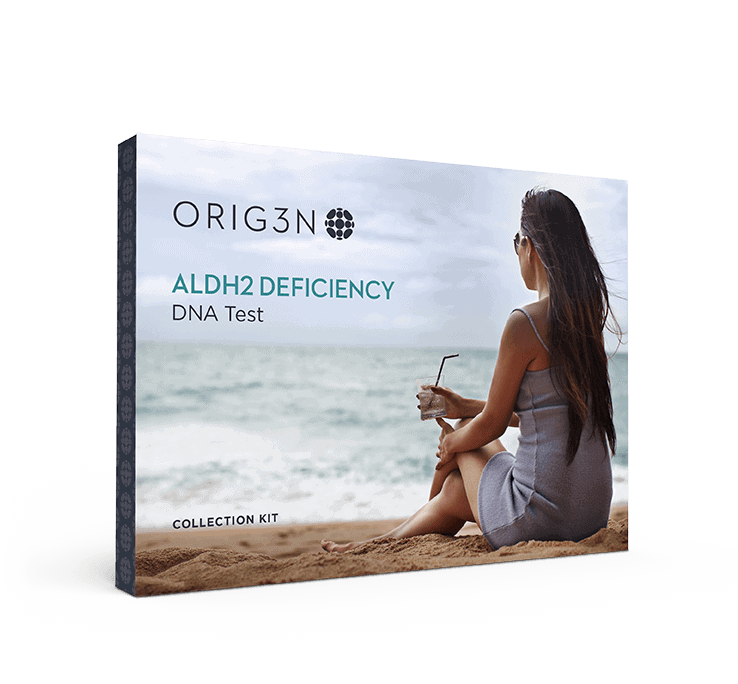
Image: Orig3n's ALDH2 Deficiency Test Kit
Beauty DNA Test
Orig3n’s Beauty DNA test is a gene profile that gives information about the genetic influence on how hair and skin may look or feel and the best care to follow, which is individually suited. In addition, a subset of Beauty DNA tests like Hair DNA Test, Skin Aging Test, Skin Health & Appearance DNA Test, and Recovery & Renewal DNA Test is also offered.

Image: Orig3n's Beauty DNA Test Kit
Check Out: Xcode Life’s Gene Skin Report - 24 traits - $30
Behavior DNA Test
Orig3n's Behavior DNA test provides insights into the genetic roleplay on personality - how an individual thinks, feels, acts, and reacts.

Image: Orig3n's Behavior DNA Test Kit
Check Out: Xcode Life’s Personality Report - 25+ traits - $30
Child Development DNA Test
Orig3n's Child Development DNA test delves into aspects like fitness and innate abilities for language & learning of your child. The test promises a lifelong journey of discovery for you and your child.
Run DNA Test
The Run DNA test is a multi-gene profile offering from Orig3n which involves personalized information on how genes influence your running performance, development, and recovery.
Image: Orig3n's Run DNA Test Kit
Superhero DNA Test
The Superhero DNA test is a fun DNA test offered from Orig3n, which lets the client tap into his hidden superpower that ranges from above-average intellect to physical dexterity.
Orig3n’s Seaport Diagnostics provides a few diagnostic testing services in addition to consumer genetic testing services.
COVID Testing
Seaport Diagnostics provides COVID testing services to employers & institutions, schools & universities, and manufacturing sectors. Test results are delivered within 24-36 hours from the time of sample reception at the labs.
Respiratory Panel
The Respiratory Pathogen Panel tests for many viral, bacterial, and fungal pathogens that cause respiratory infections. Sample collection requires a simple nasopharyngeal swab, and results are available within 24 hours on the client dashboard.
UTI (Urinary Tract Infection) Panel
The Molecular UTI Panel uses PCR (Polymerase Chain Reaction) technique to pinpoint urinary tract pathogens. This panel provides faster results than the traditional cultures screening method. Further, the test also includes antibiotic resistance markers, which help physicians in medication prescription.
HbA1c Testing
The HbA1c testing service info is available only upon filling a request form. This test is provided for facilities or organizations.
Orig3n’s blog service covers a wide range of topics, including DNA Science, Regenerative Medicine, Lifestyle, Events, Brand, Products, and Science.
Orig3n reports represent the analysis information as either normal, adapt, or gifted. "Normal" serves as a positive result, whereas "adapt" represents the negative result.
The ALDH2 deficiency test analyzes genes concerned with alcohol tolerance (ALDH2) and vitamin A (BCMO1) and vitamin C (SLC23A1) levels.
The Beauty DNA test analyzes genes involved in key traits like:
Image: Orig3n's (Seaport) beauty test result snippet
Behavior DNA report includes analysis of behavioral facets like:
The Child Development DNA report contains information about:
The Fitness test report includes:
The Nutrition test report includes genetic analysis of key nutritional aspects like:
The Run DNA test report contains analysis information about traits that includes:
The Superhero DNA test looks at aspects like:
Image: Orig3n's (Seaport) Superhero test result snippet
| Service | Pricing |
| Vitamins DNA Test | $49 |
| Personalized Vitamins | $59/month (1-year subscription)$69/month (6-month subscription)$79/month (3-month subscription) |
All the rest of the primary and subset tests are currently unavailable. However, clients can register their mail ID on the site to get notified when the tests become available again.
Orig3n claims that user privacy is of utmost importance, and only the users are the sole owners of information and hold the right to use the data as they want.
Orig3n collects "genetic and personal information, usage information, user-generated content, and voluntarily provided information."
Orig3n retains genetic information generated for use during additional purchases. The user can choose to delete the information by writing a notice to Orig3n.
For more info on Orig3n's privacy policy, click here.
Orig3n has been under intense scrutiny since late 2019 when former employees whistleblowed on activities going on in the company. These employees alleged that Orig3n tampered with test results to compensate for negative outcomes. Even samples were contaminated or were handled poorly, which gave false results.
Articles claiming that the government saying that Orig3n’s labs are not CLIA-certified surfaced.
In August 2020, Orig3n’s COVID-19 testing services were banned on the grounds of the generation of over 300 false positives. This directly led to the unavailability of the company’s products on the website. Further, the company labs’ licensing is in peril on account of the COVID testing fraud.
On dnatestingchoice, Orig3n has the 44th rank out of 121 in the health testing sector.
Innerbody research strongly recommends against availing any of Orig3n’s services due to breach in test sample and test result tampering.
Amazon has 156 reviews with average rating of 2.5/5
| Orig3n | Xcode Life | |
| Type of genetic testing | DNA kit and analysis | DNA raw data analysis |
| Health report | Not Offered | Offered |
| Pharmacogenomic report | Not offered | Offered |
| Nutrition report | Offered | Offered |
| Raw data upload | Unavailable | DNA raw data from all major providers accepted. Comprehensive list |
| Number of reports | 08 + 09 mini test reports | 12 |
| Report updates | No | Yes |
| Price | Each report $99 - $149 (only 4 reports available) | Each report: $30-$50 Bundles (up to 10 reports): $160-$199 Price details |
| Sample reports | Sample videos of tests | Available as detailed report walkthrough videos |
According to a research study by the University of Exeter Medical School in the United Kingdom, men with hemochromatosis, a common genetic disorder due to iron build-up, are ten times more likely to develop liver cancer.
Hemochromatosis, also called the iron-overload disease, is a condition where too much iron builds up in the body. Usually, the intestines absorb adequate amounts of iron and excrete the rest.
With hemochromatosis, excess iron is absorbed by the intestines, and the body has no way of getting rid of it. As a result, iron gets built up in joints, the pituitary gland, and organs like the liver, heart, and pancreas.
This gradually results in the shutting down of these organs if hemochromatosis is not treated.
Hemochromatosis is more serious in men. Women may be partially protected as they lose some iron during menstruation and childbirth.
Some common symptoms associated with hemochromatosis include:
HFE gene is associated with iron homeostasis. A variant (type) of the HFE gene, called the C282Y (the faulty type), is significantly associated with hereditary hemochromatosis.
According to a study published in the American Journal of Human Genetics, the C282Y variant contributes to 26% variation in ferritin levels among monozygotic twins.
With hemochromatosis, the iron build-up is commonly seen in the liver. This enlarges the liver and messes up the liver enzymes. It can result in an increased risk of liver conditions like cirrhosis, fibrosis, and cancer.
Hepatocellular carcinoma (HCC), a primary form of liver cancer, was the first condition in which hepatic iron overload was shown to predispose to the development of HCC.
According to a study, 8-10% of people with hemochromatosis develop HCC.
The study was led by the University of Exeter Medical School along with the University of Connecticut, Western University in Ontario, and South Warwickshire NHS Foundation Trust.
This study focused on men and women with two copies of the faulty HFE gene - C282Y. The data of 2890 people aged 40-70 years were analyzed over a nine-year period.
The following were observed:
The study insists on the importance of early diagnosis of hemochromatosis in order to avoid health complications and even death.
The NHS advises that “it is important to talk to your GP if you have a parent or sibling with hemochromatosis, even if you don’t have symptoms yourself” to identify your risk.
The lack of impact on women from the faulty HFE gene variant may suggest that periodic blood donations might play a protective role.
GeneSight, founded in 2014, is a clinical genomic testing company that analyzes how genes influence your responses to mental health medications.
This pharmacogenomics company attempts to provide DNA-based recommendations for certain medications.
GeneSight is a part of a biogenetic company, Myriad Genetics. Myriad was founded by previous CEO and President Peter Meldrum, Walter Gilbert, Kevin Kimberlum, and Mark Skolnick. It is currently led by CEO and President Paul J Diaz.

GeneSight offers 2 tests for its users:
The GeneSight Psychotropic test examines your genetic makeup and provides insights into how likely your body may respond to medications that are used to treat mental health conditions like depression, anxiety, and ADHD.
This information can help your clinician alter your dosages and recommend an alternative drug, if required, to minimize the side effects.
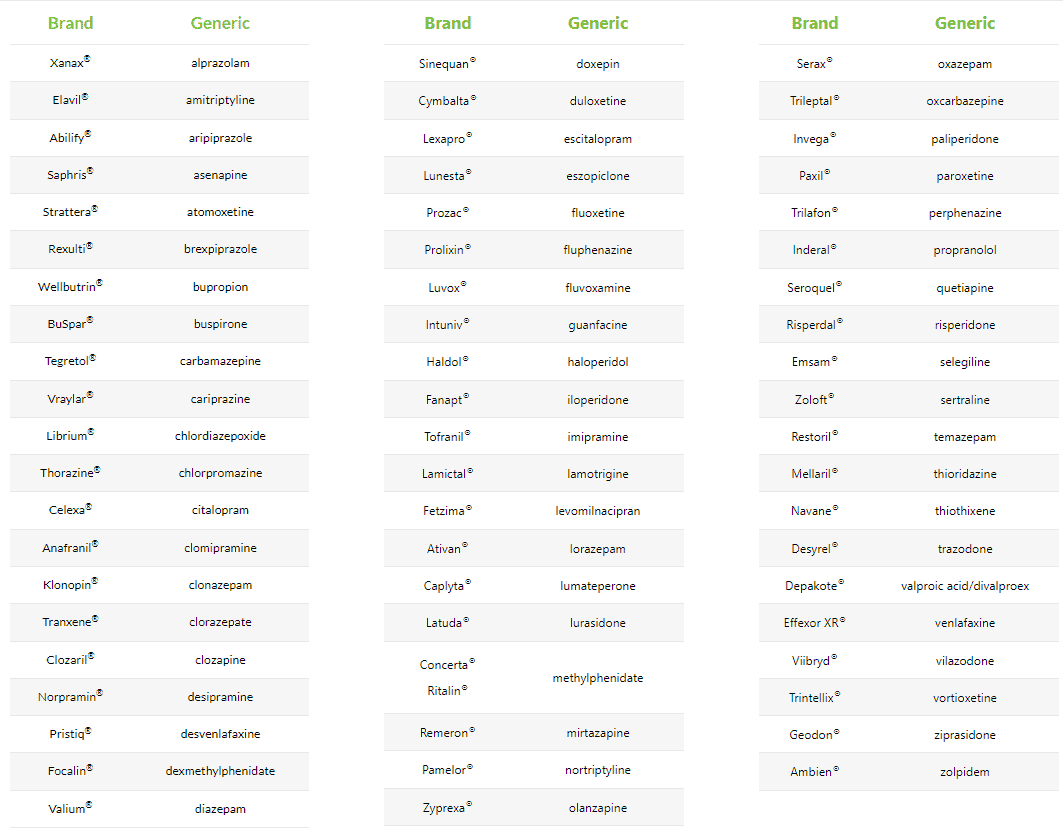
Image: Drugs covered in GeneSight Psychotropic Report
Check Out: Xcode Life's Personalized Medicine Report - 500+ drugs, $50
MTHFR (methylenetetrahydrofolate reductase) enzyme is very crucial for converting the inactive form of vitamin B9, folate, or folic acid, to the active form.
The active form is called L-methylfolate. This test examines whether a person carries any changes in the MTHFR gene that may interfere with conversion and lead to vitamin B9 or folate deficiency.
Check Out: Xcode Life's MTHFR and Methylation Report (15 genes) - $30
Users cannot directly place an order for the DNA test kit. It must be done through a doctor or nurse practitioner.
Specimen collection (cheek swab) can either be done by the clinician or at home - in the latter case, your clinician can have the kit directly shipped to your home.
Once the sample is collected, it needs to be sent to the lab for analysis. The results are typically available after 2 days.
The results are sent to the healthcare provider who placed the order. Only after they consult with the company to understand the information can they communicate the results to their patients.
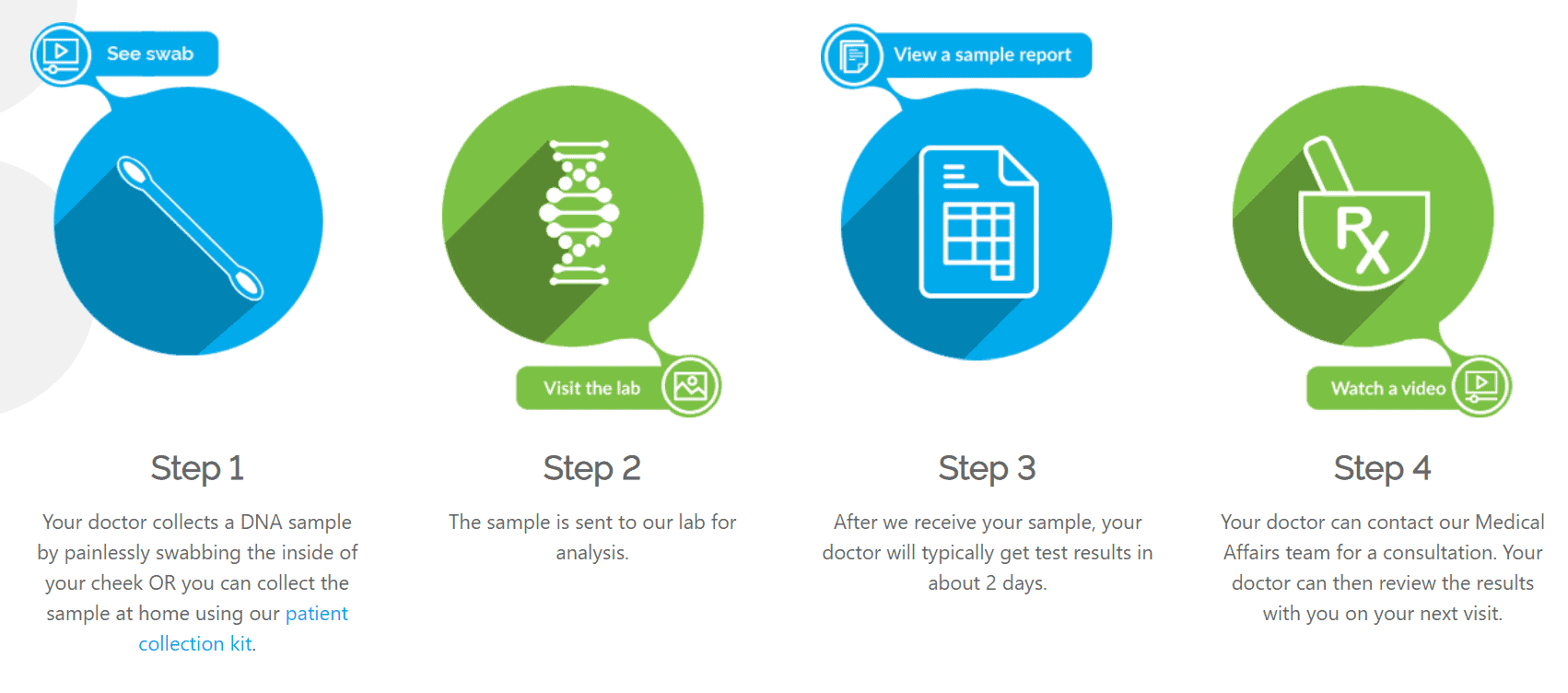
Image: GeneSight Ordering Process
The genetic testing reports differ for the two tests.
The 12-page Psychotropic Report analyzes two sets of genes to provide information on how likely you are to respond to certain medications.
Pharmacokinetic Genes
These genes influence how your body acts upon medications; they influence the transport and metabolism of the drugs.
Pharmacodynamic Genes
These genes influence how the medication may affect the body - side effects, risk of addiction, etc.
The first few pages of the report categorize different drugs based on how the genetic influence exerted on them:
Use As Directed: No known association with genetic issues
Moderate Gene-Drug Interaction: Maybe less likely to work or less efficient
Significant Gene-Drug Interaction: Maybe less likely to work and may cause side effects
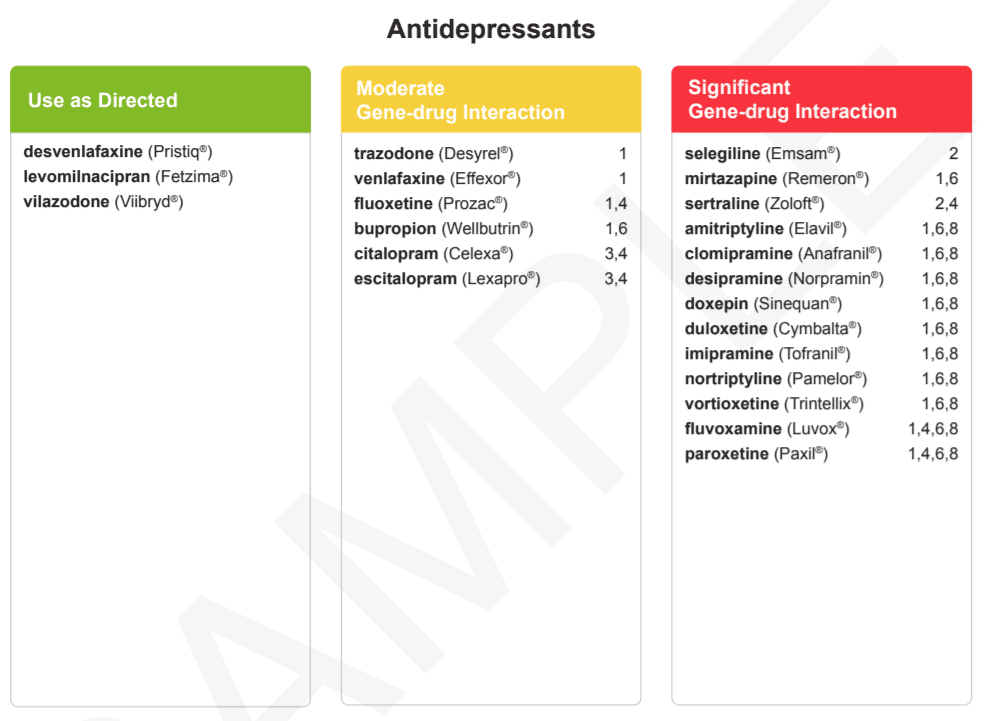
Image: Snippet from GeneSight's Psychotropic Sample Report
It is followed by the "Clinical Considerations" section to be reviewed by the clinician. The clinical considerations explain why a medication is listed in a particular category and how it must be administered if the patient wishes to pursue the treatment.
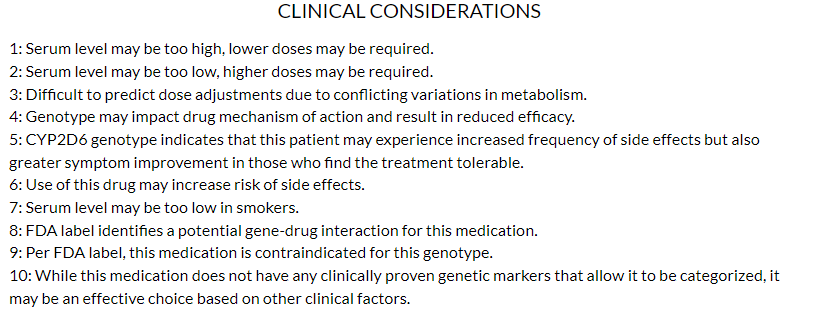
Image: Snippet from GeneSight's Psychotropic Sample Report
The following two pages provide information about the genotypes and phenotypes of the patients, which are of medical importance.
The first page contains information about pharmacodynamic genes and their relation to specific disorders.
Image: Snippet from GeneSight's Psychotropic Sample Report
The second page contains the same information regarding pharmacokinetic genes.
Image: Snippet from GeneSight's Psychotropic Sample Report
The report also includes information on other genotypes that do not have a strong association with medication outcomes.
The last section of the report is the "Gene-drug Interactions." This is a comprehensive overview of which genes interact with which drugs and affect their functioning. The section is broken down into 3 segments - Use as directed, Moderate gene-drug interaction, and Significant gene-drug interaction.
A filled circle means that the particular gene interacts with the functioning of that particular drug. An empty circle indicates no interaction.
Image: Snippet from GeneSight's Psychotropic Sample Report
The compact 1-page MTHFR Report isn't all that informative. It reports the patient's MTHFR genotype along with how efficiently they convert inactive folic acid to active folic acid or L-methylfolate.
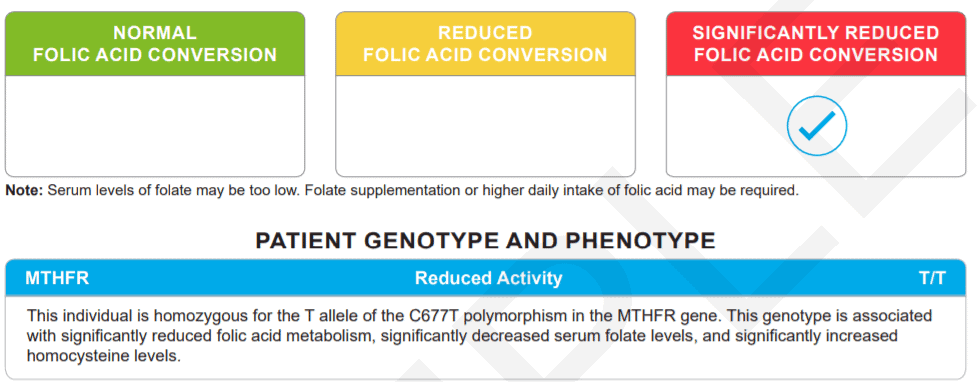
Image: Snippet from GeneSight's MTHFR Sample Report
GeneSight claims that 95% of their users pay $330 or less for the test. If the cost exceeds that amount, the company will call the patients.
Medicare/Medicaid - Full testing cost covered
Medicare Advantage Covered Tests and Other Insurance - You may need to pay $330 or less
Uninsured - Cost varies - financial assistance may be provided for some
Once they receive the sample, the cost is confirmed. If it exceeds $330, the patients receive a call from the company. The company then submits the claim to the insurance company and checks for eligibility for financial assistance. Patients then receive an explanation of benefits from their insurance company before receiving a bill.
Image: GeneSight Pricing and Insurance Claim
As Genesight is a part of Myriad Genetics, the privacy policy of Myriad Genetics applies to Genesight.
Myriad collects a selection of names, email addresses, phone numbers, addresses, personal or family health histories, as well as employment and insurance information for marketing, advertising, and service improvements.
The company clarifies that they share and disclose some information to third parties. Those companies are under Myriad's security and privacy policy to secure client information.
For more information, read the company's privacy policy
Myriad launches new psychotropic patient collection kit
Barrons: Myriad Genetics stock has an FDA issue
GeneSight Mental Health Monitor shows misunderstanding of depression and treatment
GeneSight reviews on Facebook (5/5 based on 5 reviews)
| Genesight | Xcode Life | |
| Type of genetic testing | DNA kit | DNA raw data analysis |
| Health report | Not Offered | Offered |
| Pharmacogenomic report | Offered | Offered |
| Raw data upload | Unavailable | DNA raw data from all major providers accepted. Comprehensive list |
| Number of reports | 2 | 10 |
| Report updates | No | Yes |
| Report categories | Personalized medicine and MTHFR reports | Nutrition, Fitness, Skin, Allergy, Health, Personality, Breast Cancer, MTHFR, Personalized Medicine, Sleep Genetic Reports |
| Price | ~$300, higher or lower in some cases depending on insurance coverage | Reports: $30-$50Bundles: $160-$199Price details |
| Sample reports | Available as PDF | Available as detailed report walkthrough videos |
| Personalized blog posts | No | Yes |