Whole grains (WG) offer a complete package of health benefits, unlike refined grains (RG), which are stripped off of valuable nutrients during the refining process. RG intake is associated with adverse health outcomes, including increased risk for cardiovascular diseases, type 2 diabetes, and obesity. Therefore, choosing WG over RG grains improves health in many ways. In this regard, a recent study has found that WG intake is tied to fewer heart disease risk factors.
WG comprises all the three parts of the grain, i.e. endosperm, germ, and bran.
They have been a part of the human diet for thousands of years.
They are a rich source of carbohydrates, multiple nutrients, and dietary fiber.
Some Of The Common Varieties Of WG Include:
Consumption of fiber-rich foods offers not only high nutrition but also prevents overeating.
WG and their products are more nutritious than RG and thus lower the risk of obesity.
The magnesium found in WG helps your body to break down carbs.
This helps increase insulin sensitivity, thereby, reducing the risk of type 2 diabetes.
According to research, WG bread and cereals are specifically linked to reduced risk of heart disease and stroke.
Framingham Offspring Cohort Study examined the association between WG and RG intake in 3121 participants.
The changes in waist circumference (WC), fasting HDL, triglycerides, glucose concentration, and blood pressure of the participants were recorded.
Replacing RG with WG among middle to older-aged adults can be an effective dietary change to reduce the risk of cardio-metabolic diseases.
https://medicalxpress.com/news/2021-09-grain-intake-tied-heart-disease.html
https://www.webmd.com/food-recipes/features/reap-the-benefits-of-whole-grains
https://pubmed.ncbi.nlm.nih.gov/27301975/
Dermatoglyphics is the study of fingerprints and ridges in our palms and soles. Fingerprints are critical areas of interest under research as they are unique and reveal an individual’s true identity. However, only a little is known about the reason behind the variation of fingerprint patterns. A recent study by the researchers at the Shanghai Institute of Nutrition and Health has revealed that genes involved in limb development influence the fingerprint patterns in humans.
Fingerprints are the patterns formed by ridges on the surface of our fingertips, palms, and the soles of our feet.
The number, shape, size, and position of the ridges do not change even when we grow up.
The patterns are contrasting for every individual.
It is fascinating that no two fingerprints can be the same, even in the case of twins.
The ridges on our hands and feet develop in the growing fetus from approximately 8 - 18 weeks of embryonic development.
The fingerprints are generally classified into three types: Whorls, Loops, and Arches. Loops represent staple-shaped ridges.

Image: Types of fingerprints
They are further organized into radial, ulnar, double, and central pocket loops.
The most common pattern is the loops, constituting 65% of the total fingerprint patterns. At the same time, the arches are the least common pattern.
The limbs develop from a circular structure called limb bud in the embryo.
The limb bud develops during the 4-8 weeks of embryonic development. After the eighth week, the limbs begin to enlarge in size.
The BMP4 gene contains instructions for producing bone morphogenetic protein 4.
It regulates the formation of limbs and is essential for osteoblast (bone cells) differentiation.
Did You Know: The BMP4 gene contributes to Achilles Tendinopathy Risk
The EVI1 gene produces an essential protein for appropriate murine and human development.
They are also responsible for limb development and oocyte development (egg cells) in the ovary.
The study led by Wang and his colleagues found that limb development genes influence the variations in human fingerprint patterns.
The study was published in the journal of Cell Press and reported that the genes underlying limb development are not linked to skin formation but rather to fingerprint formation.
The team began by scanning the DNA of 23,000 participants to detect the genetic basis of the finger patterns and found that at least 43 genomic regions were related to limb development.
The team concentrated on the EVI1 gene - a primary limb development gene in humans to confirm the finding.
But, first, they modified the expression of EVI1 in mice.
They found that the mice with altered EVI1 levels developed abnormal skin patterns compared to normal mice.
The finding suggests that EVI1 is responsible for influencing fingerprint types in humans and hence holds up the idea that fingerprint patterns are related to finger length.
The exact mechanism by how the genes determine the fingerprint patterns is still unknown.
But research suggests that the shapes of the volar pads influence where and what type of fingerprint forms.
Volar pads are transient swellings of tissue on the palmar surface of the hands and soles of the feet of the developing baby.
https://www.sciencedaily.com/releases/2022/01/220106111552.htm
https://hastingsmuseum.org/wp-content/uploads/2020/05/Fingerprint-Info-Activities.pdf
Breast cancer is the second most common cancer in women after leprosy. In America, breast cancer is among the top causes of cancer-related deaths. The spread of cancer cells from the breast to other organs is also a concerning case as it is the leading cause of death resulting from the disease. A recent study has reported that downregulating the gene involved in the sense of smell can reduce the spread of cancer cells from the breast to the brain.
Receptors are proteins on the cell surface that can selectively receive and bind to specific substances or signals.
Olfactory receptors are proteins present in the nasal cavity playing a pivotal role in the sense of smell.
They recognize and bind to odor molecules entering the nasal activity.
After binding, they send signals to the brain's olfactory system, resulting in odor perception.
There are nearly 400 olfactory receptors in humans to detect odors. Besides recognizing smell, the odor receptors also play a role in specific physiological processes such as cancer.
Receptor genes provide the instructions (encode) for making the receptors.
The olfactory receptor genes are responsible for making the olfactory receptors.
There are nearly 800 genes in the olfactory receptor family, and each gene encodes for each odor receptor; so, we can smell various compounds.
In breast cancer, the breast cells undergo uncontrolled proliferation (growth) resulting in tumors.
It affects both genders, but it is rare in men.
Breast cancer-related complications are among the top causes of death in women.
The study led by researchers at Massachusetts General university has reported that inhibiting the olfactory gene - OR5B21 decreased the spread of breast cancer to other organs, especially the brain.
The Olfactory Receptor 5B21 gene contains instructions for producing olfactory receptor 5B21.
According to research, the gene also acts as an oncogene (cancer-causing gene), driving the movement of cancer cells from one organ to another.
Previous studies have suggested that olfactory genes are known to be overexpressed in various cancers - prostate, melanoma, liver, and lung cancer.
However, the expression of olfactory genes in breast cancer is less studied.
The current study aimed to study the effect of olfactory genes in breast cancer.
The researchers performed the study on animal models with the OR5B21 gene that enhanced the spread of breast cancer cells.
Epithelial cells are a type of cell lining the surface of our body with no differentiation capacity, whereas mesenchymal cells can differentiate into various cell types.
While the study reported that the olfactory gene induces metastasis in breast cancer cells, the exact mechanism behind the metastasis is yet to be studied.
Introducing a molecule that inhibits the action of olfactory genes can pave the way to arrest the metastasis of cancer cells.
A component found in the grape seed extract prolongs the lifespan of mice by nine percent. This chemical appears to destroy the worn-out or senescent cells that form as we age. When used along with chemotherapy, it was observed that this chemical helped improve physical fitness and reduce the tumor size in mice. The findings of this study open up new avenues to treat age-related disorders by reducing inflammation caused due to senescent cells. The results also could prove to be valuable for chemotherapy clinical trials for cancer treatment.
Senescence essentially refers to the deterioration of functional characteristics in living organisms. For example, wrinkle formation is a part of senescence.
The cells in the body typically keep dividing and regenerating.
But, as we get older, the cells stop dividing and, at the same time, do not die.
When these cells gradually accumulate, they release harmful substances and cause inflammation, damaging the neighboring cells.
These cells are called senescent cells.
Senescent cells accumulate with age.
When this happens, it may result in higher levels of senescence-associated secretory phenotype (SASP) proteins.
Researchers believe that SAPS drives the aging process and promotes aging-related illness.
Senescence in aging tissues results in depletion of stem cells and chronic inflammation.
Stem cells are a set of cells from which all the other cells with specialized functions are derived.
Chronic inflammation drives many aging-related diseases.
An aging researcher discovered that injecting 1 million senescent cells into young mice impaired their physical performance compared to the ones who were injected with non-senescent fat cells.
Further, he added that transplanting senescent cells drove almost all the diseases that mice died of in old age.
In another study, the effect of two drugs that were previously demonstrated to selectively kill senescent cells was studied in mice.
The study reported that after just a couple of weeks of receiving the drug, the mice performed better in physical activities.
Additionally, they were 36% less likely to die the following year than those that were injected with the senescent cells but not the drugs.
All this research conclusively proves that senescent cells are one of the biggest contributors to aging.
Senolytics are a class of drugs that work to eliminate senescent cells from the body.
They are being researched to figure out whether they can selectively induce the death or apoptosis of senescent cells and improve health in humans.
A team from the Mayo Clinic in the United States first examined the potential of senolytics as anti-aging agents.
The ultimate promise of senolytics drugs is to be a remedy or cure-all for the ills of aging.
In addition to potentially increasing human lifespan, senolytics are also being recognized for their ability to increase human healthspan.
Healthspan can be defined as the period of one's life that one is healthy - where a person experiences little to no pain, illness, and suffering.
The ability of senolytics to selectively kill senescent cells could be used to treat many age-related illnesses like:
The research published in the journal of Nature Metabolism was carried out by a team of scientists affiliated with a host of institutions in China and the U.S.
The scientists discovered a senolytic compound called procyanidin C1 (PCC1) from grape seed extract.
According to previous research, PCC1 at lower concentrations helps inhibit the effects of senescent cells and, at higher concentrations, kills these cells.
PCC1 is a natural agent with senolytic properties.
Previous research on PCC1 has shown that they offer a lot of health benefits, including cancer prevention and protection against heart diseases and diabetes.
PCC1 is an excellent antioxidant and protects the body against oxidative stress.
Studies have shown that PCC1 can increase the levels of antioxidant enzymes.
Proanthocyanidin, a derivative of PCC1, has 20 times the antioxidant capacity of vitamin C and 50 times the antioxidant capacity of vitamin E.
PCC1 also seems to have anti-cancer properties.
A 2018 study has reported the chemopreventive effect of PCC1 on high-grade prostate cancer.
Research has also shown similar properties of PCC1 in colorectal cancer, lung cancer, breast cancer, and bladder cancer cell lines.
PCC1 has been demonstrated to affect reproductive parameters, development, and fetal health.
However, the exact role played by PCC1 in reproduction and fertility can be identified only with further research.
The researchers designed three sets of experiments to study the anti-aging effect of PCC1 on mice.
Experiment 1
The mice were exposed to a sub-lethal dose of radiation in order to induce cellular senescence.
Half of these mice were then treated with PCC1, while the other half were treated with a vehicle (the control group).
The radiation induced many abnormal body features like excessive amounts of grey hair.
Experiment 2
Older mice were treated with PCC1 or vehicle every 2 weeks for 4 months.
Before the treatment, senescent cells were found in the kidney, liver, lung, and prostate of the mice.
The treatment with PCC1, however, reversed this.
Further, the mice treated with PCC1 also showed increased handgrip strength, walking speed, endurance, activity levels, and balance compared to the ones that received the vehicle.
Experiment 3
The third experiment looked at the longevity of the mice that received PCC1.
It was observed that mice treated with PCC1 lived, on average, 9.4% longer than the ones that received the vehicle.
They also did not develop any serious age-related illnesses.
Any positive animal study results must always be taken with a grain of salt.
Usually, doses given to mice in an experiment, are much more than what humans can tolerate.
In this case, the same dose of PCC1, if given to humans, may result in toxicity.
Studies on rats could provide results more similar to humans’ as they metabolize drugs much as humans do.
Procyanidin is widely distributed in legumes, fruits, grains, and leaves.
Some common foods sources that contain high amounts of procyanidin are:
It is also found in lower amounts in foods like:
Other anti-aging foods that are loaded with antioxidants and other nutrients that help fight inflammation and other age-related conditions are:
COPD refers to a group of lung disorders that are caused due to obstructions in your respiratory tract that block airflow making it difficult to breathe.
COPD is the third leading cause of death worldwide.
The airways and air sacs in our respiratory system are like balloons.
They expand to accommodate the air that flows in and contracts to expel out air.
In COPD, the air flowing in and out is reduced due to one or more of the following:
There are two main types of COPD.
Emphysema
In emphysema, there’s damage to the air sacs and the walls that separate them.
There’s also a loss in elasticity of the sacs.
Bronchitis
Irritation and inflammation of the lining of the airways result in swelling and excess mucus production.
Most respiratory conditions present with a consistent set of symptoms that include:
Certain groups of people are more prone to COPD than others.
While environmental and lifestyle factors strongly influence COPD risk, emerging research suggests that certain genes play a vital role in this condition’s susceptibility.
Further, it’s been demonstrated that 8% of US FDA-approved drugs target molecules with genetic support from research studies.
The SFTPD produces the surfactant protein D (SP-D) primarily in the lung.
It regulates pulmonary surfactants (a mixture of specific proteins, lipids, and carbs that help the functioning of air sacs), lipid homeostasis, and innate immunity.
Serum SP-D levels are associated with COPD.
According to a Mendelian study, people with certain changes in the SFTPD gene had higher SP-D levels and a lower risk of COPD.
The ATP2C2 gene also influences COPD risk in a similar manner to the SFTPD gene.
It produces a protein called ATPase Secretory Pathway Ca2+ Transporting 2 that influences the SP-D levels.
More than 25 such genes influence COPD risk. You can get them all analyzed with the Gene Health Report.
COPD can result in several health complications.
Some of them are:
Along with some medical and family history, an array of tests like lung function tests, chest X-rays, CT scans, and other blood tests may be used to diagnose COPD.
There are several options for treating COPD.
Medications
Antibiotics and bronchodilators are some of the medications used to treat various symptoms and complications like infections and breathing difficulties.
Pulmonary Rehab
These programs combine nutritional and psychological counseling, exercises, and disease management training.
Supplemental Oxygen
Those with low oxygen saturation levels can benefit from the extra oxygen.
Lifestyle Changes
Quitting smoking and avoiding other pollutants at home and work can help alleviate the symptoms considerably.
ACE inhibitors (Angiotensin-Converting Enzyme inhibitors) are drugs used to relax the veins and arteries in order to lower blood pressure. They also help reduce blood volume and the heart’s demand for oxygenated blood.
ACE inhibitors bring down the activity of the angiotensin-converting enzyme. This enzyme controls fluid volumes in the body. It converts a hormone called angiotensin I into a more active form called vasoconstrictor angiotensin II.
This conversion causes constriction of blood vessels and increased blood flow. These lead to an increase in blood pressure.
ACE inhibitors reduce the conversion of angiotensin I into vasoconstrictor angiotensin II and hence relax blood vessels.
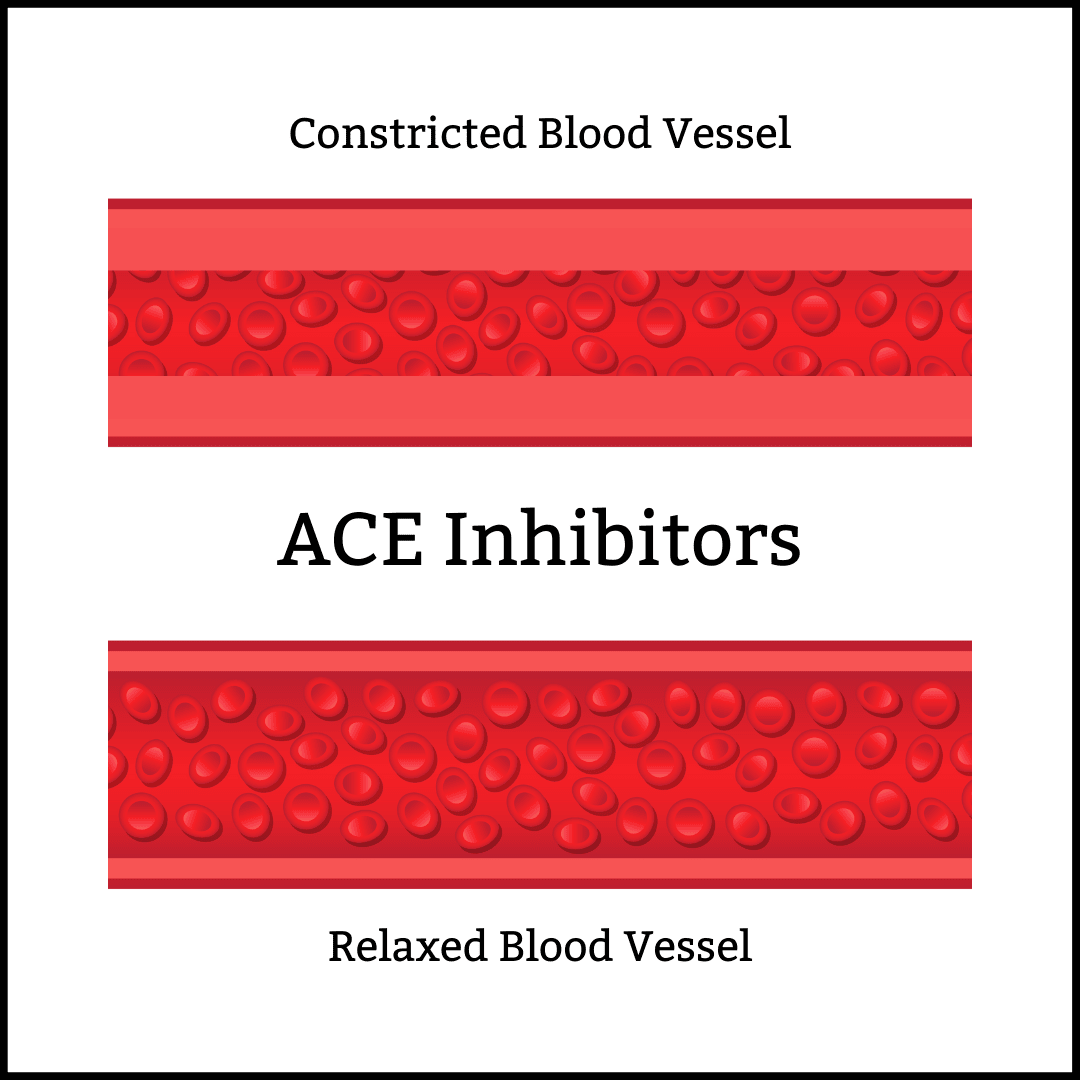
Image: Action of ACE Inhibitors
Studies have reported that ACE Inhibitors can reduce the chances of developing heart failure that occurs due to high blood pressure.
Beta-blockers and diuretics are similar drugs used to treat high blood pressure and related health conditions.
Beta-blockers work by reducing the effects of the adrenaline hormone. This causes the heart to beat slowly and relaxes veins and arteries.
Diuretics reduce the amount of water in the blood, thereby reducing blood volume and blood pressure.
Angiotensin II Receptor Blockers (ARBs) also work very similarly to ACE inhibitors. These drugs can offer better inhibition of angiotensin II and are becoming popular types of antihypertensive medications.
Digoxin is another drug commonly prescribed for reducing heart rate. Digoxin is usually used along with other kinds of heart medicines to treat symptoms of heart failure. It is preferred when ACE inhibitors or beta-blockers cannot be used.
The common side effects of ACE inhibitors are:
Other extreme side effects of ACE inhibitors are:
ACE inhibitors can interact with many drugs and can lead to extreme side effects. Inform your doctor if you are on the following medications.
ng medications.
Angioedema is a condition that causes rapid swelling beneath the skin. Studies report that up to one-third of all emergency visits for angioedema are by those who use ACE inhibitor drugs.
The XPNPEP2 gene contains instructions for the production of X-Prolyl Aminopeptidase 2 protein. The gene plays a role in the functioning of bradykinin, a molecule that helps relax the blood vessels.
rs3788853 is a Single Nucleotide Polymorphism (SNP) in the XPNPEP2 gene.
According to a study, the A allele of this SNP is associated with low aminopeptidase P (APP) activity.
Low APP activity leads to increased bradykinin production, which increases the risk of developing angioedema in black men.
However, this relationship was not found in women or white men.
| Allele | Implications |
| A | Increased risk of developing angioedema in black men |
| C | Normal risk of developing angioedema |
The ADRB2 gene (Adrenoceptor beta 2 gene) helps produce the beta-2 adrenergic receptor. This receptor is activated by adrenaline and is associated with mental health conditions like anxiety and phobias.
A study analyzed the association between ACE inhibitors and changes in the ADRB2 gene. 336 participants were treated with ACE inhibitor drugs. The time taken to reach a Mean Arterial Pressure (MAP) of 107 mmHg was noted.
rs2053044 is an SNP in the ADRB2 gene. People with the GG genotype of this SNP reached the MAP about 12 days later than those with the AA or AG genotype.
| Genotype | Implications |
| GG | Lowered response to ACE inhibitors in reducing blood pressure |
| AG | Normal response to ACE inhibitors in reducing blood pressure |
| AA | Normal response to ACE inhibitors in reducing blood pressure |
The NOS3 gene (Nitric Oxide Synthase 3 gene) helps produce the endothelial NOS (eNOS) or nitric oxide synthase 3 enzyme. This enzyme plays a role in Nitric Oxide (NO) synthesis.
rs3918226 is an SNP in the NOS3 gene. According to a study, people with the T allele of this SNP responded better to enalapril, a type of ACE inhibitor. An opposite effect was observed in those with the A allele.
| Allele | Implications |
| T | Better response to ACE inhibitors |
| A | Lowered response to ACE inhibitors |
ACE inhibitors are more effective for people younger than 55. This is because young individuals have higher levels of renin in the blood.
Renin is a type of enzyme released by the kidney - higher levels of this enzyme are associated with higher blood pressure in younger adults.
ACE inhibitors effectively bring down renin levels.
People older than 55 are less responsive to renin, and hence, ACE inhibitors don’t make an impressive difference to blood pressure levels.
ACE inhibitors lead to lowered blood flow, which can be problematic in those with existing circulatory problems.
Low blood volume and hypotension can lead to ischemia (inadequate blood supply to organs), myocardial infarction, stroke, and even kidney failure.
ACE inhibitors also cause kidney failure in those with existing renal artery stenosis (narrowed/blocked arteries that lead to the kidneys) or chronic kidney disease.
People with diabetes (both type 1 and type 2) are at increased risk of developing hyperkalemia with ACE inhibitor intake.
Genetic testing can help understand how a person is likely to respond to ACE inhibitor treatment. It gives insights into how a person’s body reacts to the drug and identifies if dosage alterations are needed to improve the efficiency of the medicine and reduce its toxicity risk.
Analyze Your Genetic Response to ACE Inhibitors