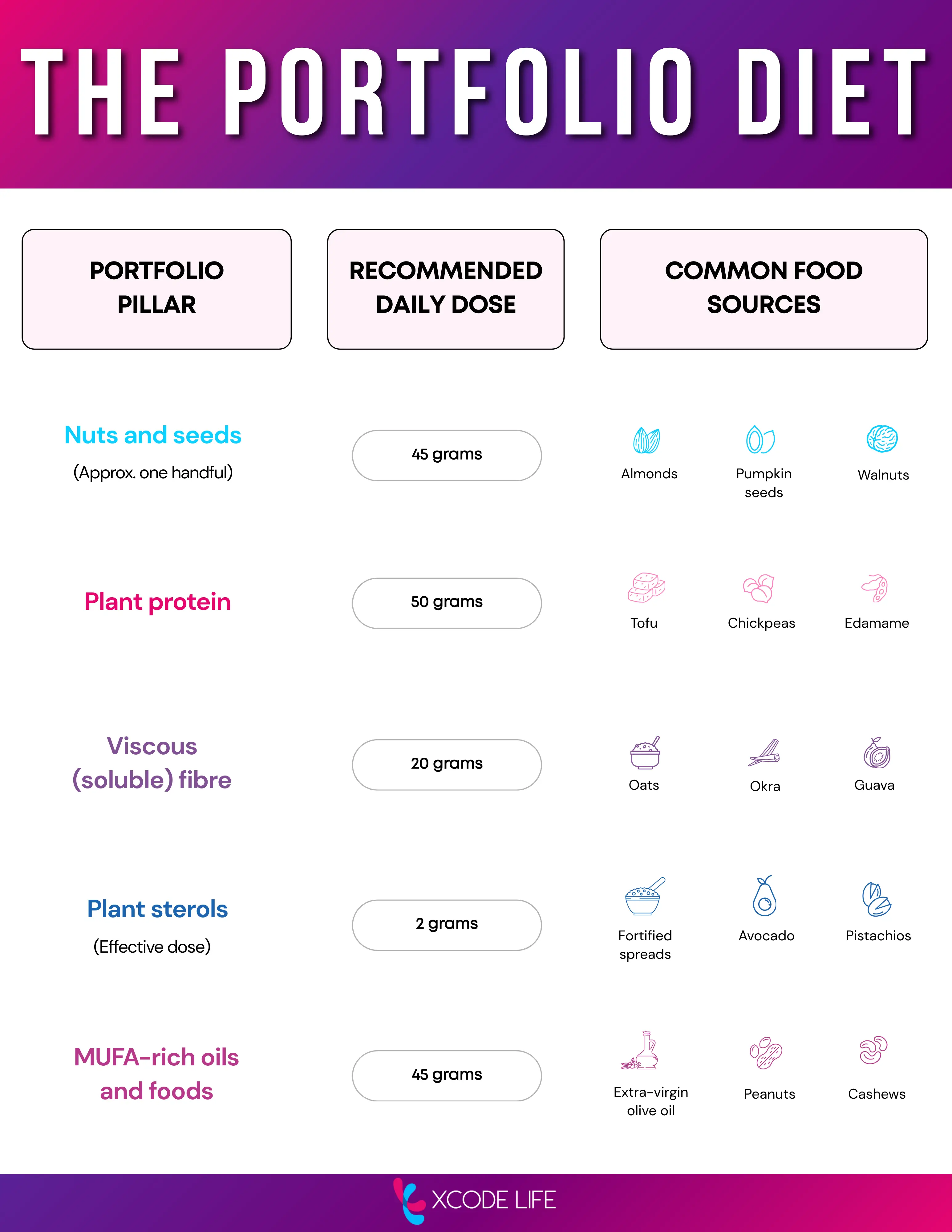
The Portfolio Diet is a clinically proven, cholesterol-lowering pattern focused on specific plant foods that reduce LDL cholesterol.
In controlled trials, the diet achieved significant LDL cholesterol reductions, up to 30%, an effect comparable to some low-dose statin medications.
Following the diet is also linked to modest improvements in HbA1c levels, which is beneficial for people with type 2 diabetes.
This article explains what the diet is, how it works, who may benefit most, and why genetics can influence your results.
What Is the Portfolio Diet?
The Portfolio Diet is a plant‑forward way of eating built around a “portfolio” of cholesterol‑lowering foods: viscous (soluble) fiber, plant protein, nuts, plant sterols, and healthy plant oils.
Rather than cutting out entire food groups, it encourages you to regularly include these components alongside a generally heart‑healthy, low–saturated fat diet.
Origins and Core Principles
The diet was developed in the early 2000s by Dr. David J.A. Jenkins and colleagues at the University of Toronto, the same group that pioneered the glycemic index.
Their idea was simple: combining several cholesterol‑lowering foods into a single pattern could have an additive effect on LDL reduction.
In practice, the core principle is to meet daily targets for each pillar (fiber, plant protein, nuts, sterols, and healthy fats) while keeping saturated fat and ultra-processed foods to a minimum.
Evidence Behind the Portfolio Diet
The Portfolio Diet is not based on a single study or a headline result.
It has been tested in several clinical trials and longer‑term population studies.
In tightly controlled trials where meals were carefully planned, people with high cholesterol who followed the full Portfolio Diet saw LDL reductions of roughly 28–30%, which was similar to the effect of a low‑dose statin (20 mg lovastatin) in the same studies.
That does not mean food and medication are interchangeable, but it shows how powerful the combination of these foods can be when followed closely.
In these independent studies, individuals who adhered more closely to the Portfolio pattern tended to see larger reductions than those who only partially adopted it.
Large cohort studies following people for 20–30 years add another layer.
Higher Portfolio Diet scores were associated with about 11–14% lower risk of cardiovascular disease, coronary heart disease, and stroke than lower scores, suggesting that this pattern may support long‑term heart health.
Because these are observational data, they can show association, not proof that the diet alone caused the risk reduction.
Taken together, these findings position the Portfolio Diet as a strong, evidence‑based option for lowering LDL cholesterol through food.
LDL cholesterol typically varies depending on medications, physical activity and diet implementation. Some participants can see a smaller change while others achieve larger reductions in LDL levels.
In clinical practice, it is usually used alongside standard medical care - not as a replacement for statins or other prescribed therapies when those are clearly needed.
Key Components: The Five Pillars of Your Heart Portfolio
The specific gram targets in trials were designed for adults and are usually applied as approximate daily goals, not rigid prescriptions for every body size.
In practice, clinicians often individualize these amounts based on energy needs, preferences, and tolerability.
Plant Protein (Approx. 50 g/day in trials)
The Portfolio Diet emphasizes plant protein from soy foods (tofu, tempeh, edamame, soymilk) and pulses (beans, lentils, chickpeas, peas).
Replacing animal protein with these sources lowers saturated fat intake and provides bioactive compounds that may help the liver clear LDL particles more efficiently.
Viscous (Soluble) Fiber (Around 20 g/day in trials)
Viscous fiber comes from oats, barley, psyllium, certain fruits (such as apples, berries, and citrus), and vegetables such as eggplant and okra.
The Portfolio Diet may be most helpful for adults with elevated LDL cholesterol or hyperlipidemia.
It is constructive for those who are on, or being considered for statin therapy. People who want LDL lowering from diet in addition to medication, or who struggle to tolerate higher drug doses can benefit from this diet
The diet also benefits those seeking to improve cardiovascular health, especially with a family history of heart disease or existing risk factors.
For those with type 2 diabetes, better adherence to the Portfolio diet is linked to modest but meaningful reductions in HbA1c and improved lipid profiles over roughly six months.
Important: The Portfolio Diet is a therapeutic dietary pattern, but it is not a substitute for prescribed medications in high‑risk situations. Any change to statins or other treatments should be made with a healthcare professional.
Expert Opinions On Portfolio Diet
Dr. Andrea Glenn, Dr. Meaghan Kavanagh, and Dr. John Sievenpiper developed and validated the clinical Portfolio Diet Score (c-PDS) in a 6-month trial of 100 hyperlipidemic adults, finding that higher adherence significantly reduced LDL.
They also conducted simulation studies and the PortfolioDiet.app trial, exploring adherence's role in delaying cardiovascular risk markers and testing a web tool for high-risk adults to follow the diet.
Nutrition researcher and dietitian Andrea Glenn, PhD, RD, defines the Portfolio Diet as a plant-based pattern of proven cholesterol-lowering foods, linking this shift to improved long-term cardiometabolic health.
Meaghan E. Kavanagh, PhD, who helped create the clinical Portfolio Diet App, reports that higher scores link to lower LDL and HbA1c . She highlights that meaningful benefits can come from small, sustainable additions of nuts, legumes, oats, and healthy oils rather than strict perfection.
John L. Sievenpiper, MD, PhD, FRCPC, a leading clinician‑scientist in this area, concludes that the combined Portfolio components on a low–saturated fat base can lower LDL cholesterol by roughly 30%, comparable to statins, and views the diet as a practical way to overcome treatment inertia in high‑risk patients who remain above LDL targets despite medication.
Where Genetics Fits In: Why Results Can Differ
Individual responses to the Portfolio Diet vary, and genetics is a primary driver of this variability.
Cholesterol Absorption
Variants in genes such as LDLR and APOB influence circulating lipid levels and can modify how effectively lifestyle and dietary interventions improve a person’s cholesterol profile.
LDLR is crucial for cholesterol homeostasis by actively removing LDL cholesterol from the bloodstream.
APOB helps build the fat-carrying particles (like LDL) that transport cholesterol in the blood.
Xcode Life’s Health Report includes genetic markers in key lipid-related genes such as LDLR and APOB helping to personalize cardiovascular risk assessment and lifestyle recommendations related to cholesterol and triglyceride management.
Lipid Metabolism
Genes involved in lipoprotein metabolism, including APOE, influence how the liver processes dietary fats and cholesterol‑rich particles.
APOE variants are known to modify LDL levels and may affect how strongly someone responds to changes in saturated fat, fiber, and plant protein.
Genetic insights do not guarantee a specific outcome, but they can help someone prioritize more aggressively, such as fiber or saturated‑fat reduction, within the Portfolio framework.
This is where a genetics‑informed view is useful rather than deterministic.
Xcode Life’s Gene Nutrition report highlights traits such as saturated‑fat sensitivity, fiber response, weight‑gain tendency, and Mediterranean‑diet response, which together can inform how someone personalizes a Portfolio‑style pattern for their biology.
Limitations and Considerations
The Portfolio Diet is effective, but it is also quite structured and can be challenging to follow perfectly in daily life.
Practicality:
Hitting trial‑level targets (for example, 50 g of plant protein and 20 g of viscous fiber daily) requires planning, label reading, and sometimes access to fortified products.
Eating out often, food preferences, culture, and cost can all make it harder to include soy foods, nuts, high‑fiber foods, and sterol‑enriched products regularly.
Digestive comfort:
If someone increases fiber very quickly, they may notice bloating, gas, or looser stools; most experts suggest building up over 2–4 weeks and drinking enough water.
People with IBS or other gut conditions often need a slower, more personalized approach to the fiber and soy parts of the diet.
Safety and Special Populations:
Individuals with soy or nut allergies will need alternative protein and fat choices, which may limit how closely they can follow the original Portfolio design.
Core foods include oats and barley, psyllium, beans and lentils, tofu and other soy products, nuts (such as almonds and walnuts), sterol‑enriched spreads or yogurts, and plant oils like olive oil and canola oil.
2. How much can the Portfolio Diet lower cholesterol?
Studies indicate reductions of 13% to 30% are achievable with high adherence.
3. Is the Portfolio Diet better than statins?
It can achieve results similar to first-generation statins in some individuals, but it is often used alongside medication.
4. Can the Portfolio Diet help with weight loss?
While it is not primarily for weight loss, the high fiber content can lead to improved satiety and support weight management when calorie intake is appropriate.
5. Is the Portfolio Diet safe long-term?
Yes. Adherence for over 30 years is associated with lower cardiovascular risk and no negative safety signals. As with any dietary pattern, people with specific medical conditions or allergies need individualized guidance.
6. Who should not follow the Portfolio Diet?
Individuals with soy or nut allergies must modify their diet. Individuals with rare conditions, such as sitosterolemia, should avoid consuming plant sterols.
Summary
The Portfolio Diet is a plant‑based eating pattern that combines viscous fiber, plant protein, nuts, plant sterols, and healthy oils to lower LDL (“bad”) cholesterol.
Clinical trials show it can reduce LDL by roughly 30%, individuals can achieve clinically meaningful reductions in cholesterol.
It is more targeted toward cholesterol lowering than general heart‑healthy patterns, but still built from everyday foods rather than supplements alone.
Responses vary between people, partly due to genetics and other factors like medications and baseline LDL
Get your MCT1 Gene Fitness Report here - Christine Chng
Was trying to find a health report about gene fitness for DNA and unfortunately came across other companies who could not pull out that data from the raw file until I discovered xcode life's Gene Report.
Happy with how easy the process was to upload the data and the quick turnaround time within 24 hours to provide a very concise and clear detailed analysis unlike what I have received elsewhere. Thumbs up.
Emilie Ellenberg
February 8, 2022
I was happy with the thoroughness of the results
I used XCode Life for two genetic tests. I used my existing raw dna data for these tests. I was happy with the thoroughness of the results and more so with the speed at which my results were returned- within 1 hour each time! I will definitely use XCode again!
Rebecca Burwell
August 12, 2022
I love that I can expand my knowledge…
I love that I can expand my knowledge of my genes by purchasing individual reports that are most important to me. The report was delivered quickly and had a ton of interesting and helpful information! I was interested in BRCA and Breast Cancer and was able to get a full breakdown.
Rabih Massri
March 12, 2021
Very detailed health guidance
I didn’t know what type of information I will get exactly and I was skeptical, but after taking the test I discovered so much more about my self and how my body functions , there was so much informations and detailed guidance on how I can benefit from MY DNA test. Especially about food and exercise types that suits my body to maintain a healthy life style. I strongly recommend Xcode
Seb B
July 2, 2022
Go there, they are the best!!!
Wonderful place to get an analyze of your DNA. It can take some time, but the details you get are OUTSTANDING!!
This is brilliant service. Great customer service as well.
I love this place and can only recommend everyone to take this. Worth the wait, worth the result and gives you answers to your life.
Do not hesitate, go here, let them analyze your DNA, top notch service!!!