According to a new study, marital bliss may be linked to your genes. Scientists have found that one’s genes can influence feelings of happiness and security in a marriage, as well as your spouses’.
There are so many must do’s and rules that people talk about for a successful marriage, however, can genes tell you more? Will this end the almanac and zodiac compatibility? Do you want to find out more about your marriage compatibility genes?
Handpicked article for you: Worrier Or Warrior? Analyze Your DNA Raw Data For COMT – The Warrior Gene
What are marriage compatibility genes? It is the analysis of genetic variations associated with differences in certain psychological attributes.
The study conducted by researchers at Yale School of Public Health showed that individuals with a specific variant of the oxytocin receptor gene, tend to have greater satisfaction in their marriages than those with other genotypes—and their warm and fuzzy feelings spill over to boost their spouses’ happiness quotient as well.
Aptly named the ‘love drug’, oxytocin is the hormone that is released when you hug or cuddle with a loved one, triggering feelings of trust, contentment and empathy.
It is also essential for mother-child bonding and helps in childbirth and breastfeeding.
People with the GG genotype are perceived to be more caring, empathetic and pro-social than those with the AG or AA genotypes, thanks to their gene variations influence on oxytocin levels.
The study on marital satisfaction found that people carrying the GG genotype reported less ‘anxious attachment’, a type of relationship insecurity that is associated with low self-worth, high rejection sensitivity, jealous and intrusive behaviour.
It also unearthed the ‘partner effect’, wherein one spouse’s GG genotype traits of being more secure and responsive in a marriage caused greater marital satisfaction for the other spouse, irrespective of their genotype.
Interestingly, the study also found that wives with the GG genotype were less likely to have children than wives with the AA or AG genotypes.
The study was conducted on 178 heterosexual, married couples in the 37-90 age group, who gave in buccal swabs for DNA testing.
The couples were questioned in depth about various relationship aspects, including levels of agreement and dispute when dealing with matters like family finances, health concerns and sexual relations, their levels of support for each other, recreational activities, etc.
They were then asked to rate their feelings about their relationship with their partners and evaluated on measures of attachment anxiety and attachment avoidance.
Researchers estimate that the genotype accounts for around 4% of the variance in marital satisfaction.
Marriage compatibility gene is not so much about predicting outcomes as it is about self-empowerment through self-awareness.
For example, people with a higher genetic score for lower satisfaction can take measures to actively prevent unhappiness and work towards creating a more positive environment.
Most people are usually aware of their innate instincts. However, a personality genetic report can reveal several aspects that people are generally unaware.
Xcode Life’s Personality report provides information on extraversionness, intelligence, entrepreneurship potential and more than 25 such traits. You can find out more about it here.
Otherwise known as iron overload, hemochromatosis is a condition that occurs due to excess of iron in the body.
The condition is primarily genetic, but could also be acquired (such as in the case of thalassemia).
Other than hereditary hemochromatosis (HH) the other types include:
Juvenile hemochromatosis. Iron accumulation begins early. Symptoms begin to appear between the ages of 15 and 30.
Neonatal hemochromatosis. A severe disorder where iron builds up rapidly in the liver of the developing fetus. It is commonly mistaken for an autoimmune disease, in which the body attacks itself.
Hereditary Hemochromatosis:
Often referred to as HHC or simply HH, hereditary hemochromatosis is a genetic condition in which the body accumulates iron in the joints and certain organs.
It is also referred to as genetic hemochromatosis, bronze diabetes, iron storage disease or celtic curse.
For people with HH, the body absorbs too much iron.
Normally human beings fulfill the iron requirements from food via the intestines.
When there is adequate iron intake, the body reduces its absorption to prevent excess iron from accumulating.
But in HH patients, the mechanism for regulating iron absorption is faulty.
Therefore amount of iron absorbed is higher than usual.
Over time the excess iron would get deposited in the cells of organs such as the liver, heart, pancreas, and pituitary gland. This leads to complications like liver cirrhosis and diabetes.
Handpicked content for you: Best DNA Raw Data Analysis Tools of 2019
Despite playing an essential role in various body functions, too much iron could be toxic.
The liver secretes a hormone called “hepcidin” which controls how iron is used and absorbed by the body.
It also influences also how the body stores excess iron in various organs.
Hemochromatosis, Disrupts the normal role of this hormone and makes the body absorb more iron than necessary.
The excess iron gets stored in major organs, like the liver.
Over time, excess deposits of iron could cause severe organ damage which may lead to organ failure and chronic diseases like liver cirrhosis, diabetes, and heart failure.
Although many people have faulty genes that cause hemochromatosis, only about 10% of them develop iron overload to a degree that causes tissue and organ damage.
The gene HFE is responsible for the effective regulation of iron absorption.
Mutations in it can cause HH. Approximately 1 in 10 Americans carry at least one copy of an HFE gene mutation and may pass it on to the next generation.
About 1 in 200 Americans have a couple of copies of the mutation, putting them at risk of developing this disorder. HFE, was first identified on chromosome 6 in the year 1996.
While majority of HH cases result from a common mutation in this gene, known as C282Y, there are certain other mutations like H63D.
About 80% of HH patients are homozygous for the C282Y mutation in the HFE gene.
If you’re a child who has inherited two copies of the mutated gene (one from each parent)- you’re highly likely to develop the disease.
However, not everyone with two mutated copies develop signs and symptoms of the disorder.
If you inherit only one copy of the mutated gene, you are a ‘carrier’ who usually experience no symptoms, or have very mild symptoms because of possessing one correct copy of the gene which adequately regulates iron absorption.
However, even if you are a ‘silent carrier’ of the gene without experiencing any symptoms of the disorder, you can still pass it on to your children.
Moreover, If you are born to parents who are both silent carriers of the defective gene, you (and your siblings) have a 25% chance of inheriting both the copies and might end up developing the disease.
It is estimated that 10 percent of the U.S. population carries this gene.
Carriers are most likely to exhibit signs of HH if there are triggering factors like alcoholism or diabetes.
The following factors can increase your risk of HH:
If left untreated, hereditary hemochromatosis can lead to a various complications, especially in your joints and in organs like liver, pancreas and heart.
Following are some of the complications:
Being aware of your HFE status can help prevent damage from iron overload. When diagnosed properly and in time, HH can be easily and effectively treated, but if left untreated, it can lead to severe organ damage. It is estimated that about one million people in the United States suffer from HH.
Since the HFE gene determines the likelihood of a person developing or transmitting HH, genetic testing for HFE status is important.
Genetic testing companies like 23andMe determine your HFE status.
Once you order the service and mail them your saliva sample in the container they provide, you will receive access to your results displayed on a website.
23andMe also offers an exclusive HFE test for $195.
Since HH occurs due to mutations in the HFE gene such as C282Y, H63D or S65C, you have to look up for the particular SNP (Single nucleotide polymorphism) for these 3 mutations. Following are the locations for the respective mutations:
Family testing- In case you find out that you are homozygous for one particular HFE gene mutation and you have children and siblings, they should get tested.
Finding out their HFE status can raise awareness of iron levels, help them take preventative measures and reduce unwanted worries.
Hemochromatosis is one of the few genetic diseases for which there is a relatively simple and effective treatment- Phlebotomy(removing blood from the patient in order to lower the overall iron levels in the blood.
And Maintenance treatment schedule depends on how rapidly iron accumulates in your body.
Although Performing phlebotomy early in the course of the illness can prevent most complications, it can still decrease symptoms and improve life expectancy even when performed after the occurrence of complications.
Some blood collection centers in the United States have obtained permission from the F.D.A to collect this blood and use it for transfusions.
For those who can't undergo blood removal because they have anemia or heart complications, your doctor may recommend a medication to remove excess iron.
The medication which can be injected into your body, or it can be taken as a pill, binds excess iron, allowing your body to expel iron through your urine or stool in a process that's called chelation.
Lowering iron levels can be done relatively simply by having blood drawn regularly.
However, adhering to simple lifestyle Changes can also help maintain safe levels of iron.
Prevention is Key!
Thus, Understanding these Simple lifestyle changes can push your iron markers into the healthy range:
Cystic Fibrosis is a progressive genetic disease that is inherited in a recessive manner.
Cystic fibrosis is characterized by persistent and frequent lung infections, and limits the ability to breathe over time.
The disease is caused by mutations in the Cystic Fibrosis Transmembrane Conductance Regulator or CFTR gene.
About 75% of new dignosis of cystic fibrosis happens in children below the age of 2 - Source: Healthline
This gene encodes a protein that is inserted into the cell membranes of the inner lining surface of organs and forms a channel that regulates the movement of salt and water in and out of cells.
Such disease-causing mutations affect the body's ability to efficiently secrete sweat, tears, digestive juices and mucus.
Important: The Cystic Fibrosis report is only applicable to 23andMe v5 chip raw data holders

When the CFTR gene functions normally, it aids in the transport of chloride to the cell surface and helps attract water to the surface as well.
This maintains the fluidity of the mucus in most organs.
A mutation in the CFTR leads to improper gene function because of which there is no chloride and water at the cell surface.
The mucus becomes thick and sticky in most organs.
In the lungs, this type of mucus traps bacteria and other microbes eventually leading to lung infections.
Cystic fibrosis, is an autosomal recessive genetic disease.
This means the disease will only manifest in individuals who receive two mutated copies of the CFTR gene (one from each parent) will get the disease.
More than 500 known mutations of the CFTR gene have been documented to cause cystic fibrosis, although most of them are rare.
How To Analyze Your APOE Gene With Your DNA Raw Data?
Though cystic fibrosis can be diagnosed using genetic testing, there are other ways to detect this disease.
These include newborn screening, a sweat test, and clinical evaluation.
Since cystic fibrosis runs in families, couples thinking of having children can take a genetic test and evaluate their results by consulting a physician or genetic counselor.
If the genetic test reveals that you are a carrier of the disease variants, it might be useful to share your result with your family members to help them understand their risk of developing the disease.
Consulting a genetic counselor is always helpful in such cases.
Though there are about 500 mutations known for the genes, the genetic tests done for cystic fibrosis help detect only the most common ones.
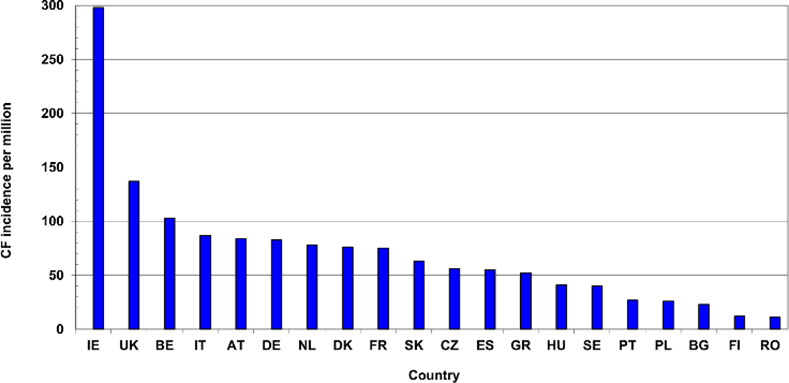
Source: Research Gate
There are more than 70,000 people living with cystic fibrosis in the world today.
In African-Americans and Hispanic-Americans, the carrier rates are 1 in 65 and 1 in 46, respectively.
However, CFTR mutations are much rarer in Asians — with an incidence of 1 in 90.
It is also interesting to note that 1 out of 29 Caucasians, including Ashkenazi Jews, carry one copy of a CFTR mutation.
Since cystic fibrosis is inherited in a recessive manner, an individual must have two copies of the recessive gene, one inherited from each parent.
This means that both parents must have at least one copy of the defective variant.
Individuals with just one copy of the gene are called carriers and do not themselves suffer from the disease.
The effects of having a combination of two different mutations also vary.
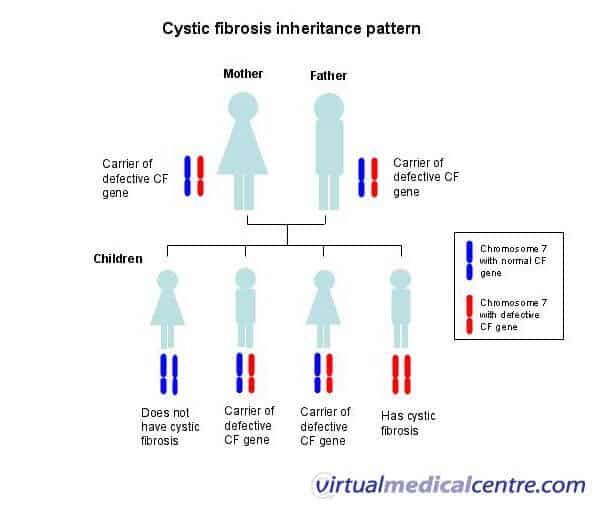
Source: Virtual Medical Centre
Sometimes, a person who has two mutated copies of CFTR might suffer from severe lung and pancreatic disease.
In other cases, lung function may be almost normal but there might be some pancreatic effects.
In some rare cases, there might be only reproductive system effects with little or no noticeable symptoms at all.
Hand-Picked article for you: Have Your 23andMe Raw Data? Use It To Get 500+ Health-Realted Genetic Traits!
One of the reproductive system effects of CFTR mutation is a congenital bilateral absence of the vas deferens (CBAVD).
Men who have been diagnosed with a low sperm count might be suffering from one CFTR mutation that they should be aware of, as this could be the reason for their infertility if they carry a second, unreported mutation on the other copy of the CFTR gene.
If you are concerned about this, you must consult a health professional.
One relatively common CFTR mutation is the deltaF508 mutation.
Individuals with two copies of this mutation have more severe symptoms than those with one copy of this mutation and a copy of another CFTR mutation or two non-deltaF508 mutations.
In many cases, when cystic fibrosis is suspected in newborns, they are screened by assessing the level of a certain enzyme in dried spots of blood.
Other tests are done on babies who test positive for this test in order to rule out or confirm the diagnosis of cystic fibrosis.
In the United States, all newborns are screened for cystic fibrosis as a general rule.
It is important to know which mutation or mutations cause cystic fibrosis in a person as this helps explore the available treatment options.
Today, the treatment of cystic fibrosis focuses primarily on unfixing the mucus, treating infections and supplying adequate nutrition.
In individuals with the G551D mutation, the drug ivacaftor is available for directly treating the dysfunctional CFTR protein.
Currently, the possibility of using ivacaftor for treating CF patients with a handful of other CFTR mutations is being studied. However, it is quite unlikely it would be an effective treatment for the deltaF508 mutation.
Alzheimer’s disease is a neurodegenerative disorder, characterized by a progressive loss of nerve cells in the brain.
It is the most common cause of dementia or gradual loss of memory.
The APOE gene encodes the protein apolipoprotein E or APOE, a cholesterol carrier that is found in the brain and other organs.
However, the protein's exact role in the development of Alzheimer's is still unclear.
Many clinical studies have shown that APOE may influence the accumulation of a protein named amyloid beta that is believed, along with other factors, to ultimately lead to Alzheimer's.
The APOE gene exists in three allelic forms– e2, e3, and e4, with the e3 variant being the most common among the general population (about 60%).
Everyone inherits a pair of these but in different combinations. APOE e4 has been found to be the strongest genetic link for late-onset Alzheimer’s disease.

The APOE genetic testing results will give you information on the combination of the three alleles.
This would help in evaluating your genetic risk of developing late-onset Alzheimer’s disease.
Though the presence of the e4 allele in a test result is indicative of an increased risk of developing Alzheimer’s disease, it does not necessarily mean you will develop the disease in the future.
In many cases, the disease still develops in individuals without the e4 allele.
People develop Alzheimer’s as a result of a combination of genetic, environmental, and lifestyle factors.
The common risk factors include advancing age, a family history of the disease, or a head injury.
Some medical conditions such as diabetes, poor heart health, and high blood pressure have also been shown to influence the risk of developing Alzheimer’s.
Women are said to be at higher risk of developing the disease than men.
Do not panic!
The APOE genetic testing to determine the risk of developing Alzheimer’s disease is not a diagnostic tool.
It only gives an idea about one’s APOE allele combination where the presence of the e4 allele is said to be associated with a higher risk.
An e4 allele combination in the APOE gene along with family history would put one at a high risk of developing the disease.
If you fall into this category, visit your healthcare provider at the earliest to determine the further course of action.
If the disease is hereditary, it is best to share your results and findings with other members of the family as well.
If you find yourself or a family member showing progressive and frequent signs of memory loss, get an APOE genetic testing done.
If the test results show negative for the presence of the e4 allele, do not eliminate the risk of developing Alzheimer’s, and contact your healthcare provider with these concerns.
In today’s world where information is one click away, finding as much information as you can from different resources, including real-life stories and connecting with people with similar symptoms would help.
If you are unable to interpret your APOE genetic test results, consult your healthcare provider who can recommend a genetic counselor to help you out.
As mentioned earlier, the presence of the e4 allele increases the chances of developing Alzheimer’s disease.
The presence of the e4 allele also depends on one’s ethnic background and ancestry.
In people with European ancestry, the presence of the e4 allele is relatively common.
About 25% of people have one e4 allele and about 3% of people have two e4 combinations.
It is said that about 18%- 35% of people of European ancestry having one copy of the e4 variant of APOE may develop Alzheimer's disease by the age of 85.
Compared to people with European ancestry, people with African American ancestry are more likely to have an e4 allele of the APOE gene.
Also, people with Mexican- American ancestry are less likely to have an e4 allele.
Overall, African Americans and Mexican Americans have a greater chance of developing Alzheimer’s disease than people of European ancestry irrespective of the allele combination they have genetically.
https://medlineplus.gov/genetics/gene/apoe/
https://www.ncbi.nlm.nih.gov/pmc/articles/PMC2908458/
https://med.stanford.edu/news/all-news/2022/05/gene-mutation-alzheimers.html
So far, conventional ‘wisdom’ and popularly touted adages like “early to bed, early to rise” have always favored people who are early risers.
People who stretch their gym worn bodies and sip into their coffees well before daylight are most often depicted as go-getters and people who are keen on scaling heights.
However, successful people like Mark Zuckerberg and Jonah Peretti are night owls.
Everyone has a friend who works best at night. Someone who seems bored in the morning but active at night. Or someone who calls for a meeting at 8:00 a.m and has already put in 2 hours of work by then!
What drives people to get up early or to function better at night? A new 23andme study reveals interesting new information
Differences in sleep patterns among humans served an evolutionary purpose.
Staggered sleep timings meant that there was someone awake all the time, watching over the group.
The advent of farming, unfortunately, meant that people who woke up early were adorned with greater significance, as the seeds had to be sown early morning.
This association of morning people being better performers, however, has unnecessarily continued into our technology age.
A previous study by 23andme using information from the UK biobank study showed that there were 24 genetic variants, especially in genes associated with circadian rhythm, associated with morningness.
The current study has revealed more than 300 genetic variants associated with being a morning person.
Apart from revealing more genetic variants in circadian rhythm genes, genetic variants in other associated genes provide clues to the various mechanisms that correlate with our sleep-wake cycle.
Handpicked article for you: Worrier Or Warrior? Analyze Your DNA Raw Data For COMT – The Warrior Gene
Does even a slight shuffling noise keep you awake at night? Or do you wake up at the first click of your morning alarm?
Some people seem more sensitive to light around them while others can sleep right through it?
Could these be our light sensitivity genes?
The latest 23andme study on morningness has found that certain genetic variants (RGS16 and INADL) associated with the function and development of retinal ganglion cells are also associated with our circadian rhythm.
This finding highlights that variations in the detection of external light signals may play a role in whether we are a morning person or a night owl.
This could partially explain why a morning person finds it hard to sleep in during the day!
Everybody has a 24-hour circadian rhythm, also called the internal clock, that coordinates various functions in tune with the body clock.
For example, the body temperature drops when it is time for the body to rest while it picks up when it is time to get up.
The 23andMe study has found that genetic variants associated with appetite (FTO) and insulin secretion are also associated with being a morning person or a night owl.
Other variants include those associated with nicotine metabolism and caffeine metabolism.
Also read: Changing your meal timing may help you lose weight, according to genetic research.
An interesting finding in this study is that certain genetic variants associated with morningness or night owl are also associated with schizophrenia and depression.
Morningness was negatively associated with depression and schizophrenia while there was a positive association with well-being.
Certain observational studies have shown that circadian rhythm mismatch could lead to an increase in the risk of schizophrenia.
Does that mean night shift workers who go against their natural circadian rhythms are at higher risk of disease?
For this, a study that focuses on genetic variants, mismatched circadian rhythm and disease risk is required.
Finding out if you are a morning person or a night owl will help in finding out which part of the day you are more likely to have higher energy levels.
Most people are usually aware of their innate instincts.
However, a personality genetic report can reveal several such aspects that people are generally unaware.
Xcode Life’s Personality report provides information on being a morning person or night owl, extraversion, intelligence, entrepreneurship potential, and more than 25 such traits.
Does your extra weight keep finding you over and over again, no matter how much effort you put in? Your genes may have an answer for it. Read on to learn how you can optimize your weight loss routine with the help of your knowledge of your genetic make-up.
Despite trying out the innumerable approaches for weight loss, most of you have been failing at it terribly and repeatedly.
The conventional fitness and nutrition advice would not work for everyone. Each person’s gene sequence, microbiome, environment, and lifestyle vary, and this impacts the dietary requirements and exercise habits.
Genetic testing may reveal as to why your efforts to lose weight has been failing you.
Genetic factors influence how your body processes certain nutrients. This may have a direct or indirect effect on weight loss or weight gain.
For instance, the gene “Apolipoprotein A2” (APOA2) is involved in the production of a particular protein which affects how your body responds to saturated fats.
If you happen to be one who possesses a variant of this particular gene, no matter how much you control your calorie-intake, you could still be gaining weight.
Yet, if you cut down saturated fat from your diet, weight loss may just as well be a cake walk!
It may not always be this straightforward. It is important to note that, there are other genes, variables and lifestyle habits that impact your weight.
While genetic testing may not have answers to all your questions, it can serve as guide for outlining a diet plan that is based on results as opposed to generic cookie-cutter plans.
Handpicked article for you: Is Dr. Rhonda Patrick Diet For You? Analyze Your DNA Raw Data To Find Out Your Nutritional Needs!
The ancestry genetic testing company 23andMe had launched a study in December 2017 involving 100,000 individuals to learn about the genetic variants associated with weight loss, and the effectiveness of various dietary approaches or exercises for weight loss.
The Weight Loss Intervention Study sought to identify why each person responds differently to exercise and diet.
This study focuses on behavioral weight loss, and builds on the work that went into the company’s Genetic weight report.
23andMe holds DNA data of over three million participants who sent their saliva samples, making it one of the largest DNA databases in the world.
Confused about which report to get? Use our Report Finder and find your reports of interest
Once the DNA sample is analyzed, the participants would receive a report that emphasizes the following predictions:
The researchers would send out weekly emails to guide the participants through the study, give them weight loss advice, meal suggestions, and other updates from the researcher forums.
In another effort to encourage individuals to use genetic information in the quest for weight loss, 23andMe had announced a partnership with Lark Health.
Lark Health is an Artificial Intelligence (AI) coaching service that delivers personalized weight loss advice, and tips for diabetes prevention via their app.
This collaboration enabled customers to include weight-related genetic data provided by the former into the latter’s services.
With an interest in turning its reports into actionable advice, 23andMe debates that it is simply used the data to make an already renowned and effective service, smarter.
The consumers can simply message their AI coach to find out if a particular food was a good choice for them.
According to Anne Wojcicki, CEO and co-founder of 23andMe, “Access to your genetic information is really just the beginning — using that information to prevent serious health consequences is the next critical step”.
Here’s a list of what this collaboration provides:
A popular personalized health & wellbeing company that uses swab samples or your DNA raw data from 23andMe to provide personalized diet and fitness insights and counseling.
DNAFit was founded in 2013, they have been exploring how DNA affects an individual’s response to nutrition and exercise changes.
DNAFit has recently joined the ‘Prenetics’ group- a Southeast Asian-based global leader in genetic testing and digital health.
The company interprets DNA, genetic traits and environmental data to offer actionable and interactive advice for health and fitness.
They combine a customer’s fitness goals with his/her DNA reports to create personalized recommendations.
Pathway Genomics focuses on providing users with personalized healthcare information delivered to any device.
Their app OME™ combines an individual’s personal health and wellness feedback with machine-based deep learning, and data science to provide tailored and actionable recommendations for physical well-being.
The personalized genomics company that specializes in preventative healthcare offering Nutrigenetics (the interaction between nutrition and a person’s own genetics), Fitness Genetics and Health Genetic and many more, tests to enable users to adapt to preventive and proactive health practices.
Xcode Life analyzes the two most important lifestyle factors that help in weight loss- Nutrition and Fitness.
Read more: Which are the top 10 best DNA raw data analysis tools?
The report includes more than 33+ categories of traits such which fall under broader categories such as certain behavioral tendencies, one’s genetic metabolism of macronutrients, one’s micronutrient requirement and food Sensitivities.
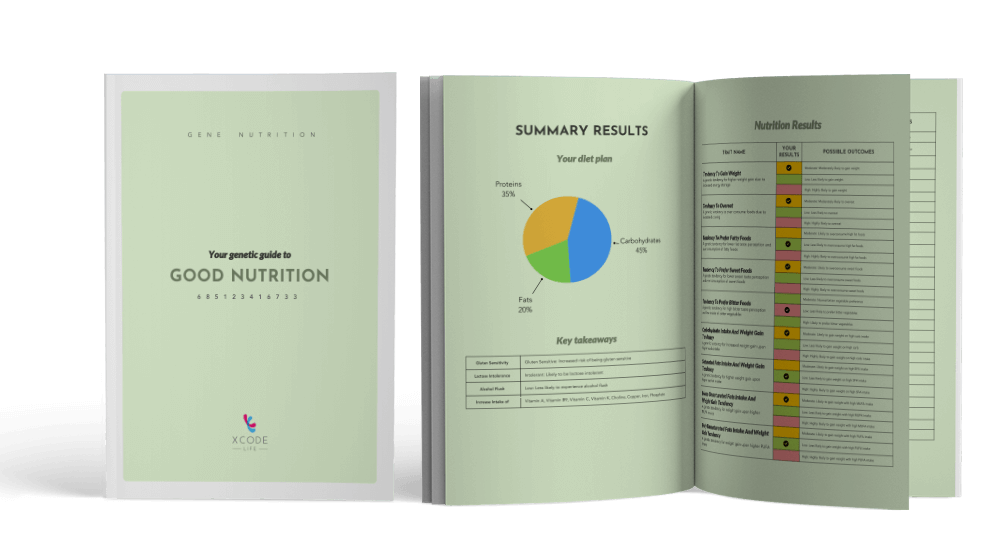
While macronutrients are the type of food that we require in large amounts in our diet such as carbohydrates, proteins, fats, etc, micronutrients are those essential elements of life required in smaller quantities such as Vitamins, Copper, Zinc, etc.
In addition to the common medical problems associated with deficiencies of vitamins and minerals, it can also cause weight gain.
Micronutrient deficiency can slow one’s metabolism and increase one’s cravings for certain foods that can be high-calorie ones and thereby cause weight gain.
Also, micronutrient deficiencies can cause fatigue– that result in reduced fitness activities and thereby causing weight gain.
People of a particular genetic type tend to need more of a particular micronutrient and an Xcode Nutrition report finds out the same.
Here’s a list of various micronutrient requirement the report emphasizes: