
Estimated reading time: 7 minutes
Key Takeaways
- Magnesium glycinate is a well-absorbed form of magnesium that may help individuals who do not meet their magnesium needs through diet alone.
- Research suggests modest benefits for sleep quality, muscle function, and nervous system support, particularly in people with low magnesium status.
- It is not a cure or fast-acting solution, and effects vary between individuals.
What Is Magnesium Glycinate?
Magnesium glycinate is a supplemental form of magnesium bound to the amino acid glycine.
This chelated structure helps the mineral remain stable during digestion.
Studies indicate that magnesium bound to amino acids is generally absorbed more efficiently than some inorganic forms.
This form is also associated with fewer gastrointestinal side effects compared with certain magnesium salts.
How Is Magnesium Glycinate Absorbed In The Body?
Magnesium absorption primarily occurs in the small intestine.
Comparative studies suggest that chelated forms such as magnesium glycinate are associated with higher bioavailability than some inorganic salts, including magnesium oxide.
Bioavailability refers to the proportion of magnesium that enters circulation and becomes available for physiological use.
However, higher absorption does not guarantee greater physiological benefit. Baseline magnesium status, gut health, kidney function, and total dietary intake strongly influence outcomes.
What Are The Benefits Of Magnesium Glycinate
Sleep and Relaxation
Magnesium glycinate may modestly improve sleep patterns in adults reporting poor sleep, possibly due to its effect on nervous system regulation.
A randomized, placebo-controlled trial published in the Journal of Research in Medical Sciences found that 250 mg/day of magnesium supplementation modestly improved insomnia severity scores in older adults with poor sleep quality.
The effect size was small and most pronounced in individuals with lower baseline magnesium intake.
Systematic reviews conclude that evidence remains mixed, with benefits more likely in magnesium-deficient populations rather than the general public.
Anxiety and Stress-related Symptoms
A 2024 systematic review of clinical trials reported that five out of seven studies measuring anxiety outcomes observed improvements in self-reported anxiety scores with magnesium supplementation.
However, study designs varied, and not all trials demonstrated benefit.
Importantly, few studies isolated magnesium glycinate specifically. Most evaluated magnesium broadly, meaning conclusions about glycinate rely on its absorption profile rather than direct anxiety outcomes.
Muscle Function and Cramps
Magnesium plays an essential role in normal muscle contraction and relaxation through its interaction with calcium signaling pathways.
While some studies suggest magnesium supplementation may reduce delayed-onset muscle soreness (DOMS) in physically active adults, evidence for preventing everyday muscle cramps remains inconsistent.
Current guidelines do not recommend routine magnesium supplementation for cramp prevention in otherwise healthy individuals.
Gut Health
Magnesium influences several aspects of gastrointestinal function and gut microbial balance.
Research is still emerging, and evidence varies by outcome and study design.
A recent randomized controlled trial found that magnesium treatment increased the abundance of specific gut bacteria, such as Carnobacterium maltaromaticum and Faecalibacterium prausnitzii, in rectal samples of adults.
These microbes have been associated with markers of intestinal health in prior research.
Clinical evidence specifically on magnesium glycinate for human gut health remains limited.
Most studies focus on magnesium’s broader effects on bacterial populations or on specific conditions rather than testing this form in isolation.
| Expert pick: What To Read Next |
|---|
| 7 Most Significant Magnesium Benefits For Men |
RDA of Magnesium
The Recommended Dietary Allowance (RDA) for magnesium refers to the average daily intake level estimated to meet the nutrient requirements of nearly all (97%–98%) healthy individuals.
Magnesium needs vary by age, sex assigned at birth, and life stage.
| Stage of life | Age | RDA for Magnesium |
| Infants | Upto 6 months | 30 mg/day |
| Infants | 7-12 months | 75 mg/day |
| Children | 1-3 years | 80 mg/day |
| Children | 4-8 Years | 130 mg/day |
| Older children | 9-13 years | 240 mg/day |
| Adolescents | 14-18 years | 410 mg/day (males); 360 mg/day (females) |
| Adults | 19-30 years | 400 mg/day (males); 310 mg/day (females) |
| Adults | 30+ years | 420 mg/day (males); 320 mg/day (females) |
For those who are pregnant or lactating, the RDA generally increases modestly compared with non-pregnant females of the same age.
Who Needs Magnesium Supplements?
Supplementation may be considered when dietary intake is consistently low or absorption is impaired.
Higher-risk groups include:
- Older adults
- Individuals with gastrointestinal disorders
- People with type 2 diabetes
- Individuals taking medications that affect magnesium balance (for example, diuretics and proton pump inhibitors)
- Diets low in magnesium-rich foods
Clinical evaluation can help determine whether supplementation is appropriate.
Why Isn’t Magnesium Working for Me?
Magnesium supplementation does not produce noticeable effects for everyone.
Several biological and lifestyle factors can influence how the body absorbs, retains, and uses magnesium, even when a well-absorbed form such as magnesium glycinate is used.
1. Magnesium Status Was Already Adequate
Magnesium supplements are most likely to have an effect in individuals with low magnesium intake or deficiency.
If dietary intake and body magnesium levels are already sufficient, additional supplementation may not produce noticeable changes.
Many studies reporting benefits show stronger effects in deficient populations rather than the general public.
2. Absorption and Gut Factors
Magnesium absorption occurs in the small intestine and can be influenced by gastrointestinal health.
Conditions affecting digestion or intestinal integrity may reduce absorption efficiency.
While magnesium glycinate is generally well tolerated, improved absorption does not guarantee increased physiological effect if downstream utilization is limited.
3. Kidney Regulation and Magnesium Loss
The kidneys tightly regulate blood magnesium levels. In some individuals, magnesium is excreted more rapidly through urine, which can limit the impact of supplementation.
This mechanism has been observed more frequently in older adults and in people with metabolic conditions such as type 2 diabetes.
4. Genetics and Magnesium Handling
Genetic differences can influence how magnesium is absorbed and regulated.
Variants in genes involved in intestinal magnesium transport and renal reabsorption, such as TRPM6 and TRPM7, have been associated with differences in magnesium balance.
These variations may help explain why individuals respond differently to similar magnesium intakes or supplement doses.
5. Dose, Duration, and Expectations
Magnesium is not a fast-acting compound.
Changes in magnesium status occur gradually, and perceived effects, when present, often depend on consistent intake over time.
Expecting immediate changes in sleep, stress, or muscle function may lead to the impression that supplementation is ineffective.
| Expert pick: What To Read Next |
|---|
| How Genes Influence Magnesium Requirements |
What Foods Are High In Magnesium?
Magnesium is naturally present in many plant and animal foods. Dietary sources are the primary recommended way to meet daily magnesium needs.
- Green leafy vegetables: Spinach and Swiss chard contain magnesium as part of chlorophyll, the pigment involved in photosynthesis.
- Nuts and seeds: Almonds, cashews, peanuts, pumpkin seeds, and chia seeds provide concentrated amounts of dietary magnesium.
- Whole grains: Brown rice, oats, quinoa, and whole wheat contribute magnesium retained in the grain’s outer layers.
- Legumes: Black beans, lentils, chickpeas, and soybeans are consistent plant-based sources of magnesium.
- Fish: Fatty fish such as salmon and halibut provide moderate amounts of magnesium along with other nutrients.
- Dairy products: Milk and yogurt contain smaller but meaningful amounts of magnesium.
- Fruits: Bananas, avocados, and dried figs contribute magnesium as part of overall mineral intake.
- Dark chocolate: Cocoa solids are a notable source of magnesium when consumed in moderation.
Dietary magnesium intake can vary based on food choices and processing.
Refined foods typically contain less magnesium than whole foods.
FAQs On Magnesium Glycinate
Magnesium glycinate helps meet daily magnesium requirements. Magnesium is involved in muscle function, nerve signaling, bone health, and energy metabolism. Evidence suggests this form is well absorbed and generally well tolerated.
Magnesium supplements can interact with certain medications. These include some antibiotics, bisphosphonates, and diuretics. Consuming high oxalate foods like spinach, rhubarb, and beets may also hinder magnesium absorption - so, space them out. Limiting caffeine and alcohol when on magnesium supplementation is also advised.
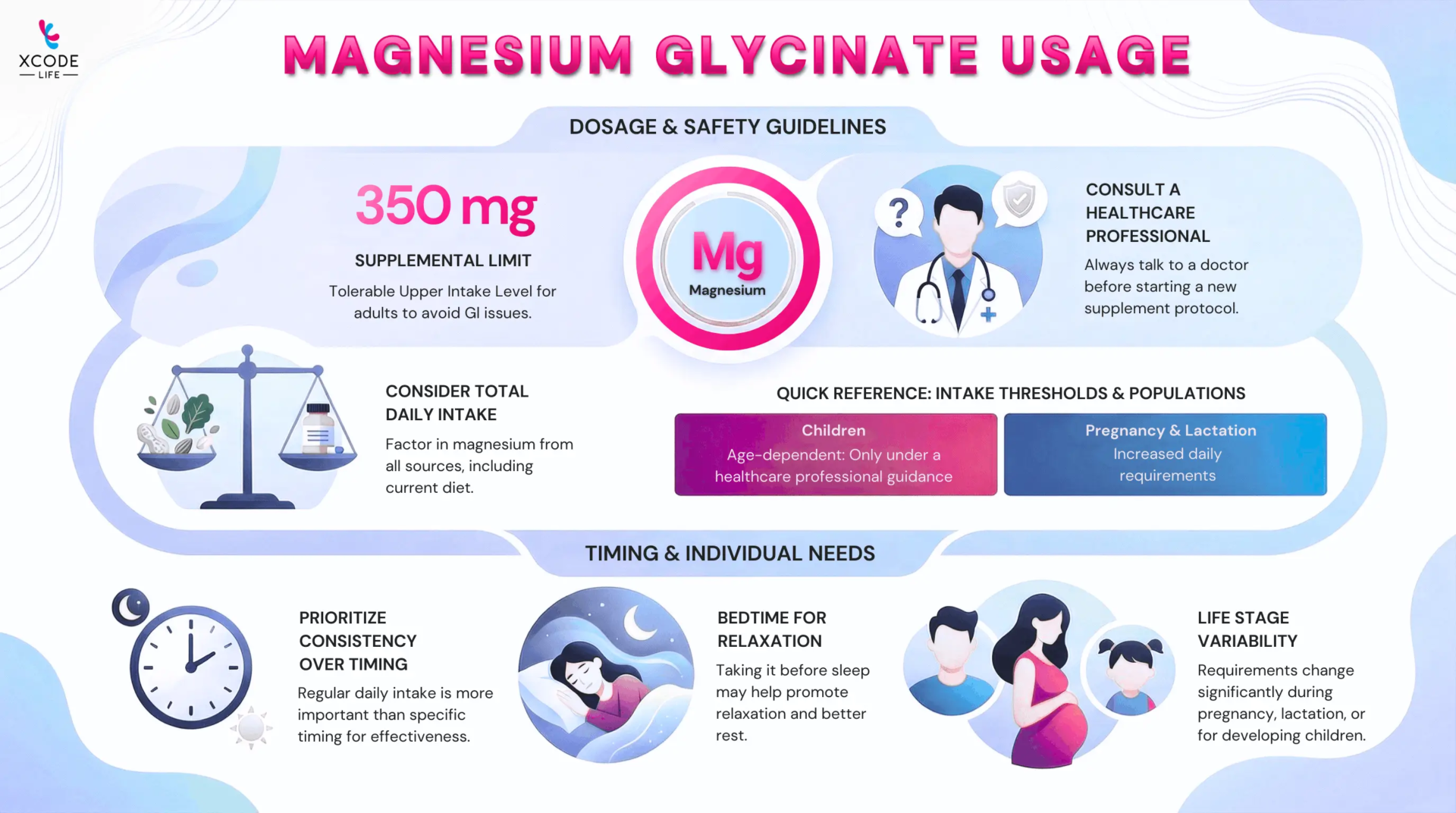
Daily intake within recommended limits is considered safe for most healthy adults. Magnesium contributes to ongoing physiological processes that require consistent intake. Side effects are more likely when supplemental intake exceeds the upper limit. Long-term use may require monitoring in people with kidney disease.
Magnesium does not act as a sedative. It supports normal nervous system function and muscle relaxation. Some people report feeling more relaxed, but this response is not universal.
Magnesium glycinate is absorbed in the small intestine after ingestion. Blood magnesium levels can begin to shift with regular daily use, but noticeable effects depend on your starting magnesium status. If magnesium intake was low, some people may notice changes in sleep quality or muscle comfort within 1–3 weeks. In cases of more significant deficiency or metabolic imbalance, improvement may take several weeks or longer. Magnesium does not act immediately, and the timeline varies from person to person.
Magnesium can reduce the absorption of some nutrients when taken at the same time. High doses may interfere with iron, zinc, or calcium absorption. Separating intake can help minimize these interactions. Many multivitamins already account for these interactions. Always seek clinical guidance before starting any supplements.
Final Takeaway
Magnesium glycinate is a well-absorbed and generally well-tolerated form of magnesium. Evidence suggests modest, context-dependent benefits, particularly in individuals with low magnesium intake. Its usefulness depends on baseline status, overall health, and biological variability rather than the supplement form alone.