Marfan syndrome is a genetic disorder which affects the body’s connective tissue.
Connective tissues play a vital role in helping growth and development.
It also holds together all the body’s cells, tissues and organs together.
Since connective tissues exist throughout the body, Marfan syndrome can affect several parts of the body.
Mutations in the genes that synthesize protein fibrillin-1 results in increased levels of TGF-β(protein transforming growth factor beta) which affects the connective tissues throughout the body, leading to Marfan syndrome.
Although Marfan syndrome is a lifelong condition, its outlook has been improving in recent times.
During the 1970s, the life expectancy of an individual with Marfan syndrome was two-thirds that of a normal person.
However, with improvements in diagnosis and treatment, individuals with Marfan syndrome now have a life expectancy on par with an average person.
Apart from playing a vital role in growth and development, the connective tissues hold the body together.
Since it is found throughout the body, Marfan syndrome affects many parts of the body including the cardiovascular system, skeletal system, eyes, lungs, and skin.
The brain and the spine are surrounded by a fluid called “dura” which is composed of connective tissue.
Marfan syndrome causes the enlargement of this dural membrane, causing dural ectasia which affects more than 60% of Marfan syndrome patients.
Although dural ectasia doesn’t cause any issues, it might sometimes cause headache, back, abdominal and leg pain.
Hand-Picked article for you: Have Your 23andMe Raw Data? Use It To Get 500+ Health-Realted Genetic Traits!
Eye problems such as astigmatism and myopia occur commonly in Marfan syndrome patients.
And more than 50% of them suffer from ectopia lentis which occurs as a result of the dislocation of the eye’s lens that helps focus light rays on the retina.
Ectopia lentis is also a key symptom of Marfan syndrome and is the first sign of the disorder.
Other eye problems affecting Marfan syndrome patients include glaucoma, strabismus, early cataract, retinal detachment and thinning of the cornea.
Pulmonary complications are quite common among many people with Marfan syndrome, and pneumothorax is one of the most common ones.
It is also known as “collapsed lung” which is the detachment of the lungs from the chest wall.
In Marfan syndrome patients, pneumothorax can be recurrent, seen in both the lungs and can also be associated with emphysema.
Doctors do not understand why individuals with this condition find it difficult to gain weight.
They cannot be benefited from any particular diet, dietary supplement or weight lifting programs.
Since it puts too much strain on the heart and aorta, weight lifting is not a safe activity for people with Marfan syndrome.
However, with age, some people with Marfan syndrome do put on more weight.
Therefore, developing healthy eating habits is important for Marfan syndrome patients even though it may not make them gain weight.
Being a serious, life-threatening condition, an early and accurate diagnosis is very important for Marfan syndrome.
Doctors experienced with connective tissue conditions make several exams of different parts of the body to diagnose the condition.
Thorough physical exam, detailed medical and family history, and the following tests are taken into account to diagnose Marfan syndrome:
When all the tests mentioned above fail to diagnose Marfan syndrome, genetic testing may be helpful.
Especially for those with a family history of the condition, genetic tests can rule out or confirm the diagnosis.
Genetic testing which is now improved and affordable can reveal mutations in the fibrillin-1 (FBN1) and other related genes that are known to be responsible for Marfan syndrome.
If you are suspecting a diagnosis when there is no family history, a genetic test can find out if you possess a mutated FBN1 gene and if that mutation is linked to Marfan syndrome or not.
However, to confirm a diagnosis, a combination of genetic testing along with the presence of clinical features should be considered.
The FBN1 gene instructs the synthesis of the protein fibrillin-1.
When this protein binds to other fibrillin-1 proteins and molecules, it forms microfibrils, a threadlike filament.
These microfibrils are those that offer flexibility and strength to the connective tissues.
When this FBN1 gene gets mutated, it can cause a reduction in the amount of functional fibrillin-1, leading to lowered microfibril formation.
This results in decreased elasticity in tissues, leading to instability and overgrowth of tissues in Marfan syndrome.
Even amongst the individuals of the same family, signs, and symptoms of Marfan syndrome vary.
While some people experience mild symptoms, others develop life-threatening complications.
The most common features of this condition include:
Although there isn't any cure for Marfan syndrome, there are treatments that focus on preventing the complications of the condition.
Regular monitoring and current treatments have improved the life expectancies of individuals with Marfan syndrome.
Treatment options include:
The risk of passing the abnormal gene from a parent with Marfan syndrome to their offspring is the same for both genders.
Throughout the world, Marfan syndrome affects both males and females in equal numbers, without any ethnic predispositions.
The inheritance of Marfan syndrome occurs in an autosomal dominant manner, and hence it doesn't skip any generations.
Symptoms show up with the presence of just a single copy of the mutated gene.
Researchers from the University of Florence have reported the possible role of a mutation in the MTHFR gene in the cardiac manifestations of Marfan syndrome.
They have also found a higher prevalence of homozygote with the C677T MTHFR polymorphism.
Homocysteine is responsible for the pathogenesis of the vascular changes in Marfan syndrome patients.
Higher levels of homocysteine have been reported to cause severe vascular changes including aortic dissection in Marfan syndrome patients with the most severe vascular changes.
Family planning decisions can be hard and quite emotional for couples affected by genetic disorders such as Marfan syndrome.
Pregnancy constitutes to added risks to women with Marfan syndrome due to the stress on the heart and blood vessels.
It is essential that women with this condition discuss the possible pregnancy risks with their doctors before planning to get pregnant.
Although there is no clarity if women with Marfan syndrome can or cannot tolerate pregnancy, Marfan syndrome patients should consider these aspects before deciding:
Mostly associated with abnormalities in connective tissues, primarily affecting the ligaments, bones, cardiovascular system, lungs, eyes and skin, Marfan syndrome doesn't cause infertility.
However, the condition can be passed on to the offspring from either of the parents.
Although individuals with Marfan syndrome benefit from regular physical activities, it is recommended that they stick to low-intensity and low-impact activities to prevent undue stress on the aorta.
They should also refrain from taking part in strenuous activities such as weightlifting and competitive sports due to this reason.
Some natural strategies to manage Marfan syndrome include:
Some dietary tips for managing the symptoms of Marfan syndrome:
Include natural anticoagulants such as turmeric, cinnamon, fish and cayenne pepper to lower the viscosity of your blood to minimize the risk of blood clots from forming in the aorta.
Consider foods such as dark leafy greens, lean meat, garlic, fruits and fish to boost your blood vessels and strengthen them.
Consume vitamin-A rich, eyesight promoting foods such as eggs, dairy products, and carrots.
Physical fitness and sports can be an issue since strenuous activities should be avoided among individuals with Marfan syndrome.
They can also face problems due to fatigue.
They cannot smoke since it destroys the protein elastin.
Family planning can also be a strenuous task due to all the potential risks involved.
Dural ectasia which is characteristic of Marfan syndrome can cause low back pain, leg pain, abdominal pain, and headaches.
Hip pain is also common since Marfan syndrome patients have deeper hip sockets.
Pectus carinatum can be treated via non-surgical bracing and surgery.
Dynamic compression braces are comfortable to wear and avoid the breakdown of skin that occurs with traditional ones.
Prenatal testing done between 10 and 12 weeks of pregnancy can detect Marfan syndrome.
Amniocentesis done between 16 and 18 weeks of pregnancy can also detect Marfan syndrome.
While these tests can find out if the child possesses the faulty gene, they cannot indicate the severity of the condition.
For an organ as complex as the heart, many types of diseases can be observed. The most common ones are:
Although heart failure is usually a result of existing heart disease, its onset can largely be identified by
The above, along with fainting/dizziness is observed.
Chest pain is one of the most dangerous symptoms of many diseases, among which heart attack is one.
This makes it difficult to correctly identify whether the pain in the chest is symptomatic of a heart attack.
If the pain is sharp and distinguishable from a location, it is usually not a heart attack.
On the other hand, pain indicative of heart attacks is diffused, dull and yield heavy discomfort.
Often, doctors get panic calls from patients experiencing pain that stings while taking a breath, or something similar to acidity.
These are associated with non-cardiac ailments ranging from physical injury of the ribs to acid reflux to pleurisy.
Hand-Picked article for you:
With increased research being done in the field of cardiovascular diseases, plenty of reasons for the onset of heart diseases have been found.
Broadly, they can be classified into the following types:
Based on the ECG pattern, heart attacks can be classified as:
Beyond causing cancer, smoking has also been found to predispose the smoker to heart attacks.
Smoking along with taking birth control pills increases the threat.
Studies have shown that the active ingredient in cigarettes, nicotine, reduces the oxygen-carrying capacity of the blood.
This directly leads to an increase in blood pressure.
Damage to the inner lining of blood vessels and the heart is also observed.
These threats are imminent not just for active smokers, but also for passive neighbors.
At first glance, this might seem unbelievable. But research has shown that gum diseases increase the risk of heart disease.
Due to poor dental health, a bacterial infection may set in through the oral orifice, which leads to an attack on the heart vessels.
Simultaneously, clinicians have reported loss of teeth in correspondence with Coronary Artery Diseases (CADs).
The Thyroid Stimulating Hormone (TSH) secreted by the pituitary gland and T4 produced by the thyroid gland are hormones which are involved in the regular functioning of many organs.
Imbalances in these hormone levels cause conditions that may lead to heart disease.
Unlike other causes, thyroid levels can be set back to normalcy with adequate medications.
In hypothyroidism, TSH levels are elevated, which causes the arteries to lose their elasticity.
This indicates an increase in blood pressure.
Another side effect of hypothyroidism is a metabolic imbalance, which gradually leads to deposition of cholesterols along the arteries, paving the way for coronary heart disease.
Hyperthyroidism is caused as a result of increased T4 levels.
This hormone stimulates the heart muscles and causes an elevation in heart rate.
Prolonged overstimulation causes palpitations and eventually weakens the muscles, including those of the heart.
In spite of maintaining a risk-free life, many find themselves at the unsolicited doorstep of heart failure.
They could inherit it from their family or be predisposed or at risk due to another disease.
But after being diagnosed, patients often seek out methods to get better to increase the quality of life.
Most clinicians suggest doing cardio exercises for half an hour every day, along with dietary changes.
Behavioral changes like quitting smoking and drinking are advisable.
In some cases, medications are prescribed.
Commonly prescribed medications are:
The influence of diet on the onset of heart diseases is a much-studied topic.
Recent findings claim that red meat significantly predisposes an individual to succumb to heart diseases.
Scientists have observed that a particular by-product of red meat digestion increases the deposition of cholesterol on the inner walls of blood vessels.
They have also noticed an association with platelets, thus accelerating blood-clot-related complications.
Apart from red meat, doctors often ask patients to avoid foods rich in sodium, processed meats, and beverages with added sugars.
Studies conducted in America have conclusive numbers that highlight the dangers caused by such foods on the cardiac system.
The heart-healthy foods
A few alternatives in your kitchen could go a long way in keeping your hearts safe!
The staple food, rice, often becomes the culprit. Using barley instead of rice adds more fiber to the plate.
For those using whole wheat bread, Edamame (Japanese soybean) is a welcome change that packages almost four times the same fiber content.
Instead of drinking beverages out of the can, including healthy volumes of red wine in your diet helps the heart.
Replacing salty foods with fresh herbs is found to have impressive effects while adding some flavor to your plate.
Apart from these, snacking on walnuts and almonds is advisable.
Magnesium for heart health
Magnesium has been found to restore blood pressure levels by acting on the ion channels lining blood vessels.
With increasing advances in scientific research, the onus on finding a cure for heart diseases is greater than ever.
However, the fact that it is not curable has not been challenged.
This is because the exact progression of a ‘heart being attacked’ causes irreversible damage to the heart muscles.
As you are reading this article, science is finding ways to revert this but has solutions to delay the onset of heart diseases by a much bigger margin than what was possible a few years ago.
Hand-Picked article for you: Have Your 23andMe Raw Data? Use It To Get 500+ Health-Realted Genetic Traits!
Lifestyle and wellness experts stress on how heart diseases can be prevented.
This can be understood as a progressive recommendation.
For youngsters, they suggest charting out heart-healthy diets and starting an exercise routine.
Smoking and drinking are to be avoided.
For elders with a stressful work environment, the biggest task is to control stress and increase their quality of life.
With age, metabolism will slow down, which necessitates regulating diets.
Apart from this, general awareness about the onset of heart diseases and heart attacks would add to the conscious living of individuals.
Testing your blood is a great way to understand what’s going on inside your blood vessels.
The most conclusive would be a cholesterol test, which gives you a lipid profile that outlines which types of cholesterols are floating in your blood.
This helps to understand how they might deposit on the blood vessels. CRP tests are equally helpful in estimating the extent of inflammation, which is a marker of cholesterol deposition.
These two tests in combination are informative about atherosclerosis.
Apart from these, lipoproteins, ceramides in plasma and peptide levels add value to understanding the extent of risk to heart disease.
Exercising for 30 minutes a day is found to be effective in making a heart healthier.
The most appropriate type of exercise for the heart is a cardio routine.
Lifting weights add strength to the muscles and increase the overall fitness of an individual.
Staying hydrated helps in thinning of the blood.
Additionally, vitamin E and aspirin supplements are found to prevent atherosclerosis.
Replacing coffee with tea and avoiding cigarettes are seen to have profound effects.
A person born with a heart with weak/faulty valves, walls or blood vessels, is said to have a congenital heart defect.
Often these go unnoticed in infants.
However, they resurface during adulthood, causing irreversible damage.
Treatment options are similar to conventional heart disease methods.
There are studies underway to find the reasoning behind individuals with Down syndrome falling prey to heart diseases at a shockingly young age.
Because Down syndrome is a genetic abnormality, it is suspected that the affected gene also results in congenital heart defects.
The front wall of the heart receives oxygenated blood from an important blood vessel called the Left Anterior Descending (LAD) artery.
When this artery gets blocked, a significant part of the heart is deprived of much-needed blood.
This causes the rapid onset of a heart attack.
Among other instances, this is known to be highly critical as it can change from a meager block to full blockage within a very short span of time.
The most common reason for the high mortality rate around heart attacks is that it can be passed on through a set of faulty genes to many generations. Among these, the following are inheritable:
Since it is a predominantly inheritable disease, patients at risk of heart diseases should definitely sign up for a genetic test with their immediate family members.
Genetic tests can resolve doubts about a person’s suspected inheritance of disease.
By mapping the family tree, the incidence of heart diseases can be tracked.
A genetic counselor can also help an individual understand how predisposed they are to a particular condition, based on the above.
Ideally, genetic testing can be done for any person interested to understand the occurrence of the disease and their risk.
Additionally, it can prove helpful for patients who are diagnosed with a disease of the heart, to better understand how they inherited it.
A thoughtful thing to do would be to include his/her immediate family members in the test to make diagnosis better.
Family members who have lost a blood relative can ideally walk in to get a test done for clarity of inheritance.
Chromosome deletions have been studied to have multiple effects and one such is the 22q deletion syndrome.
Previously, it was found to cause facial abnormalities, autoimmune disorders, and mental illnesses like schizophrenia and BPD.
In recent times, cardiac diseases have also been observed. Additionally, they complicate surgical procedures, which makes treatment highly risky.
According to psychology, intelligence refers to the capacity to acquire and apply knowledge.
It also includes an individual's ability to benefit from previous experiences, for problem-solving and adapting to new situations.
However, according to the psychologist Howard Gardner, intelligence doesn’t attribute to one but eight skills including-
Although there is no single definition for the word, intelligence refers to mental powers and general cognitive, problem-solving skills.
It is the mental ability which is involved in reasoning, calculating, learning, understanding relationships, etc.
The Latin word ‘Intelligo’ stands for ‘to choose between various options’.
One simple definition is “Intelligence is what you do when you do not know what to do”.
Human Intelligence aka HUMINT, stands for the intelligence gathered by means of interpersonal contacts.
Per NATO (North Atlantic Treaty Organization), HUMINT is a category of intelligence obtained from data collected and provided by human sources.
There are four different theories of intelligence which include psychometric, cognitive, cognitive-contextual and biological theories.
Robert J. Sternberg’s triarchic theory on intelligence emphasizes three types of intelligence namely- Practical, Creative and Analytical intelligence.
The theory takes a cognitive approach and is the first to go against the psychometric approach to intelligence.
The three important types of intelligence that matter at workgroups and organizations and for effective leadership include:
Ever since Alfred Binet devised the first IQ test, it has been believed that intelligence can be calibrated and has opened new avenues to figure out how it can be improved.
Psychologists have also been trying to modify intelligence. Some areas of intelligence being malleable is hoped to undergo improvements.
Intelligence can be divided into two categories:
Fluid intelligence includes reasoning and problem-solving, and the latter is demonstrating creative ways for a common solution.
Crystallized intelligence can be improved with age, as one reads and comprehends whereas fluid intelligence tends to diminish with age.
Here are some of the activities that can help you sharpen your practical intelligence:
Intelligence is inherited.
A recent study conducted on >6000 pairs of twins has identified that genetic variants are linked to brain structure and IQ.
The researchers have also found a whole range of genetic variants which can aid the understanding of how these genes work.
The study reports that there is a genetic basis upon which children find learning enjoyable or easy.
There is a genetic basis for why individuals differ in not only their intelligence but also in their drive to learn.
Although intelligence cannot be trained, an intellectually stimulating environment can let you make the most of your talents.
Intelligence improves an individual's test-taking skills and helps raise one’s scores on these tests.
Intelligence includes learning abilities, ability to adapt to new situations and handle abstract concepts.
The development of a child’s intelligence depends on an appropriate environment and adequate stimulation.
Children with this opportunity make the most of their intelligence and perform better in academics.
IQ tests predict the following:
The formula is as follows:
A person whose mental age and chronological age are the same gets an IQ of 100.
Mental age is a concept pertaining to intelligence which looks at how you perform intellectually compared to average intellectual performance meant for your age.
Your intellectual performance is based on your performance in assessments and tests given by a psychologist.
Lewis Terman developed the original idea of IQ and proposed this scale for classifying IQ scores such as:
On one hand, intelligence success accounts for one of the greatest successes of psychology. The IQ test has proven to be a very useful tool in predicting many real-world phenomena. But is an IQ test a fair predictor of an individual’s all-round intelligence? Are all people with a good IQ score smart? Well, not really! These tests are indeed good at measuring certain mental faculties like logic, abstract reasoning, learning ability, etc. But the test falls short when it comes to measuring the abilities that you need to make good judgemental calls in real life. A higher IQ does indicate a greater cognitive ability, but where that is applied is what’s really important. Let’s take a flashlight for example. IQ indicates the brightness of the light. But what matters here the most? The brightness or where we point the flashlight to?
Dr. Howard Gardner, Ph.D. is the father of the ‘multiple intelligence' theory.
Developed in the year 1983, the theory suggests that the traditional idea of intelligence based on I.Q. testing, is far too limited.
He proposes eight different types of intelligence that account for a broader range of human potential namely:
General Intelligence or the general mental ability is a variable summarizing the positive correlations among various cognitive tasks, reflecting that a person’s performance on one type of such task tends to be comparable to his/her own performance on other kinds of cognitive tasks.
People with higher general intelligence tend to learn faster than others.
There is also evidence for 'specific intelligence' which is a measure of skills in narrow domains.
It is an individual’s aptitude in separate modalities or abilities, rather than the more general understanding of intelligence.
Emotional intelligence is the ability to interpret and manage emotions.
It starts with self and social awarenesses; being able to recognize emotions and its impact on both oneself as well as others.
It comprises of three skills namely emotional awareness, the ability to harness emotions and applying them to tasks and the ability to manage emotions.
An individual high in emotional intelligence would make a better coworker or an effective leader.
EQ aka Emotional Quotient measures the capacity of individuals to recognize one’s own emotions as well as that of others, comprehend between various kinds of feelings, label them appropriately and manage and/or adjust emotions to adapt to the environment.
The Wechsler Intelligence Scale is a psychological assessment which measures various aspects of intelligence designed especially for children between the ages 6-16.
The test has gone through several updates and current test version (the fifth edition) got released in 2014.
Despite being used as a children’s IQ test, it is also used as a clinical tool that measures individual cognitive abilities.
It is also sometimes used to access and identify the cognitive function and ability ranges that identify giftedness, general strengths, and weaknesses.
Jaco Pastorius was the world’s greatest bass player who had the most tragic end to a brief career which drew superlatives and praises from his peers.
He was also the man who revolutionized the bass guitar and the most influential bass guitarist ever, who started as a drummer.
He was diagnosed as a manic depressive who also took drugs to a level where his behavior would even risk him to lose his spark.
He went into a coma for his final nine days before passing away.
Xcode Life’s Personality Report provides information on openness, extraversion, intelligence, entrepreneurship potential, and more than 25 such traits.
Seizures are the third most common neurological disorder after stroke and Alzheimer's disease, affecting about 50 million people worldwide. Seizures are temporary disruptions of brain functions.
It occurs due to abnormal, excessive neuronal activity, when the normal brain functions are hijacked.
If seizures are repetitive in an individual, it is a chronic condition called 'epilepsy'. The highest incidence of epilepsy is seen in young children and in the elderly.
Not all seizures are the same. Some may be accompanied by loss of consciousness, while others may not.
It is often difficult to distinguish between the episodic loss of consciousness and various types of seizures.
Though they can be of several types, broadly they are classified into two:
The other less known types are:
The exact cause of seizures are unknown. Our brain has got restraint mechanisms in place to keep the electrical activity in check.
Sometimes, these are overridden by largely unknown mean, leading to seizures.
Several factors, may however, contribute to this:
While we're not exactly sure what causes seizures, it has been considered to be the 'price we pay for years of normal cortical function'
The following have been attributed to causing epilepsy in children:
The signs and symptoms differs based on the location and extent of brain region affected.
However, most seizures begin with a 'Jacksonian march', i.e. starts with localized symptoms, leading to convulsions and twitching followed by the loss of consciousness.
Other seizures types may manifest as individuals staring blankly for a few seconds without realization of what's happening.
The warning signs:
A single seizure does not indicate epilepsy. It takes at least a couple of unprovoked seizures to be diagnosed as epilepsy.
Out new: Sleep 101: Everything you need to know for a well-rested night
Anybody can develop epilepsy.
Factors like age, health condition, and race might influence the likelihood of developing epilepsy.
According to the statistics, about 1 in 50 individuals develop epilepsy in their lifetime.
New cases of epilepsy are noted among children, particularly during those below one-year-old, and it gradually goes down until age 10.
Among older individuals, particularly those older than 55, the rate of occurrence starts to increase as people develop brain tumors, stroke or Alzheimer’s disease.
"It started, as it always does, with the rising feeling – the feeling of nightmares –crawling all up my body and paralyzing me so that I couldn’t call for help. Then the dread closed in all around me and everything went fuzzy and unreal. The seizure’s never the worst bit, though. The worst bit’s when I come to and I see the faces of the people I love" - Helen Stephen
During seizures, your brain undergoes bursts of electrical activity more than usual.
This can cause several symptoms depending on the type of seizure and the part of the brain which is involved.
Normal brain activities can also occur during a seizure.
You might be able to move, feel, see and do many things.
While seizures have a start, middle and an end phase, it might be difficult to categorize it sometimes.
When you experience more than one seizure, you might notice that they could be stereotypic, episodic and can also be unpredictable.
Common symptoms of a seizure include changes in your thoughts, the way you speak, vision problems, muscle changes, drooling, losing bladder controls, and trouble breathing.
Not all seizures indicate epilepsy.
Normal EEG readings and lack of response to epileptic medicines can help distinguish between epilepsy and other seizure disorders.
Epilepsies are highly genetic disorders. About 50% of the case occurrences have a genetic basis.
Genetic tests can yield mechanistic insights into treatment choices and prognosis.
Research shows a complex and surprising interaction between genes influencing seizure onset.
At present, more than 70 genes have been linked to epileptic phenotype.
However, most cases of seizures cannot be explained even on the recent surge in identification of epilepsy-genes.
Upon reviewing your symptoms and medical history, your physician might order several tests to diagnose epilepsy.
The diagnostic test for epilepsy include:
There are several treatment strategies
About 80% patients respond to medication.
The remaining 20%, however, remain refractory.
Surgery is the treatment of choice for such patients.
Some of the anti-epileptic drugs include: Lacosamide, Rufinamide, Tiagabine, Diazepam, Phenytoin, Divalproex, Carbamazepine, Phenobarbital, and Valproic acid among many others.
Epilepsy is not a mental illness and majority of patients do not have psychological issues.
However, uncontrolled epilepsy can affect the individual psychologically.
More commonly, epilepsies can cause personality changes in an individual.
A switch in their emotional and behavioural state might occur.
Memory loss is also a common cause of worry in epileptic individuals.
Prior to the onset of a seizure, changes in mood like irritability or depression is not unusual.
Reduced libido, depression, psychosis, and paranoia can also occur as a complication.
They are, however, largely preventable.
Although epilepsy is not a psychiatric disorder, the dimension is vital for future research.
About 1 in 3 individuals develop the fear of seizures and constantly worry they might have an other attack soon.
Not only does anxiety occurs as a reaction to the diagnosis, but also does exist as a symptom of epilepsy and a side effect of the epilepsy drugs.
Nigerian researchers report that epilepsy and bipolar disorder could share genetic roots.
The study concluded that there is a genetic or environmental relationship between epilepsy and bipolar disorder.
It has also been suggested that biochemical, structural, and functional abnormalities in the primary bipolar disorder could occur secondary to epilepsy.
Another research conducted by the Bayer college of Medicine has reported that the gene associated with bipolar disorder controls the balance between brain excitation and inhibition is associated with epilepsy.
While schizophrenia is not a common complication, epileptic patients are at a 2.5 times increased risk for schizophrenia compared to the normal population.
The LGI gene (leucine-rich glioma inactivated) has been linked to partial epilepsy with auditory features, representing schizophrenia.
Repeated generalized seizures without return to full consciousness between seizures, called status epilepticus, is a true medical emergency.
This condition requires aggressive seizure management and general medical support because 30 or more minutes of continuous convulsive seizures leads to brain injury or even death.
An individual having a seizure attack can remember what's happening to them during the onset if there is no loss of consciousness.
They cannot, however, react to it and move or speak until the attack ends.
Till date, we do not know exactly how a seizure terminates on its own.
While foods have not been shown to trigger epilepsy, people with the conditions are advised to avoid the following:
Vitamins that reduce seizure frequency include vitamin B6 and vitamin E.
Minerals that reduce seizure frequency include manganese, taurine, dimethylglycine, and omega-3 fatty acids.
Thiamine helps improve cognitive function in epileptic patients.
Also, supplementation with folic acid, vitamin B6, biotin, vitamin D, and L-carnitine may be needed to prevent or treat deficiencies resulting from the use of anti-convulsant drugs.
A Brazilian case study has reported a case of a man with partial symptomatic epilepsy experienced an increase in seizure frequency due to his heavy coffee drinking habit.
They also reported that once he stopped taking coffee, the frequency of his seizures had decreased dramatically.
Cannabis-based (CBD) oil has been reported to have prevented seizures in a patient who had experienced various treatment failures.
Doctors emphasize that CBD oil isn’t a miracle cure but that it can help eliminate or reduce epilepsy symptoms and also ease off side effects caused by other drugs.
The Texas Law permits only those with intractable epilepsy (where at least two other medications have failed to help) eligibility to be prescribed CBD oil.
While exercising helps improve overall health and well being, researchers have also found a link between exercises and reduction in the number of seizures in epileptic patients.
Also since lack of physical activity is associated with cardiovascular diseases, cancers, type 2 diabetes, osteoporosis, hypertension, anxiety, and depression. Thus exercises can help prevent such conditions.
While living with epilepsy can be quite challenging, it's not impossible. Being diagnosed with the condition can be quite upsetting and make a person with epilepsy feel isolated and alone.
The medicines they take might cause side effects which might make it difficult for them to cope with work. But with proper management and support, patients can lead a relatively normal life. They may have to stay away from potential triggers of the condition though.
The Equality Act 2010 protects epilepsy patients from being unfairly treated.
The act covers them during a job application, interview process and continues to cover once they start working too.
The act implies that employers cannot refuse a job to an individual just because they have epilepsy.
However, to ensure safety, they must refrain from applying for jobs that involve driving, working at heights, working near open fire/water and work that involves unguarded machinery.
Upload it to Xcode Life for insights into 700+ health-related traits!
Our affinity for alcohol is not new; in fact, we developed it ten million years ago, even before we evolved into humans! The natural source of alcohol is fruits, with usually less than 1% of ethanol in ripe fruits and up to 8% in overripe fruits. The presence of alcohol was beneficial both for our primate ancestors as well as the plants that bore the fruits. The strong smell of alcohol traveled far and wide, attracting primates. This helped primates reach food sources while they helped the plants by dispersing the seeds. Alcohol was considered highly beneficial when fruits were its major source. In the present time, where alcoholic drinks are available in large quantities and are consumed in higher concentrations, they tend to do more harm than good.
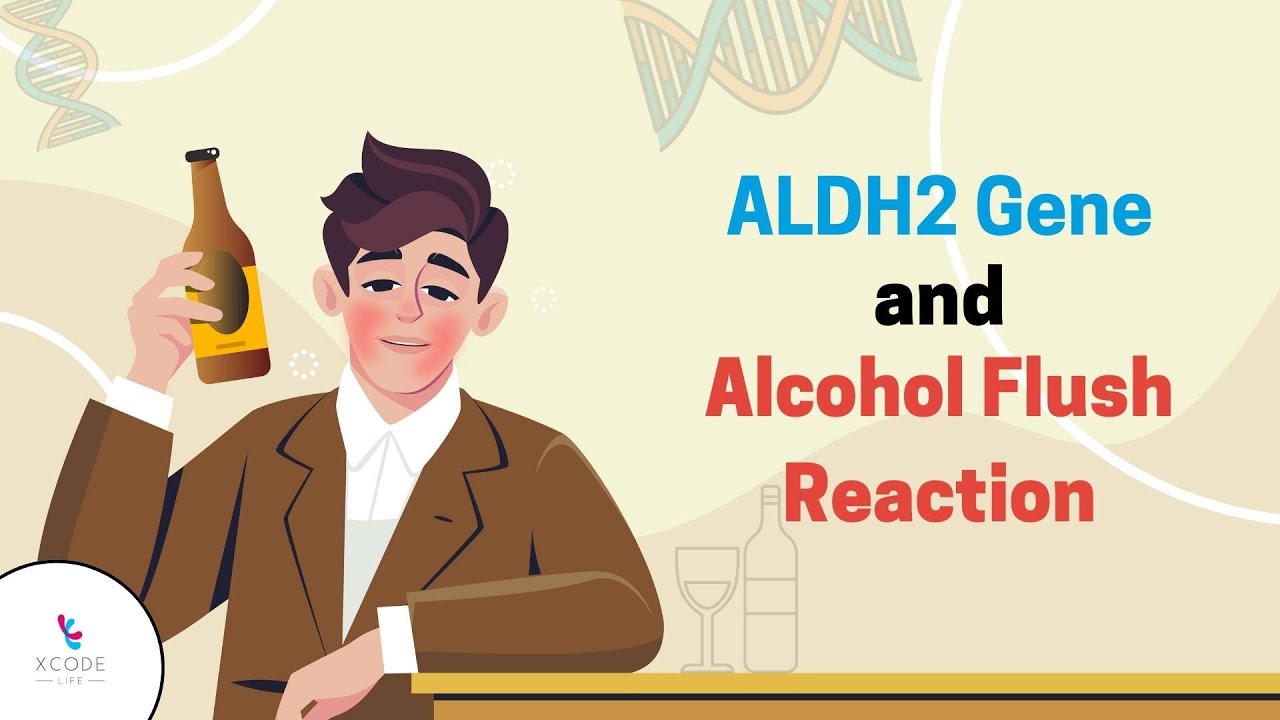
The consumption of alcohol in some individuals causes blotches of erythema on their face and neck region, and sometimes on the entire body. Such an event is called an alcohol flush reaction.
Most of the time, it happens as a result of improper digestion of alcohol.
Accumulation of acetaldehyde in the body after alcohol consumption leads to this reaction.
When you consume alcohol, it gets metabolized to its byproduct acetaldehyde.
In typical cases, acetaldehyde gets metabolized further.
An enzyme called aldehyde dehydrogenase, coded by the gene ALDH2 is responsible for this metabolism.
However, some individuals have a defective gene that prevents the further metabolism of acetaldehyde.
This causes its accumulation in the body resulting in an alcohol flush reaction.
There are two types of enzymes responsible for the breakdown of alcohol: alcohol dehydrogenase (ADH) and aldehyde dehydrogenase. Acetate is synthesized with the help of aldehyde dehydrogenases (ALDH), mostly by ALDH2, a mitochondrial enzyme, but also by ALDH1, the cytosolic enzyme.
There are five different types of ADH enzymes based on structural similarity and kinetic properties.
Class I enzymes: The class I enzymes are coded by the ADH1A, ADH1B, and ADH1C genes, which are associated with about 70% of the total ethanol oxidizing capacity.
II: The class II enzymes are coded by the ADH4 gene, which is associated with about 30% ethanol oxidizing capacity.
III: The class III enzymes are coded by the ADH5 gene and is the only class of enzyme that is detected in the brain.
IV: The class IV enzymes are coded by the ADH7 gene and are found mainly in the upper digestive tract, where it oxidizes ethanol at high concentrations.
V: The class V enzymes coded ADH6 gene are found in a variety of substrates, including retinol but are less efficient in ethanol metabolism.
People of Asian descent, especially East Asian descent, are more susceptible to having an alcohol flush reaction.
In fact, this red face phenomenon is also called the "Asian flush or "Asian glow."
According to some studies, over 70% of East Asians have genetic polymorphisms in either ADH or ALDH2, leading to intense flushing with ethanol consumption.
Other than the primary flushing red face, the other symptoms include:
While the flushing by itself may not be dangerous, the reaction may have other health-related implications.
A 2013 study reported that people who experience an alcohol flush reaction on drinking might have a higher chance of developing hypertension, or high blood pressure.
Another study done on East Asian men in 2017 found an association between high risk of cancer, especially esophageal cancer, and flushing reaction.
This can be due to the high levels of acetaldehyde, which can trigger the growth of cancer cells.
When you report with suspected alcohol flush reaction, your doctor may first perform a physical examination. Other confirmatory tests also help with the diagnosis.
Skin test
It detects your allergy, if any, to a substance in alcoholic beverages such as grains like maize, rye, and wheat.
A little amount of the substance is injected into your skin, and the reaction is studied. If the skin appears red and raised, you are noted positive for the test.
Blood test
A blood test is done to detect the presence of antibodies like IgE that are found in the blood when there is an allergic reaction to a substance in alcohol.
Enzyme test
Measuring the amount of alcohol metabolizing enzymes, alcohol dehydrogenase, and aldehyde dehydrogenase can predict the intensity of reaction that one may experience.
Genetic test
The gene responsible for acetaldehyde metabolism in the body is ALDH2 that produces the enzyme ALDH2 or Aldehyde Dehydrogenase 2.
Individuals who suffer from an alcohol flush reaction may have a faulty or deficient ALDH2 gene, and this can be identified using genetic testing.
There is no definitive treatment for the root cause of this reaction, ALDH2 deficiency.
However, there are options when it comes to managing the symptoms.
The only foolproof way to prevent this reaction is to avoid or limit your alcohol intake.
A lot of people tend to use OTC antihistamines to manage the reaction, but this is strongly not advisable.
The first and foremost step is to recognize your risk for this condition by studying your ALDH2 gene variants.
Check your 23andMe raw data or your Ancestry DNA raw data to find out the variant you carry
| TT | [Limitation] More likely to show signs of alcohol flush on alcohol consumption |
| TC | Moderate risk of alcohol flush on alcohol consumption |
| CC | [Advantage] Less likely to show signs of alcohol flush on alcohol consumption |
According to the variant you carry, you might need to limit or discontinue alcohol consumption.
Alcohol irritates the gastric lining.
When you drink alcohol, even a small quantity of it, it causes your stomach to produce acid.
Consumption of excess alcohol leads to increased production of stomach acid, which can lead to gastritis.
In many cases, excess alcohol triggers pain in the stomach, causes diarrhea, vomiting, and even bleeding.
Alcohol affects almost all parts of our body.
Consumption of excess alcohol affects the part of the brain that controls hearing.
In fact, alcohol consumption affects ears and hearing in more than one way.
When we drink alcohol, it also gets absorbed in the fluid of our ears and causes a burning sensation.
Alcohol causes hot flashes in women, especially those going through menopause.
Having even a few sips of alcohol can make you feel warmer.
This is because alcohol makes the blood vessels underneath your skin dilate and increases the blood flow in them, which can induce the 'warm feeling.'
But in reality, alcohol reduces your core temperature.
Reducing alcohol consumption can immensely improve your health. Here is a list of a few things you can do to help you reduce drinking:
Upload the file to Xcode Life to get insights into 700+health-related traits!
Updated 16 January 2022
The COMT gene is an essential gene when it comes to determining the development of our personalities, identities, and dispositions.
This gene codes for the catechol-o-methyltransferase enzyme that inactivates or breakdown catechols, which are a type of neurotransmitters in the brain, like dopamine.
These neurotransmitters are responsible for brain functions like short-term memory, planning, and cognitive abilities.
COMT gene is found on chromosome 22.
There are two types of COMT genes :
It has more affinity for dopamine and therefore, plays a more significant role in inactivating dopamine in the brain.
The MB-COMT is located in the cell bodies, axons, and dendrites of cortical neurons with its C-terminal end in extra-cellular space.
It has a lesser affinity for dopamine and is located in peripheral tissues like liver, blood, etc. and plays a role in detoxification and metabolism of catechol compounds.
Handpicked content for you: COMT Gene- Neurotransmitter Levels and Worrier Or Worrier Personality
There is one SNP (Single Nucleotide Polymorphism) within the COMT gene that is associated with the consequences of poor health.
When a small piece of chromosome 22 gets deleted as part of the 22q11.2 deletion syndrome, it leads to the loss of 30-40 genes that includes the COMT gene.
Due to this deletion, people with this disorder have only one copy of the gene instead of two.
Loss of one copy of the COMT gene results in abnormal regulation of the COMT enzyme in the brain and increases the risk of developing behavioral problems and mental illnesses.
COMT and MAO or Monoamine oxidase A (MAO) are two primary enzymes that are responsible for breaking down catecholamines in the brain.
Catecholamines like norepinephrine, epinephrine, and dopamine lower the threshold for an aggressive response to external stimuli.
MAO is located on the outer membrane of the mitochondria, i.e. in the nerve terminals and glia in the brain and peripheral tissues, it is found primarily in the liver and the kidney.
MAO is of two types and two separate genes code for the two forms: MAO-A and MAO-B.
MAO-A is located in the dopaminergic and noradrenergic neurons, and MAO-B is present in serotonergic neurons and glia.
As mentioned above, COMT is also of two types, where one is membrane-bound, and the other is soluble.
MAO enzyme is responsible for deactivating primary, secondary and tertiary amines that are found in the brain, liver, and kidney.
They play an important role in metabolizing the biogenic amines and oxidizing xenobiotics like aniline.
MAO is responsible for deactivating amines like dopamine, which is a chemical messenger in the brain.
Low levels of dopamines are associated with Parkinson’s disease.
In such cases, treatment with a dopamine drug is not useful as it cannot cross the brain barrier.
So, MAO inhibitors are used that prevent the breakdown of dopamine and make it available for use in the brain.
MAO-B inhibitors are a type of inhibitors that are used to treat symptoms of Parkinson’s disease.
These drugs are prescribed for patients to block the action of the MOA enzyme and prevent the breakdown of dopamine.
COMT v158m is the most studied SNP of the gene because it plays a vital role in intelligence, personality and the risk of developing a disease.
Presence of the ‘A’ allele is said to decrease the activity of COMT by 3-4 times and affects cognitive and executive functions.
So, if you have AA, then you will have the highest amount of dopamine and GG would mean the lowest amount of it.
Too little or too much dopamine impacts cognitive performance.
Hand-Picked article for you: Have Your 23andMe Raw Data? Use It To Get 500+ Health-Realted Genetic Traits!
VDR or Vitamin D Receptor is the nuclear hormone receptor for vitamin D3. Low levels of vitamin D are seen in many acute and chronic illnesses and is also related to neurological and immunological conditions.
Also, it is important to note that vitamin D stimulates enzymes that create dopamine.
TaqMan genotyping assays were used to identify VDR polymorphisms like Taq-1, Bsm-1, Fok-I, and Apa-I.
The VDR Taq and Bsm gene are always inverse to each other.
VDR mutations occur in the vitamin D3 receptors and COMT gene have an inverse effect on the regulation of the dopamine levels.
When a person has a VDR mutation, it means that the person is less sensitive to methyl group supplement levels.
Having AA alleles on the COMT v158m gene, SNP is said to make one prone to stress, and they tend to be ‘worriers.’
In people with AA alleles, the level of COMT is less, and dopamine is high which makes them poor dealers of stress.
However, in the case of GG alleles, the individuals perform better under stress and show more aggression and therefore, are termed as ‘warriors.’
The 'warrior' gene is located on the short arm (p arm) of the X chromosome and codes for the enzyme Monoamine Oxidase A (MAOA).
The variants of the MAOA gene, collectively called MAOA-L, are responsible for the aggressive behavior seen in many individuals with mental disorders.
A recent study in Finnish criminals brought about another gene that has initially been linked with ADHD, autism, schizophrenia and bipolar disorder called CDH13.
Even this gene today is considered to be a ‘warrior’ gene.
Everyone has the ‘warrior’ gene.
Its effects are based on the mutations that the gene undergoes due to a variety of predisposing factors.
However, a recent study at the University of Florida has linked the MAO-A or the ‘warrior gene’ in men to be the ‘happiness gene’ in women.
The reason for the difference in expression of the gene in men and women was proposed to be testosterone, which is much higher in men than in women.
Epinephrine and norepinephrine are catecholamines that act as hormones and neurotransmitters in the brain.
Their primary function is to prepare the body and the brain for action.
They increase the blood flow and activity of the organs needed for impending actions such as increasing the heart rate, promoting alertness, and vigilance, increasing the blood pressure, increasing blood flow to the skeletal muscles, and increasing the utilization of glucose stored in the body.
However, at the same time, epinephrine and norepinephrine reduce the blood flow to certain other parts of the body such as the gastrointestinal system and excretory system as they are not directly involved in the fight or flight response.
So, epinephrine and norepinephrine reduce gastric motility, digestion, and metabolism and inhibit voiding of the bladder.
COMT gene is responsible for the breakdown and metabolism of neurotransmitters like norepinephrine, serotonin, and dopamine in the brain.
When there is less production or excessive metabolism of dopamine, it contributes to the motor symptoms of Parkinson's disease.
Dopamine drugs cannot cross the brain barrier and therefore, are unable to improve the symptoms of the patient.
So, in such cases, COMT inhibitors that prevent the production of COMT enzyme are prescribed.
This increases the availability of dopamine and reduces motor symptoms of conditions like Parkinson’s disease.
Dopamine is broken down into metabolites by a variety of enzymes that include:
Dopamine can be broken down by different pathways, but all of them lead to the same end product homovanillic acid that has no known biologic activity.
Yes, they are and let us see how:
The MTHFR gene codes for the MTHFR enzyme that converts 5,10-methylenetetrahydrofolate (MeTHF) to 5-methyltetrahydrofolate (MTHF).
MTHFR is a part of the one-carbon pathway that cycles dietary folate into its various forms. It gets converted back to THF after it loses one methyl group when methionine synthase converts homocysteine into methionine.
However, a mutation in this MTHFR gene stops the activity of methionine synthesis, leading to the accumulation of homocysteine (an excess of which is terrible for the body).
This is where the COMT gene comes into the picture. Limited methionine means an insufficiency in the activity of the COMT gene.
This is how COMT and MTHFR genes are functionally linked.
Currently, there are no conclusive results about the association of the COMT gene with schizophrenia.
However, extensive studies are being carried out to explore the linkage between the COMT gene and other mental disorder.
Nutrition facts: Magnesium is a cofactor for COMT and is required for its efficiency. Vitamin B6 or pyridoxine acts as a cofactor for enzymes associated with methionine metabolism.
Xcode Life’s Health Report provides information on openness, extraversion ness, intelligence, entrepreneurship potential, and more than 25 such traits.