
Key Takeaways
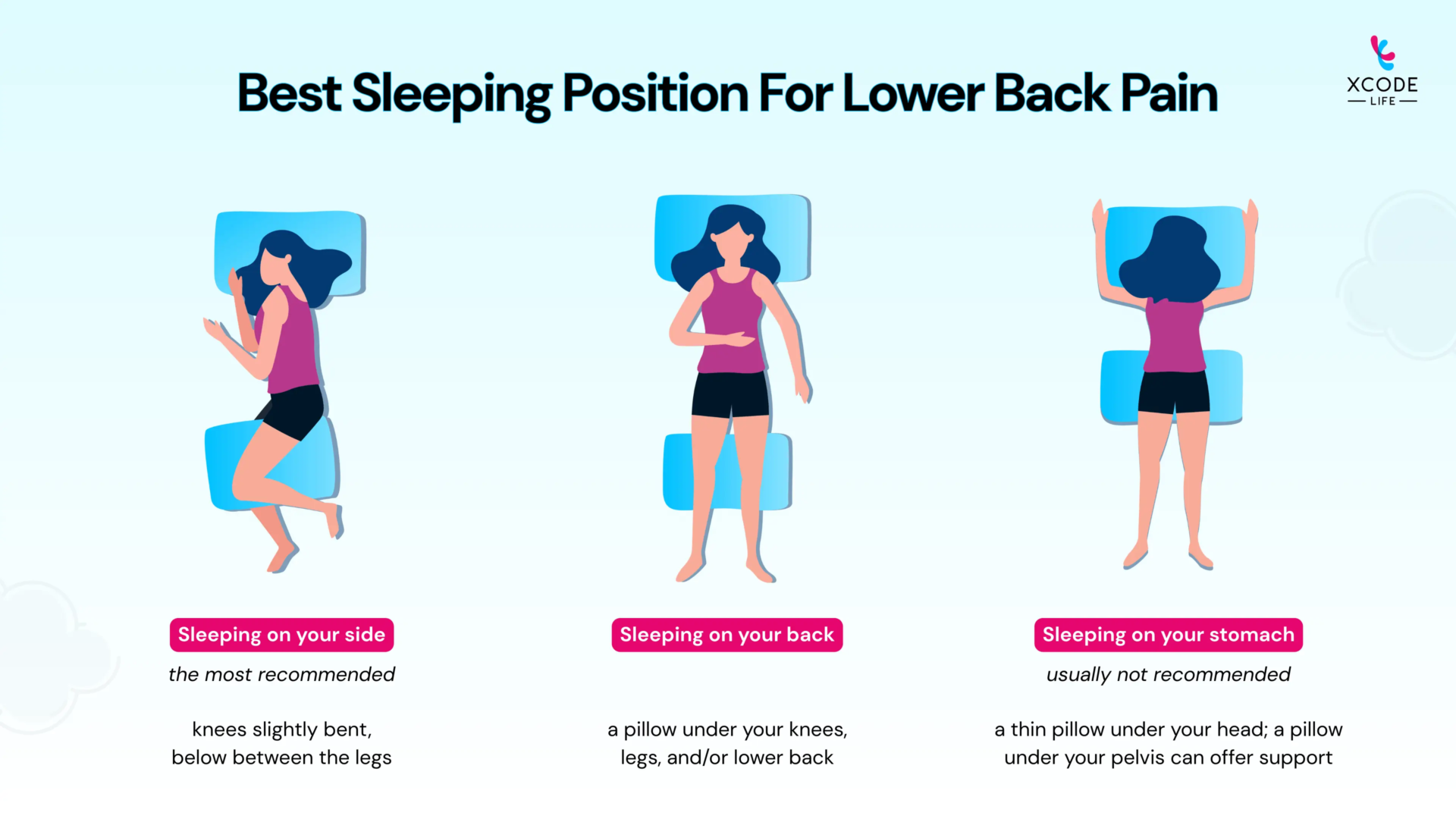
- The best sleeping position for lower back pain is on your side with a slightly bent knee and a pillow between your legs.
- If you’re not a side sleeper, lying on your back with a pillow below your knees can also help alleviate back pain.
- Stomach sleeping is generally not recommended for those with back pain.
Unlocking The Secrets To A Better Sleep Health With A Simple DNA Report:

How Are Sleep And Lower Back Pain Related?
The relationship between sleep and lower back pain is a two-way street.
How Back Pain Affects Sleep
Severe lower back pain can make it difficult to find a comfortable sleeping position.
Extreme pain can also interfere with a good night’s rest.
How Sleep Affects Back Pain
Inadequate or low-quality sleep can lead to back pain. While experts are not sure why this happens, it may be due to insufficient tissue repair.
According to a study that involved nearly 10,000 participants, lower back pain is associated with short sleep duration and poor sleep quality.
The quality and suitability of your mattress and pillow also play a role.
An unsupportive or sagging mattress can lead to improper spinal alignment, exacerbating back pain.
Additionally, certain sleep disorders, such as sleep apnea or insomnia, can disrupt normal sleep patterns and have been associated with an increased risk of developing or worsening chronic pain conditions, including lower back pain.
What Is The Best Sleeping Position For Lower Back Pain?
Sleeping on your side: the most recommended
According to the Sleep Foundation, the best sleeping position for lower back pain is sleeping on the side with a slight bend in the knees.
A pillow between your legs can further help with comfort.
If your lower back pain is due to a herniated disk, sleeping on your side in a fetal position can help relieve pressure by widening the space between the vertebrae.
Sleeping on your back
If you are a seasoned back sleeper and cannot break the habit, a pillow under your knees, legs, and/or lower back can help relieve lumbar pressure and reduce pain.
Sleeping on your stomach: usually not recommended
According to experts, sleeping on your stomach can be the worst position for back pain as it adds stress to your neck.
But if you cannot sleep in any other position, go for only a thin pillow under your head.
A pillow under your pelvis and lower abdomen can also prevent the lower back from sinking into a U-shape.
This ensures that your spine is not pulled out of alignment.
Does Sleep Help Heal Lower Back Pain?
Sleep plays a crucial role in the healing process of lower back pain.
During sleep, the body undergoes restorative processes that promote tissue repair and recovery.
Adequate sleep allows damaged tissues, including those in the lower back, to heal more effectively.
It also helps reduce inflammation, which can contribute to lower back pain.
Therefore, getting sufficient, high-quality sleep can support the healing of lower back pain.
However, it's important to note that sleep alone may not address chronic or severe lower back pain.
Thus, consulting with a healthcare professional for a comprehensive evaluation and appropriate treatment options is recommended.
What Is The Worst Sleeping Position For Lower Back Pain?
If you constantly suffer from lower back pain after sleeping, it is best to avoid sleeping on your stomach.
However, getting adequate, high-quality rest is more important for relieving lower back pain in the sleep position.
So, if you cannot sleep well in any other position, follow the tips given in the previous section for sleeping on your stomach.
What Should You Do To Avoid Lower Back Pain?
- Maintain good posture: Practice proper posture while standing, sitting, and walking. Keep your shoulders back and head aligned with your spine. Avoid slouching or excessive arching of the lower back.
- Use ergonomic support: Ensure your workspace, including your desk, chair, and computer setup, is ergonomically designed. Use a chair with good lumbar support and adjust the height of your chair and desk to maintain a neutral spine position.
Position your computer screen at eye level to avoid straining your neck and back. - Lift objects correctly: When lifting heavy objects, use your legs instead of your back to lift. Bend at the knees, keep your back straight, and lift with the strength of your legs. Avoid twisting or jerking motions while lifting, as these can strain the lower back.
- Engage in regular exercise and stretching: Regular exercise can strengthen the muscles that support the spine and help maintain proper alignment. Focus on exercises that target the core muscles, including the abdominal and back muscles. Additionally, incorporating stretching exercises for the back, hamstrings, and hips can help improve flexibility and reduce the risk of lower back pain.
- Practice regular breaks and movement: Avoid prolonged periods of sitting or standing in one position. Take regular breaks to stretch, move around, and change your posture.
Incorporate short walks or gentle exercises into your daily routine to promote blood circulation, relieve muscle tension, and support spine health.
While these tips can promote spine alignment and reduce the risk of lower back pain, it's essential to listen to your body and consult a healthcare professional if you have persistent or severe back pain.
How Do I Fix My Lower Back Pain ASAP?
Ice therapy and gentle movement for the first 48 hours, followed by heat therapy and stretching after 48 hours, can help relieve lower back pain.
After consulting a doctor, topical creams and painkillers can also be used for immediate relief.
Frequently Asked Questions
How Should I Sleep To Relieve Lower Back Pain?
Sleeping on your side with a pillow between your legs and lying on your back with a pillow below your knees helps keep the spine neutral, thereby relieving lower back pain.
What Is The Best Sleeping Position To Decompress Your Lower Back?
- Modified fetal position: Sleep on your side with a pillow between your legs to align your hips and spine
- Lying on your back: To maintain your spine’s natural curvature, sleep on your back with a pillow under your knees.
What Should You Not Do With Lower Back Pain?
Avoid complete bed rest (go for short walks and gentle stretches instead), heavy lifting, bending and twisting, and prolonged standing or sitting.
Is It Better To Sit Or Lie Down With Lower Back Pain?
Both prolonged sitting and lying down are bad for lower back pain. While seated, use a good lumbar support in your chair and take periodic short, slow walks. While lying down, lie on your side with a pillow between your legs or lie on your back with a pillow below your knees.
What Is The Big 3 For Lower Back Pain?
While only small walks and gentle stretching are recommended when you have lower back pain, the big 3 for strengthening your lower back are: modified curl-up, side plank, and bird dog. The big 3 was developed by Dr. Stuart McGill.
How To Get Rid Of Lower Back Pain While Pregnant?
Good posture, maternity support pillows, flat shoes, physical activity, and strength training can help relieve lower back pain while pregnant. It is also important to avoid lifting heavy objects to prevent lower back pain.
Summary
Lower back pain can be caused by muscle strain, disc problems, degenerative conditions, poor posture, and a sedentary lifestyle. The relationship between sleep and lower back pain is reciprocal, as pain can disrupt sleep, while insufficient sleep can contribute to back pain.
The best sleeping position for lower back pain is on the side with a slight bend in the knees and a pillow between the legs. If sleeping on the back, a pillow under the knees, legs, or lower back can help.
Sleeping on the stomach is generally discouraged, but if necessary, a thin pillow under the head and a pillow under the pelvis and lower abdomen can help maintain spinal alignment.
Maintaining good posture, using ergonomic support, lifting objects correctly, engaging in regular exercise and stretching, and taking regular breaks to move are additional tips for avoiding lower back pain.
It's important to consult a healthcare professional for personalized advice and treatment options if experiencing chronic or severe back pain.