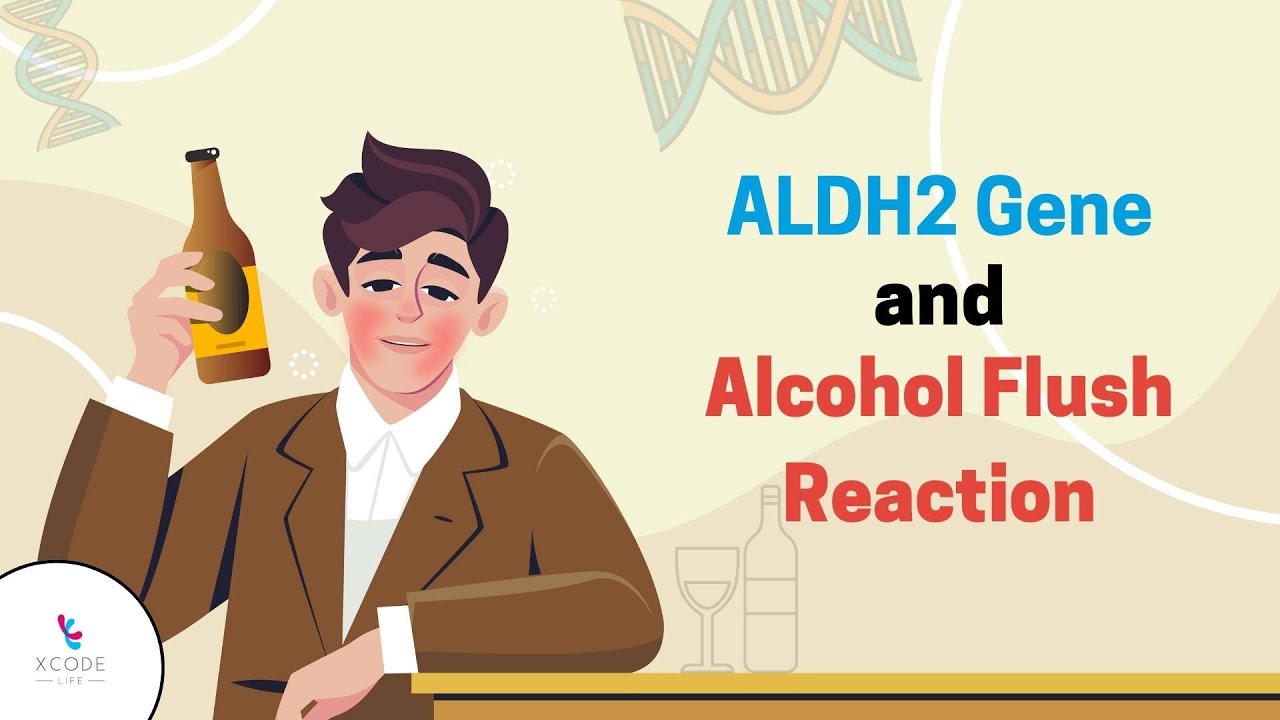
WATCH: The genetic behind alcohol flush reaction
Alcohol has become a part of people’s lives. People drink when they are happy, excited, sad, or stressed out. It is one of the oldest recreational drugs in use. While many people can handle their drink well, some have extremely unpleasant symptoms when they consume even limited quantities of alcohol.
Alcohol Flush Reaction (AFR) is a condition that causes red patches on the skin after consuming alcohol. These red patches are mostly seen on the cheeks, neck, and shoulders. Sometimes, they can also be seen all over the body.
If you have East Asian friends and go out for drinks with them, you may have noticed their faces turning red after just a couple of sips of their drinks.
About 30-50% of East Asians, including Koreans, Chinese, and Japanese experience alcohol flush regularly.
According to 100 different studies, moderate consumption of alcohol may reduce the risk of cardiovascular diseases by up to 40%.
The right levels of alcohol consumption also increases healthy High-Density Lipoprotein (HDL) levels in the body
Moderate drinkers may be at a lower risk of developing type II diabetes than non-drinkers.
However, when you consume more than four drinks a day, the risks of alcohol consumption may outweigh the benefits.
Genetically, some people can handle their alcohol better and benefit from moderate drinking. For others, even small quantities of alcohol only cause increased health risks. We will discuss this in the later sections.
Scientists believe that the alcohol flush reaction has its roots in China about 10,000 years ago. This was the same time that agriculture became a staple form of livelihood here and people’s diet changed. Rice became a common food choice.
According to the experts, the change in diet and lifestyle caused changes in the gene makeup of the Chinese population.
Alcohol flush reaction is a result of such a random change in the genes (gene mutation). It spread from here to neighboring parts of the country and is now very common with East Asians.
It is very rare for non East-Asians to carry this variant (type) of gene.
When you consume alcohol, 90% of its processing happens in the liver. An enzyme called alcohol dehydrogenase converts ethanol into ethanal (acetaldehyde).
Acetaldehyde is a toxic by-product. Another enzyme called aldehyde dehydrogenase quickly converts this by-product into ethanoate (acetate).
Before the liver starts processing alcohol (in about 20 minutes after consumption), alcohol is absorbed from the stomach to the bloodstream and reaches the whole body, including the brain.
Some people experience alcohol flush and others don’t because of their genes.
In people with alcohol flush, the body does not produce enough aldehyde dehydrogenase to convert acetaldehyde to acetate. This causes excess accumulation of the toxic acetaldehyde in the body. This leads to the symptoms of alcohol flush including skin blotching, nausea and general feeling of discomfort.
Alcohol reaches your brain within minutes after you have had your drink.
Your Central Nervous System (CNS) helps with processes like thinking, reasoning, understanding, and motor functions. Alcohol slows down the CNS processes. People experience a foggy mind, inability to remember things, slowed motor functions, and dull hearing after they start drinking because the alcohol affects the nerve cells and makes them slow.
How fast alcohol affects your brain’s activity can depend on factors like what other drugs you have had before, your age, size, and gender and also your genes.
If you are a woman, then you are at a higher risk for developing alcohol-related disorders than a man! It sounds unfair but this is true.
Drinking the same amount of alcohol as a man seems to damage the woman’s health more than it does a man’s.
When it comes to alcohol disorder-based deaths, women have 50-100% more mortality rate than men.
Women have lesser water content in their body than men. So, the concentration of alcohol in the body of a woman is higher and they get intoxicated faster.
Because of the presence of estrogen, more women experience liver damage because of excess alcohol consumption than men.
The U.S. Dietary Guidelines for Americans suggest the below recommended values for moderate alcohol consumption.
Adult men - 2 drinks a day
Adult women - 1 drink a day
The recommended values are for normal adults without alcohol flush or alcohol abuse conditions.
People with alcohol flush reactions will have to limit their alcohol consumption based on how intense their symptoms are.
The Body Alcohol Content (BAC) is a measure of how much alcohol has reached your Central Nervous System (CNS). BAC is measured in terms of percentage of alcohol in 100 ml of blood. Below are the values of BAC and their corresponding symptoms.
Alcohol flush is one of the earliest symptoms of alcohol consumption.
Here are the symptoms of alcohol flushing:
Alcohol is a drug and depending on the tolerance levels and the years of alcohol use, symptoms of alcohol withdrawal may include:
People with alcohol flush reaction are not usually prone to overusing the drug as the side effects discourage them from drinking more.
Genetics play an important role in determining whether or not your body can handle alcohol.
The ALDH2 gene helps produce aldehyde dehydrogenase (ALDH) that converts the toxic acetaldehyde from alcohol into acetate. This step is very important to prevent acetaldehyde accumulation in the body that leads to alcohol flush.
Alcohol flush reaction is a condition that causes red patches in the skin, nausea, and general discomfort after a person drinks. This condition is very common in people with East Asian ancestry. As the person continues to drink, the symptoms get worse. Genetics play a very important role in causing alcohol flush reactions. Knowing your limit, choosing alcohol with lowered ABV and keeping the stomach full and the body hydrated all help bring down the intensity of the condition. Certain medications can help too.
Do you start your day with a cup of freshly brewed coffee? Does a cup of tea warm your insides and leave you feeling fresh in the evening? Do you stock up energy drinks in your fridge to help handle late nights?
All these beverages have one thing in common - caffeine.
Caffeine is an organic compound found in plant sources. Caffeine is a legally accepted and consumed psychoactive drug ( a chemical that alters nervous system functions). Caffeine alters a person’s mood, behavior, and energy levels.
While some studies have praised the beneficial effects of caffeine on human health, others warn about the health risks. Why does the same substance lead to different health outcomes?
The answer to these questions is not only applicable to caffeine but also to a lot of other substances.
We are all genetically unique. While some substances produce relatively similar effects on our bodies- many substances, including caffeine, are processed differently in different individuals.
When a drug fails a clinical trial- it does not mean that every individual who took that drug failed to respond. On the other hand, there is no approved drug that works equally well on every individual.
It is common knowledge that some drugs work really well for some, but not for others. We need higher doses of certain drugs and lower doses of others. There is a dose difference for certain drugs for men, women and children.
Caffeine is no different. Unless the genetics and other factors are accounted for, it will not be easy to say whether caffeine is good or bad for you. Keep reading to find out the unique genetic aspects of caffeine metabolism (processing in the body)
There are about 60 species of plants that can produce caffeine. Few top sources are:
Did you know that about 85% of Americans consume at least one caffeinated drink a day? Coffee remains the most consumed caffeinated drink among adults.
How much caffeine is too much? Do you have to give up on caffeine to lead a healthy lifestyle? Keep reading to know more.
The history of caffeine is closely associated with the histories of its plant sources.
It was 2437 BCE. The Chinese Emperor Shen Nung was relaxing in his garden. The wind blew a couple of leaves into his cup of boiling water. He noticed that the water changed color and smelled fragrant. The leaves were later identified to be from the tea shrubs. Tea leaves are considered a stimulant (a drink to energize the body).
There are many stories on the discovery of caffeine. Some scripts say the ethnic Oromo people of Ethiopia recognized coffee beans to have energizing properties.
The more popular version is of Kaldi, an Ethiopian goat herder. He noticed his goats getting all excited after consuming coffee beans. He mentioned this in a monastery and the first cup of coffee was brewed there.
The leaves of the yaupon holly tree were brewed as early as 8000 and 1000 BC. This was then known as the black drink.
In many West African cultures, it is still a regular practice to chew on kola nuts when people feel tired.
Caffeine is very easily absorbed by the body. 99% of caffeine is absorbed in about 45 minutes.
Once you consume a caffeinated beverage, it enters the gastrointestinal tract. Caffeine is processed in the liver by an enzyme that breaks it apart into different chemicals like paraxanthine, theobromine, and theophylline.
Peak levels of caffeine are observed in the plasma between 15 minutes and 120 minutes after oral consumption.
Caffeine easily reaches the brain. Adenosine is a chemical in the brain that induces sleep. The structure of caffeine is similar to that of adenosine. Caffeine attaches itself to the adenosine receptors (a protein that responds to adenosine) and prevents people from feeling sleepy.
The more caffeinated beverages you drink, the more adenosine receptors your body will produce.
Over time, you will need more amounts of caffeine to keep you awake.
Plant sources are not the only way to get your dose of caffeine. Caffeine is artificially synthesized in industries too.
The production of caffeine in industries began during World War II. Germans were unable to obtain caffeine because of various trading bans. They hence had to create caffeine artificially.
Today, synthetic caffeine is very cheap and tastes just like natural caffeine. It would not be surprising if you cannot tell the difference between the two.
While synthetic caffeine is safe when had in small amounts, the problem is with the manufacturing process. Ammonia goes through a lot of steps and chemical interactions to turn into caffeine.
The synthetic caffeine industry is also unregulated in most countries. All this makes synthetic caffeine a slightly worrying product in the market.
Caffeine is addictive. Your body goes through withdrawal symptoms when you try to reduce your caffeine intake. Few popularly noticed symptoms of caffeine withdrawal are:
Withdrawal symptoms can start 24 hours after giving up caffeine and can last for up to 9 days.
Caffeine sensitivity refers to having an adverse reaction to consuming caffeine. For most people, consuming more than 400 mg of caffeine can cause physical and mental discomforts.
Few others can be hypersensitive to caffeine and cannot tolerate it even in small quantities. Here are some non-genetic factors causing caffeine sensitivity.
How are some people able to process caffeine better than others? Genetics is the answer.
CYP1A2 gene - The CYP1A2 gene influences how fast caffeine is processed in your body and how you react to it. One particular SNP that can increase or decrease the effects of caffeine consumption is the rs762551.
AA genotype
AC and CC genotype
ADORA2A gene - The ADORA2A gene produces the adenosine receptors in the brain. You know by now that caffeine attaches itself to the adenosine receptors and prevents the person from feeling tired or sleepy.
The ADORA2A gene is also responsible for increasing dopamine levels (the happy hormone). Variations in the ADORA2A gene are said to cause mood swings, anxiety, and irritation.
Caffeine is a legally consumed drug that can alter the mood and increase attention and focus. It is naturally present in up to 60 plant sources. It is also artificially produced in industries. Normal adults have to limit their caffeine intake by up to 400 mg. Caffeine overdose can lead to mood disorders, rapid heartbeats, and high blood pressure. Caffeine withdrawal has to be handled gently and causes symptoms like depression, anxiety, and low energy levels. Genetically, some people can show high caffeine sensitivity and need to monitor their caffeine consumption.
Selenium (Se) is an essential micronutrient (nutrients needed by the body in small quantities). It is required for its role in antioxidant activity, immunity, and thyroid function.
The natural forms of this nutrient in our body are selenocysteine and selenoproteins. Humans are known to have 25 selenoproteins, with selenoprotein P and glutathione peroxidase (GPx) among the most studied. Most of the selenoproteins found in the body play a role in antioxidant function.
Most of the selenoproteins found in the body play a role in antioxidant function.
Some other important functions of selenoproteins include:
The inorganic (chemically-derived) forms of selenium are available as selenide, selenite, and selenium. Selenium is taken up from the soil by plants, so dietary levels depend upon the soil's selenium content.
From an evolutionary point of view, humans adapted to selenium needs based on their geographical location. During early human migration, they inhabited areas with differences in the soil levels of certain micronutrients, like selenium.
Over the years, the body learned to adapt itself to the selenium availability in the soil. Thus, the soil concentration, along with the dietary practices of different populations, brought about the differences in the selenium requirements.
While selenium is very important for its function as a selenoprotein, it was essential to regulate blood levels of selenium to reduce the risk of selenium toxicity in areas with high environmental selenium levels.
Some types of genes involved in selenium uptake and metabolism helped adapt to the environmental levels of selenium. For example, in regions with low selenium levels in the soil, people with higher/better absorption of selenium from the diet may have had a survival advantage.
On the other hand, regions of high selenium levels, people with lower absorption levels may have had an advantage.
The RDA of selenium for a healthy adult is 55 µg/ day, while the normal blood levels are between 70 to 150 ng/mL.
The CBS gene carries the instructions to make the enzyme cystathionine beta-synthase. This enzyme is responsible for converting a harmful amino acid, homocysteine, to another amino acid, cysteine, which is safe for the body.
Some changes to the CBS gene play a role in the build-up of homocysteine in the body, causing many negative health implications.
It also leads to lower selenium levels in the body.
According to a study, selenium levels are inversely associated with homocysteine levels - higher levels of homocysteine in the body lead to lower selenium levels.
Thus, the changes in the CBS gene that bring about the buildup of homocysteine can also cause selenium deficiency.
rs6586282 is located on the CBS gene and regulates serum homocysteine and selenium levels. 85% of the people have a normal type of the CBS gene, while 15% have the type that could put them at risk for selenium deficiency. The T allele affects the clearance of homocysteine and causes its build-up, and is hence associated with lower levels of selenium in the body.
The amount of selenium present in food sources is largely influenced by soil quality and other factors like rainfall and evaporation.
Selenium deficiency can result in several health issues like:
Selenium toxicity: While selenium supplementation is very important for people with selenium deficiency, excess selenium can lead to a condition known as selenium toxicity. The safer upper limit for selenium is 400 micrograms a day for healthy adults. Anything above that could lead to toxicity, characterized by symptoms like fatigue, discoloration of the nail, brittleness, irritability, and garlic breath. Long-term or chronic toxicity can lead to loss of fertility and hypothyroidism.
Selenium deficiency can be assessed by a qualified healthcare practitioner based on symptoms. Levels of the enzyme glutathione peroxidase may also be tested. This enzyme is known to play a role in selenium functioning. Low levels of the enzyme indicate low levels of selenium.
An infection by a virus is known to increase reactive oxygen species or ROS and lower antioxidant enzyme levels in the body. Reactive oxygen species are molecules containing oxygen, which react with other molecules in the body cells. This could lead to oxidative stress damage, resulting in increased viral replication.
Selenium increases type 1 immunity against viral infections and restricts viral mutations. Viruses undergo changes to adapt to the human body better and escape any treatment against it.
Identifying people at risk of selenium deficiency and supplementing their need may help in its use as adjuvant therapy (an add-on therapy other than the primary treatment) to treat viral infections.
RSV or respiratory syncytial virus is a type of virus that causes respiratory infection with cold or flu-like symptoms. A study conducted on 75 children with respiratory diseases due to RSV showed the selenium supplementation helped relieve the symptoms faster.
A study conducted on people who tested positive for HIV showed that supplementation with selenium resulted in a reduced number of viral particles and an increase in T-immune cells.
Recent research also found an association between selenium supplementation and SARS-COV-II viral multiplication.
Selenium influences the chemicals that are known to play an important role in affecting mood and behavior in animals and humans. Thus, this nutrient is required for the brain's normal functioning. Selenoprotein P (SELENOP) plays a role in the transport of this trace mineral in the body.
Selenium supplementation plays a role in improving mood-related issues. In a study conducted by Benton and Cook, 100mcg of selenium was given to the study population, while controls were given a placebo. The study found that supplementation with selenium resulted in an improvement in the mood.
In another study by Gosney et al., micronutrient supplementation and its effect on the mood of nursing home residents were studied. Eight weeks after supplementation with 60 mcg of selenium, there was a reduction in depression scores.
As selenium affects cognitive function, a deficiency in selenium levels can play a role in memory problems, lack of mental acuity (sharpness), or (in non-clinical terms) brain fog.
Preeclampsia is a condition in which pregnant mothers have high blood pressure, potentially affecting their pregnancy. A study on nearly 500 women showed that supplementation with selenium resulted in a 72% reduction in preeclampsia risk compared with controls.
A study conducted on mother and child to understand the impact of selenium on psychomotor function (the relationship between physical actions and cognitive function) showed that maternal selenium levels during the first trimester (in pregnancy) play a role in motor development during the child's first year.
The same study showed that the level of selenium in cord blood (blood in the tube that connects the mother to the baby) had a positive relationship with the child's language development at two years.
The selenium levels in the food are influenced by selenium levels in the soil. Soil selenium levels may be affected by pH, rainfall, and evaporation. People with the following conditions may have lower selenium levels:
The primary step towards adequate levels of selenium is to eat foods rich in selenium. The National Institute of Health recommends that 55µg of selenium should be consumed every day by people over the age of 14.
Selenium is an important mineral required for many processes like the regulation of the thyroid gland and anti-inflammatory activities. The body cannot produce selenium, and hence it needs to be consumed through dietary sources. For selenium to perform its function, it needs to be absorbed and utilized well by the body. Some genetic factors can put you at risk for selenium deficiency, which can lead to a weakened immune system, muscle pain, and hair loss. Health conditions like HIV and Crohn’s disease can also put you at risk for selenium deficiency. Ensuring adequate intake of selenium is important for the body. Some common food sources include rice, beans, wheat bread, and tuna.
Gluten is a family of storage proteins found in various grains such as barley, rye, and wheat. Gluten is responsible for the soft and chewy texture of pastries and baked items. It also retains the moisture in bread, pasta, and cereal.
Gluten intolerance and gluten sensitivity are two terms used interchangeably to describe a condition where the body recognizes gluten as an ‘enemy’ and initiates an immune response against it.
Gluten intolerance is also known as ‘non-celiac’ gluten sensitivity.
Celiac disease is an exaggerated form of gluten intolerance. Upon consuming gluten, the immune system attacks the lining of the intestines. When the symptoms are more severe, the recovery is a lot harder.
Here, the body’s immune system, which is meant to protect it, mistakenly acts against it. This is known as an auto-immune response, which can be due to genetic reasons.
Since intestines play a big role in the absorption of essential nutrients, attacks on them over time can result in poor absorption of nutrients, putting you at risk for various deficiencies. When the gluten intolerance is non-celiac, the immune responses triggered do not damage the intestines but instead contribute to milder symptoms.
Gluten sensitivity symptoms are not restricted to just the digestive system.
All the fad about gluten-free diets has portrayed gluten-containing products, mainly wheat, in a bad light. While gluten is a big no-no for the gluten-sensitive, reduced consumption of whole grains may negatively impact your health.
Whole grains like wheat, bran, and rye are rich sources of fiber. They also contain carbohydrates, proteins, and small amounts of B vitamins and minerals.
Thus, avoiding gluten in the absence of an intolerance/sensitivity can end up being detrimental to your health.
Diana Gitig, a Ph. D. graduate from Cornell University, Massachusetts, mentions that celiac disease's first reported case dates back to 100 A.D. It was diagnosed by a Greek doctor, Aretaeus. Yet, the cause of the disease was never understood clearly.
During the Dutch famine in the 1940s, when celiac patients received very little flour (wheat) for consumption, their symptoms started improving.
When fresh supplies of bread were reintroduced, the symptoms started worsening again. This was when wheat was isolated as the cause of the intestinal symptoms.
Until the 1950s, only 1 out of 8000 were sensitive to gluten. Today, as high as 1 in every 100 individuals are gluten sensitive .
Prof. David Sanders from the University of Sheffield takes help from the concept of evolution to answer this huge rise in cases. He claims that humans started eating wheat only recently, about 10,000 years ago. This is a very brief period considering that humans have walked on the planet for more than 2 million years.
Humans initially consumed raw food, such as plants, fruits, and meat. Processed food (wheat, rye, and other grains), are relatively new in the evolutionary timeline. Prof. David acknowledges this fact and states that our body is still in the process of adapting, especially the food that contains gluten in it. With millions of years of having a gluten-free diet, it makes sense as to why gluten is considered a foreign body by our immune system.
Although a global analysis of gluten intolerance is yet to be done, a nationwide study was conducted in the United States. Over 400,000 biopsy results were examined to understand if ethnicity played a role in gluten intolerance and celiac disease. The following results were concluded after the study :
It is also worth mentioning that gender studies showed that both men and women had equal chances of being gluten-sensitive. Hence it can be inferred that gender does not play a role in this intolerance.
The Human Leukocyte Antigen (HLA) gene system plays a role in the production of the Major Histocompatibility Complex (MHC), which are proteins present on the cell surfaces. They play a role in regulating the immune system.
Two classes of the HLA gene known as HLA-DQ2 (HLA-DQ2.2 and HLA-DQ2.5) and HLA-DQ8 are linked with gluten intolerance risk.
Four types of the HLA gene, HLA DQ, HLA DQ 2.5, HLA DQ 2.2 (has three sub-types), and HLA DQ7, have been linked to gluten intolerance.
In a study conducted to assess the genetic influence on gluten intolerance, nearly all the patients with celiac disease had the risk allele in the HLA DQ2 and the HLA DQ8 genes. The absence of the same was found in 100% of people without celiac disease. In another study conducted to analyze the HLA gene types, people with the C allele in HLA DQ8, T allele in HLA DQ 2.5, the T, C and A alleles in different subtypes of HLA DQ 2.2 (M1, M2, and M3 respectively), and A allele in HLA DQ7 were shown to have an increased risk of reacting to gluten in their diets.
Some of the non-genetic causes of gluten sensitivity are:
Not all people are born with gluten sensitivity. It is possible to acquire it during the course of life. This intolerance can be triggered after surgery, childbirth, or after a period of severe stress.
Gluten sensitivity increases the risk of an adrenal hormone imbalance.
The adrenal glands pick up on the stress levels.
Unstable sugar levels and inflammation of the digestive tract resulting from gluten intolerance cause the adrenal glands to secrete cortisol.
This leads to an increase in body fat, fatigue, and irritable mood.
Fatigue is one of the most common symptoms of celiac disease and non-celiac gluten sensitivity.
In fact, fatigue and tiredness are the symptoms that last longest, even after the individual has shifted to a gluten-free diet.
Fatigue in gluten intolerant individuals occurs due to two main reasons:
Dehydration is also a major cause of fatigue and tiredness in gluten intolerant people.
Patients suffering from celiac and non-celiac forms of gluten intolerance have reported neurological symptoms such as headaches, brain fog, anxiety, depression, and peripheral neuropathy.
Gluten can also cause other disorders like insomnia, migraines, ADHD, epilepsy, schizophrenia, bipolar disorder, and in a minute number of cases, gluten ataxia (antibodies directed at gluten attacks the brain).
Many studies have shown a correlation between gluten intolerance and depression, anxiety, and other neurological syndromes.
A study conducted by Christine Zioudrou and her colleagues at the National Institute of Mental Health in 1979 found that some gluten compounds can attach to the morphine receptors in the brain.
The morphine that is produced in the body is known as endorphins. These are released in our body for various reasons, for instance, to reduce/manage pain.
Certain compounds of gluten (exorphins) mimic the structure of endorphins and attach to the receptors.
Thus, the endorphins have no place to attach to and are not activated. This can lead to mood-related disorders like depression and anxiety.
A large majority of the people who suffer from gluten-intolerance report lack of sleep and poor sleep quality.
Due to digestive symptoms, neurological symptoms, and generalized fatigue and tiredness, most people suffer from a lack of sleep or other related conditions.
If you think you have some of the symptoms of gluten sensitivity, talk to your doctor before jumping to any conclusions. The doctor can run tests and review your history to help reach a diagnosis.
Another way to find out if you have a risk for gluten allergy is to do a genetic test. If you already have your DNA raw data from any ancestry company like 23andMe, Ancestry DNA, Family Tree DNA or whole genome data, you can upload it to Xcode Life for a Gene Nutrition report.
In the Gene Nutrition report you can find an in-depth analysis of your genetic variants for gluten sensitivity and ways to manage or prevent it.
A gluten-free diet seems pretty straightforward - just removing gluten from your diet. But completely avoiding gluten can be challenging as many ingredients added to food like soy sauce, mayonnaise, and roasted nuts also contain gluten.
Whole grains like wheat and barley are well-known harbourers of gluten. So wheat-based bread, pasta, or baked goods should be avoided.
Just like how water exerts pressure on the walls of the pipes when flowing, blood too exerts pressure on the surface blood vessels.
The pressure exerted must be constant and of a particular value. A drop or hike in this pressure may likely be a warning of an abnormality.
When the pressure exerted by blood on the walls increases beyond a certain level, it is known as hypertension or high blood pressure.
Hypertension is a common health condition. Nearly half the American population is expected to be diagnosed with hypertension.
Most people don’t experience any particular symptom until the condition becomes severe. That is why hypertension is rightly known as the "silent killer”. Even when people do experience the symptoms, they are almost always associated with other issues.
The causes of hypertension or high blood pressure are still being studied. Some of the well-accepted and scientifically proven causes are smoking, obesity or being overweight, diabetes, having a sedentary lifestyle (one involving very minimal physical activities), and unhealthy eating habits.
When it comes to diet, a high salt intake can result in hypertension, especially if you are 'salt-sensitive.'
We all require some amount of salt in our diets to survive. As its chemical name sodium chloride suggests, salt contains an important mineral, sodium.
Salt sensitivity is a measure of how your blood pressure responds to salt intake. People are either salt-resistant - their blood pressure doesn't change much with salt intake or salt-sensitive - their blood pressure increases upon salt consumption.
About 60% of people with high blood pressure are thought to be salt-sensitive.
If you suspect salt sensitivity, the best way forward is to approach your medical practitioner.
Your practitioner may initially put you on a low sodium diet. This can then be switched to a high sodium diet.
If there's a rise in the blood pressure by 5-10% after the switch, then you may be considered salt sensitive.
When our ancestors were roaming about in Africa, many thousands of years ago, salt may have been a scarce nutrient in their diets.
Our bodies require salt for a lot of important functions like muscle contraction, maintaining blood volume, and sending messages and signals between the cells.
Salt also plays a role in water retention in the body. In archaic times when our ancestors were out and about in the Savannah, exposed to the sun for long periods of time, being salt-sensitive would have given them an advantage by losing less water to the environment.
Salt retention became even more essential when infectious diseases (which often cause people to lose sodium through diarrhea and vomiting) started to spread.
Researchers speculate that this is the reason why humans probably developed the sensitivity to salt.
So, an ability to hold on to this nutrient was a survival advantage in many ways.
Unfortunately for many of us, we have retained this evolutionary ability to hold on to calories and sodium ever so dearly. Being surrounded by an environment filled with high-salt and high-calorie foods has automatically ended up increasing our risk of obesity and hypertension.
Surprisingly, salt is not only found in salty foods, but many sweet-tasting foods have large amounts of salt in them. Salt is used as a taste enhancer and a preservative.
Many brands that make cake and pastries hide some amount of salt in them in order to enhance the taste.
The kidneys control blood pressure by either excreting or reabsorbing sodium. Since sodium moves with water, it is excreted as urine when the blood pressure needs to be lowered. By contrast, the kidneys reabsorb sodium in order to increase the blood pressure.
Our blood pressure is also regulated by the widening and narrowing of the blood vessels to regulate the blood flow.
Whenever there's a drop in the blood pressure, it triggers the release of a hormone, renin, from the kidneys. Renin helps form a molecule, angiotensin 1. Angiotensin 1 and 2 are two forms of the hormone angiotensin, that controls the narrowing of the blood vessels to regulate blood pressure. Angiotensin-converting enzyme or ACE, released by the lungs, converts angiotensin 1 to angiotensin 2. Angiotensin 2 triggers the release of another hormone, aldosterone, that helps kidneys reabsorb sodium and water, thereby increasing the blood pressure.
Some types of ACE gene increase the production of the angiotensin-converting enzyme. This results in an increased sodium absorption, thereby causing a higher than normal spike in the blood pressure.
The SNP rs4343 influences the production of the angiotensin-converting enzyme in response to sodium (salt) in blood. The A allele of rs4343 has been associated with increased blood pressure on high salt intake.
People who are salt sensitive should watch the sodium content in their diet. Foods that are low in sodium and high in potassium are recommended - potassium lessens the effect of sodium.
The DASH diet is popular among people with high blood pressure. This diet emphasizes fruits and vegetables - both of which are low in sodium and high in potassium. It also includes nuts, whole grains, poultry, and fish.
Dairy products also are a good addition to the diet. Milk, yogurt, cheese, and other dairy products are major sources of calcium, vitamin D, and protein.
Other low sodium foods include basil, apples, cinnamon, brown rice, kidney beans, and pecans.
While retaining salt in the body was a survival advantage for our ancestors, the same has become a villain in this day and age of high-calorie and high-salt foods all around. Hypertension, characterized by a persistent elevation in the blood pressure, is a risk factor for many serious conditions like heart disease and stroke. Depending on our sensitivity to the sodium in salt, our blood pressure either spikes or lurks in the normal range upon consumption of salt. The ACE gene plays an important role in determining our sensitivity to salt. The ‘salt-sensitive’ individuals must be wary of the amount of sodium (salt) intake in order to maintain their blood pressure in the normal range. The DASH diet is popular among people who are trying to limit their salt intake.
Vitamin E has gained popularity recently. The association between vitamin E and skin health is a key reason for its popularity.
Vitamin E is a fat-soluble nutrient. Both plant and animal sources are available:
Animal sources: fish and oysters, dairy products like butter and cheese, Plant sources: vegetable oils, nuts and seeds, and green vegetables like broccoli and spinach.
There are 8 different chemical forms of vitamin E found.
All of these have varied effects on the body. Out of these, alpha-tocopherol (α-tocopherol) is the most active form while gamma-tocopherol (γ-tocopherol) is the most common form found in foods consumed by North Americans.
Here are some of the significant functions of vitamin E:
Vitamin E as an antioxidant
Vitamin E is a proven anti-oxidant (substances that prevent oxidation). It helps prevent cell damage from free-radicals.
Free radicals are active molecules in the body that can harm the cells in the body and prevent the cells from staying healthy.
Free-radical damage is the most common reason for skin problems including aging of the skin, development of wrinkles, fine lines, and dark spots, and skin becoming loose and saggy.
Vitamin E in both dietary forms and topical forms (external application in the form of creams, gels, and serums) is beneficial for healthy skin.
Vitamin E and immunity - Vitamin E helps improve immune response and provide protection against various infections by keeping the immune cells healthy.
Vitamin E and lifestyle risks - Lifestyle risks like smoking, drinking, and UV exposure can harm the cells in the body. Vitamin E provides protection against these.
Vitamin E and degenerative diseases - Many studies have shown that taking the recommended amounts of vitamin E reduces the risk of developing diseases like cancer, high blood pressure, and coronary heart diseases. These promising early results are being further investigated.
The early 1900s was the time when some of the initial vitamins like vitamin A, B, C, and D were discovered. Scientists and biochemists were involved in intense research identifying what else these vitamins could and couldn’t do.
Herbert McLean Evans and Katherine Bishop were anatomists experimenting with rats at the University of California. They fed rats only milk and studied how the rats were progressing. While they found that the rats were growing healthier, they were not reproducing!
They tried modifying the diet and included some starch and animal fats. The female rats became pregnant but were unable to carry the pregnancy to full term.
That’s when they introduced lettuce as a part of the diet. Now they found that the rats got pregnant and delivered healthy babies.
It was then recorded that healthy and natural sources of food were important for fertility. A particular nutrient was extracted from lettuce and was named vitamin E in 1922.
Since the nutrient was related to fertility in rats, it was given a Greek name ‘Tocopherol’. In Greek, ‘toco’ meant birth, ‘pher’ meant carrying, and ‘ol’ referred to it being a chemical.
Upon consuming vitamin E rich foods or vitamin E supplements, it is absorbed in the body like any regular fat source that you eat. Vitamin E is absorbed by the small intestine and from here, it reaches the blood and is circulated around.
The liver absorbs most of the vitamin E from the blood. You should know that the liver only acts on alpha-tocopherol and converts it into a form that is usable by the cells in the body. All other types of vitamin E are sent (excreted) out.
The converted form of alpha-tocopherol is now sent out to the blood and reaches all the tissues and cells.
Excess vitamin E is stored in the adipose tissues (fat-storing tissues present in several locations in the body) just like how normal fat is stored and is used when needed.
The use of vitamin E in the cosmetics and skincare industry has become quite common. Every product in the market seems to have added vitamin E to it.
Are all of these actually beneficial?
No, says research.
Vitamin E needs to remain stable to be useful for your skin. Most generic skincare products use unstable vitamin E forms that get destroyed as soon as you expose the product to light and air.
Hence the products you religiously use may do nothing to your skin.
The next time you buy a vitamin E-enriched product, make sure the base nutrient used is an ester form of vitamin E (a type of compound produced from acids) that is more stable and is also easily absorbed by the skin.
You cannot get vitamin E toxicity by just consuming foods rich in vitamin E. You get it only when you consume excess supplements. Here is a list of maximum levels of vitamin E that your body can handle safely.
Vitamin E toxicity can lead to internal and external blood loss (hemorrhage). When you consume excess vitamin E supplements for a longer duration, the side effects get worse.
For normal healthy individuals, vitamin E deficiency is quite rare. These individuals can easily get their recommended values only from regular food that they eat.
If a person gets vitamin E deficient because of certain genetic and non-genetic reasons mentioned below, it can result in:
Genetically, few people can have higher levels of vitamin E in the body and a few others can have lower levels. You will have to plan your vitamin E intake based on your genetic design.
APOA5 gene - The APOA5 gene is responsible for producing (encoding) the Apolipoprotein A-V protein. This is important for transporting fats including vitamin E. There are two SNPs of this gene that alter the vitamin E needs in the body.
CYP4F2 gene - The CYP4F2 gene produces the CYP4F2 enzyme. This helps in breaking down vitamin E. A particular allele of the gene is known to result in higher levels of vitamin E in the body.
TTPA gene - The TTPA gene helps produce the alpha-tocopherol transfer protein. This helps in transferring vitamin E in the body. Few mutations of the TTPA gene can cause Ataxia with Vitamin E Deficiency (AVED). AVED is another very rare inherited disorder that can lead to vitamin E deficiency.
Here, the transfer protein required to process vitamin E into cell-usable forms is absent or doesn’t function right. AVED results in vitamin E deficiency and individuals with these mutations are likely to require more vitamin E than recommended levels.
MTTP gene - The MTTP gene is responsible for producing a particular type of protein called microsomal triglyceride. This protein, in turn, helps produce beta lipoproteins. Beta lipoproteins carry fats in the food you eat from the intestine to the blood. These also carry fat-soluble vitamins like vitamin E.
There are about 60 different mutations of the MTTP gene that cause a condition called abetalipoproteinemia.This is a very rare inherited disease that hinders dietary fat absorption in the body.
People with abetalipoproteinemia are likely to require more vitamin E levels. They will need large doses of vitamin E supplements (5-10 grams a day) to prevent getting vitamin E deficient.
https://www.ncbi.nlm.nih.gov/pmc/articles/PMC6266234/
https://academic.oup.com/jn/article/135/3/363/4663706
http://www.vivo.colostate.edu/hbooks/pathphys/topics/vitamine.html
https://pubmed.ncbi.nlm.nih.gov/23183290/
https://www.healthline.com/health/food-nutrition/vitamin-e-deficiency
https://ods.od.nih.gov/factsheets/VitaminE-HealthProfessional/
https://www.healthline.com/health/all-about-vitamin-e
https://www.hsph.harvard.edu/nutritionsource/vitamin-e/
https://lpi.oregonstate.edu/mic/health-disease/skin-health/vitamin-E