Depression, a fairly common mood disorder, is a major influencer of health and wellness. Recent research has found a link between depression and sleep timing and preferences. The reports suggest that an individual who wakes up an hour earlier than usual has a significantly decreased depression risk. These results could help a person improve their mental health by fixing their sleep cycle.
Depression is characterized by feelings of loss, sadness, and anger. Such mood disorders are usually linked to lack of sleep and various other factors like stress, family history, etc.
Previous studies have found an association between sleep timing and mood. Further insights from these studies have shown that night owls are twice as likely to suffer from depression as early risers regardless of their sleep duration.
Another study showed that early risers were up to 27% less likely to develop depression over the years. But, additional research is needed to examine the genetic and environmental factors and understand the relationship between sleep and mood disorders.
12-24% of our sleep timing is influenced by genetics. Researchers have found over 340 genetic changes that play a role in a person’s chronotype - morning or evening person.
Mood disorders can disrupt sleep cycles; hence researchers have been working on finding a causal relationship between them. These findings could hold significant implications for improving mental health.
A genetic study led by Iyas Daghlas M.D aimed to understand the protective nature of sleep schedule shifts.
The study was conducted with data of up to 850,000 individuals from UK-based Biobank and DNA testing company 23andMe - 85,000 who had worn wearable sleep trackers for seven days and 250,000 who had filled out sleep-preference questionnaires.
A third of this group self-identified as morning larks, and only 9% were night owls; the rest were somewhere in the middle.
The study also used a different sample consisting of genetic information along with surveys about diagnoses of major depressive disorders and anonymized medical and prescription records.
The results of the study suggest that scheduling your sleep an hour early can reduce your risk of major depressive disorder by 23%. Further, going to bed 2 hours early can cut down the risk by 40%!
The study also lays down a possible explanation that could explain this result. Going to bed early makes it easier to wake up early in the day. This could mean longer exposure to the daylight, which has a positive impact on mood. Others seem to suggest that having a biological clock that differs from most people can itself be depressing.
Coffee is a popular beverage consumed worldwide. The main constituent of coffee is caffeine, a natural stimulant that helps you stay alert by stimulating the central nervous system.
Previous studies indicate that caffeine consumption has various health benefits such as offering protection against diabetes and heart disease, improving gut bacteria, and reducing the risk of cancer. However, a recent study suggests that individuals with a risk of cardiovascular disease subconsciously reduce their coffee consumption.
While some studies suggest that caffeine consumption can help maintain heart health and blood vessel function, others report the opposite.
A study found that consuming large amounts of coffee regularly contributes to aortic stiffness. Aorta is the largest blood vessel in the human body, carrying blood from the heart.
Factors that influence the impact caffeine has on your heart health include:
CYP1A2 is the most commonly researched gene for caffeine metabolism. This gene produces the CYP enzymes that are involved in clearing out caffeine from the body. Some people have an error in this gene, which results in impaired caffeine metabolism. Studies suggest that this leads to an increased risk of heart attacks.
A research study, led by Professor Elina Hyppönen, examined the effect of cardiovascular health on coffee consumption.
The study was conducted using information from 390,435 European ancestry participants, aged 39 to 73 years, taken from the UK Biobank.
Participants reported their regular coffee consumption. The following parameters were also noted:
Participants with chest pains, hypertension, or irregular heartbeats were more likely to be non-habitual or decaffeinated coffee drinkers compared to those who did not report such symptoms.
In genetic analyses, a higher resting heart rate was linked with increased chances of an individual being a decaffeinated coffee drinker. Higher systolic and diastolic blood pressures were also associated with lower caffeinated coffee consumption. These causal relationships were supported by consistent evidence from genetic studies.
The findings of the study showed that genetics actively regulates our coffee consumption and protects us from consuming too much. It explains how people subconsciously self-monitor caffeine levels based on how high their blood pressure is, which is likely a result of a protective genetic mechanism.
This implies that someone who consumed high amounts of coffee is likely to be more genetically tolerant to caffeine, as compared to someone who drank less coffee. Conversely, a non-coffee drinker, or an individual who consumes decaffeinated coffee, is more prone to the ill effects of caffeine.

Freckles are small brownish marks that are present on the face of some people. They usually appear in sun-exposed areas.
They are mostly harmless and occur due to the overproduction of melanin (the skin pigment) in response to UV stimulation.
There are two categories of freckles, namely ephelides and solar lentigines.
1. Ephelides is the common or characteristic type of freckles. This type of freckles is common in people with light skin and is generally seen in people of Caucasian and Asian descent.
2. On the other hand, solar lentigines are dark patches of skin that include aging spots and sunspots. It tends to appear in older Caucasians (above the age of 40yrs).
There appears to be an evolutionary purpose for freckles in humans. People who lived in places with higher sun exposure had a darker skin color. This is due to the excess production of melanin, which protects the skin from the harmful effects of ultraviolet radiation (UVR). Lighter-skinned people often have ancestry that evolved with less exposure to sunlight. When they are exposed to greater amounts than usual, excess pigmentation occurs. Geographical location is a major factor in evolution that is linked to the development of freckles.
MC1R or melanocortin-1 receptor gene contains instructions for the production of the receptor for Melanocyte Stimulating Hormone (MSH), one of the two hormones that regulate pigmentation. This gene plays an important role in the normal pigmentation process in the body.
Certain changes in the MC1R gene reduce the ability of the MC1R receptor to stimulate eumelanin (pigment responsible for lighter skin) production. This leads to melanocytes making more pheomelanin (pigment for darker skin).
The MC1R receptor is active in cells other than melanocytes as well. These include cells involved in the body’s immune and anti-inflammatory responses.
Several SNPs associated with the MC1R gene are primarily linked to fair skin, red or light hair, and freckles.
They also show a varying risk of melanoma and non-melanoma skin cancers.
rs1805008 and the Tendency To Develop Freckles
rs1805008 is also known as Arg160Trp or R160W. It is one of the many SNPs found in the MC1R gene and is associated with red hair color, especially in the Irish population.
The T allele is associated with an increased risk of freckles as well as melanoma. Individuals with TT alleles have an increased probability of developing freckles, 7-10 times more chance of having red hair, and a greater risk of developing melanoma.
There are a few non-genetic factors that increase your risk of having freckles.
Increased exposure to UV light
Exposure to ultraviolet light causes the skin cells to produce more melanin. This causes a dark pigmentation on the skin, including darker freckles.
Hormonal treatment
Hormonal treatment like oral birth control can increase the pigmentation by melanin on the skin. The cells that produce melanin, melanocytes, are also stimulated by female sex hormones, estrogen, and progesterone. When these hormone levels change because of treatment, hyperpigmentation occurs.
Despite the genetic component, people are not usually born with freckles. So, it is possible to avoid or manage it with a few tips and tricks.
- Use of sunscreen: Sunscreen protects your skin from the harmful effects of the sun and its UV rays. Those who are prone to freckles must apply sunscreen every time they step out. Using a sunscreen of SPF 30 or above can help avoid new freckles but may not help you get rid of the existing ones.
- Laser treatment: There are different types of lasers that target specific areas in the skin.
It can take about 2-3 weeks to recover from the treatment, and more than one session may be required to achieve the desired results. It is important to consult a qualified dermatologist before doing a laser treatment.
- Retinoid cream: Retinoid cream consists of vitamin A which can help lighten the freckles.
The retinoids in the cream help absorb UV-B radiation and prevent the formation of new lesions.
- Cryosurgery: This surgical technique uses extreme cold to destroy abnormal skin cells.
This method can treat or eliminate freckles, but it can have some side effects such as hypopigmentation or blistering.
- Fading Cream: Fading creams are available as OTC products that contain hydroquinone.
The hydroquinone present in these creams suppresses the production of melanin and helps lighten the darkened areas of the skin.
- Using a chemical peel exfoliates the damaged areas of your skin. When the damaged skin heals after a chemical peel, new skin appears without the freckles.
There are also many natural or homemade remedies to lighten or get rid of freckles.
1. Application of lemon juice to the required areas thrice a week can lighten the spots.
2. Homemade scrubs using milk, honey, and oats is another effective method to reduce freckles.
3. Milk products like buttermilk, yogurt, or sour cream have skin light
https://www.wrvo.org/post/what-are-freckles-and-why-do-some-have-more-others#stream/0
https://www.bustle.com/articles/153916-the-science-behind-freckles-is-a-lot-cooler-than-you-thought-video
https://www.healthline.com/health/what-are-freckles#sunburn
https://www.healthline.com/health/melasma#risk-factors-and-causes
CRI Genetics is a genetics testing company that offers ancestry and health reports to individuals. The company works to unlock complex information from your DNA and provides you with a detailed analysis report.
An advanced team of scientists, led by Dr. Alexei Fedorov, actively participates in scientific research in genetic science to help increase the accuracy of genetic tests.
CRI Genetics collects DNA samples by using swab kits. The company uses its founder's patented DNA analysis algorithm to analyze the DNA using 527,414 markers to offer a range of reports. They also promise an 8-week efficiency guarantee.
CRI Genetics offers the following options when opting for an ancestry analysis:
Ancestry Analysis Report
This report provides a detailed percentage breakdown of your heritage, along with a biogeographic representation.
Ancestry Timeline Report
The report provides an estimated origin and timeline for your ancestors.
Dual Ancestry Report
This service offers a first report that provides an ethnicity estimate for your recently originated ancestors and a second report defining your deep ancestry estimate.
Haplo Report
This report provides results on a common ancestral lineage by tracing a set of common inherited genes through past generations.
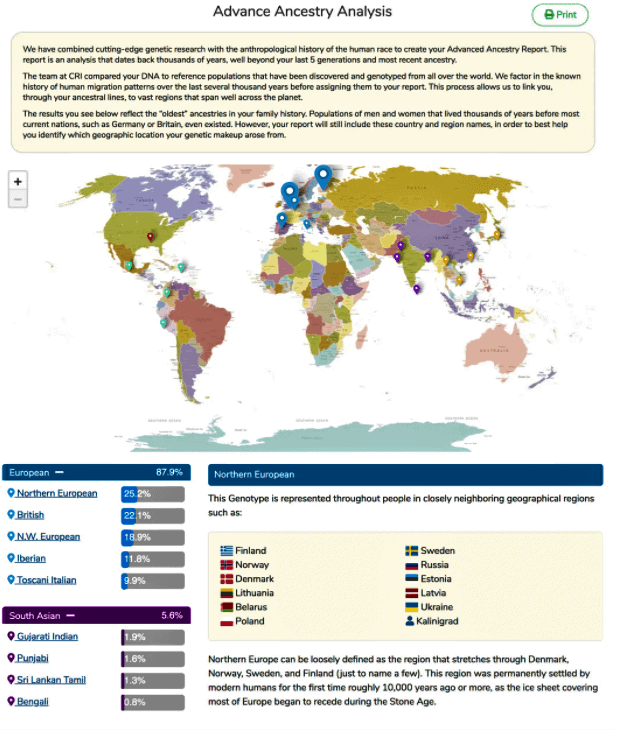
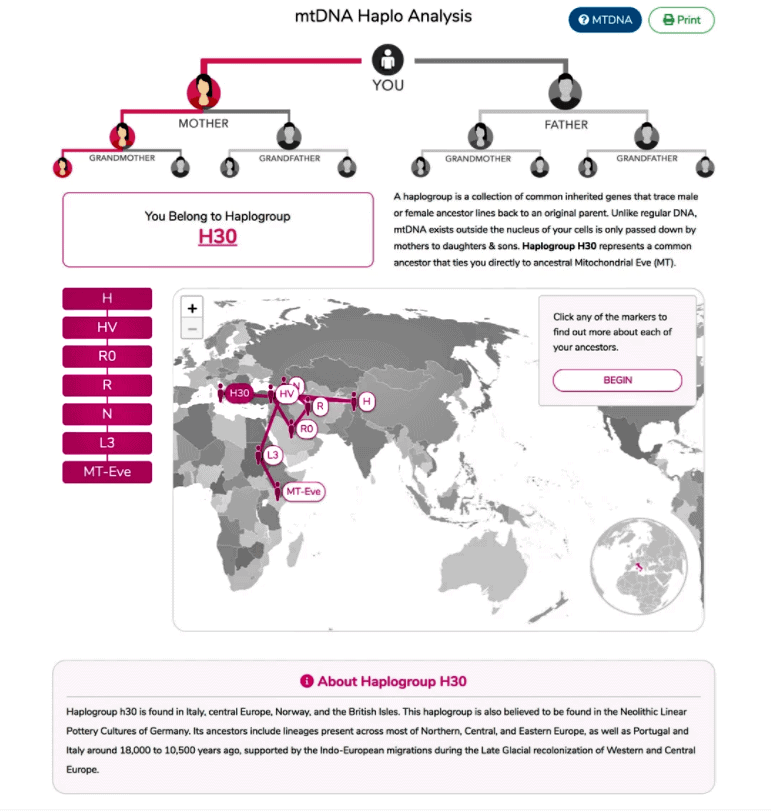
Apart from ancestry testing, the company offers DNA testing for health, allergy, and weight loss.
The test includes 80+ health reports and analyzes a total of 148 genetic markers to provide health and wellness insights.

The test includes up to 13 new reports and analyzes 29 genetic markers that influence your body's response to allergens and other external factors.
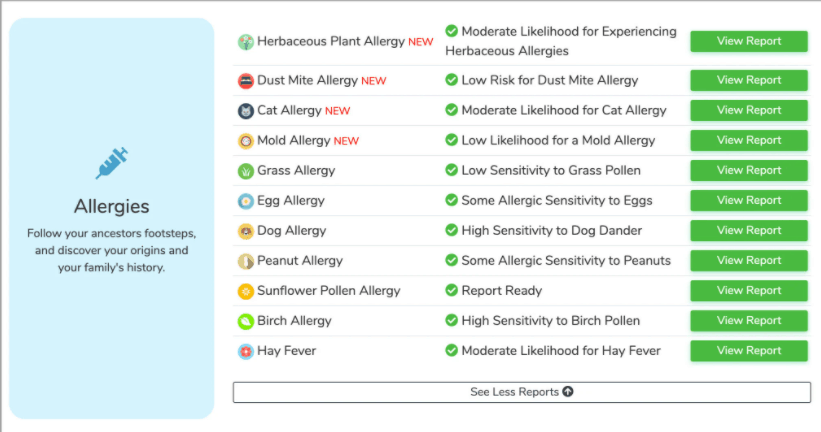
The test includes up to 13 new reports and analyzes 29 genetic markers that influence your body's response to allergens and other external factors.

To get started, users can order a DNA sample collection kit from the CRI Genetics website. Users can expect the kit to arrive within 3 to 5 days of the purchase.

Once the kit is received, a registration process must be completed before mailing back the sample collection kit.
The reports are typically ready by 6-8 weeks of mailing the kit. Users can access their reports by signing in to their accounts.
This report includes:
This report includes:
Claimed to be the best choice by the company, this report offers:
CRI Genetics claims that their user privacy is very important to them and has taken extra steps to protect them from security breaches. They state that they do not share user information without the user's consent.
For further information, you can refer to the company's privacy policy.
CRI Genetics seems to be well received by users based on the customer testimonials.
Despite questionable reliability and accuracy in some cases, CRI Genetics is a good ancestry DNA testing service. However, their other reports like allergy and health are very limited when compared to other third-party services like Xcode Life.
Cilantro is a herb popularly used in cooking. The names cilantro and coriander are commonly used interchangeably. Both cilantro and coriander come from the same plant species, Coriandrum sativum. The nutrient profiles of the plant and seed are different.
In North America, cilantro refers to the leaves and stem, while coriander refers to the seeds. In other countries like India, coriander refers to the leaves and stem, and the seeds are called coriander seeds. Cilantro is the Spanish word for coriander.
Cilantro has a fragrant, citrusy flavor. The coriander seeds have a warm, spicy, earthy aroma with a hint of citrus. It is usually paired with cumin and used as a base ingredient for making spice mixes.
Even though cilantro is properly used in several cuisines all over the world, some people do not like the taste of it. They find the taste soapy and revolting. This is termed as Cilantro Taste Aversion.
Even the famous American chef, Julia Child, did not have a liking for cilantro. She said the best way to deal with it in food is to pick it up and throw it on the floor.
Cilantro contains several aldehydes. Aldehydes taste soapy in nature. People with cilantro taste aversion perceive the taste of these aldehydes found in cilantro.
The number of people with this aversion is less in Central America and India, where this herb is very popular. Nearly 20% of the East Asian population are found to experience the soapy-taste of cilantro.
Why do some people hate the taste of cilantro but others don’t?
The answer to this question lies in genes.
Cilantro taste preference can be explained by genetics. The olfactory receptors influence our sense of smell, which directly alters our taste perception. Variations in olfactory-receptor genes can affect the way we perceive the taste of certain food items.
The OR6A2 gene is an olfactory-receptor gene. It carries instructions for the production of Olfactory Receptor Family 6 Subfamily A Member 2 protein. This protein has a high-binding affinity to soapy-flavored aldehydes like the ones found in cilantro. Individuals with an aversion to the taste of cilantro are found to have a variation in this gene.
rs72921001
rs72921001 is a single nucleotide polymorphism or SNP in the OR6A2 gene. Individuals with the A allele of this gene are at a lower risk of detecting a soapy taste.
The best way to deal with the soapy taste of cilantro is to avoid using it in meals or picking it out of your plate as Julia Child said.
Certain other ways to deal with this include
Some restaurants use a mix of parsley, tarragon, and dill. Lime of lemon zest can be used to substitute for the bright, citrusy flavor of cilantro. Carrot tops, mint, basil, or Thai basil are also used in certain dishes.
Microgreens are becoming increasingly popular. Micro cilantro tastes less soapy than mature cilantro leaves. Coriander seeds may also have a more palatable flavor compared to cilantro.
Crushing cilantro may help eliminate the soapy-tasting aldehydes. Using cilantro in chutneys and sauces dampens the soapy flavor and can help you get used to the herb.
Xcode Life's Gene Nutrition report covers traits like cilantro taste aversion and 40 other traits.
https://arxiv.org/abs/1209.2096
https://flavourjournal.biomedcentral.com/articles/10.1186/2044-7248-1-22
https://www.medicalnewstoday.com/articles/277627
https://www.healthline.com/nutrition/cilantro-vs-coriander#TOC_TITLE_HDR_3
https://www.britannica.com/story/why-does-cilantro-taste-like-soap-to-some-people
https://blog.23andme.com/23andme-research/cilantro-love-hate-genetic-trait/
https://www.washingtonpost.com/news/voraciously/wp/2019/07/08/how-to-manage-or-even-conquer-your-cilantro-hatred/
The dimpled and lumpy appearance on the skin, called cellulite, affects more than 85% of postpubertal women. It is also called orange-peel skin due to its texture. Cellulite occurs when the subcutaneous (under the skin) fat pushes through the layers of connective tissue. Due to the difference in fat distribution, muscles, and connective tissue, cellulite is more common in women than men.
Fat tissue, also called adipose tissue, is found just beneath the skin. It is also found around the internal organs, where it has a protective role to play. In cellulite, the adipocytes (fat cells) present in the adipose tissue increase in size, making the skin look lumpier.
Based on the cellulite severity scale, there are three grades of cellulite:
Grade 1 is scored from 1-4, and the skin has an orange-peel-like appearance.
Grade 2 is scored from 5-9, and the skin has medium-depth depressions with a cottage cheese-like appearance.
Grade 3 is when the score is ten and higher. The skin has deep depressions with a mattress-like appearance.
Understanding the genetic basis of cellulite formation can give useful insights into its pathophysiology. A study revealed that HIF1A and ACE genes are associated with cellulite risk.
The HIF1A gene contains instructions for the production of hypoxia-inducing factor 1 protein. Hypoxia is a condition where the body or a particular region of the body is deprived of oxygen. The expression of this gene is stimulated by the expansion of fat tissues following a high-calorie intake. Under normal conditions, HIF1A rapidly degrades, which allows an adequate flow of oxygen to fatty (adipose) tissues. However, during hypoxic conditions, there is an increase in this molecule, which results in reduced oxygen flow to fatty tissues. This leads to an increased risk of cellulite. It has also been found that HIF1A is increased in obese people and is positively correlated with BMI.
rs11549465 and Cellulite Risk
rs11549465 is an SNP in the HIF1A gene. The T allele acts as a ‘protective factor’ and reduces the risk of cellulite formation.
This study also identified an ‘indel’ polymorphism (rs1799752)in the ACE gene associated with cellulite risk.
Indel polymorphisms are the insertion or deletion of a portion of a particular gene. Indel polymorphisms are not as common as SNPs but are nevertheless present across the genome. It is annotated as I/D for insertion or deletion, respectively.
Exercises that target the thighs, buttocks, and hip areas can also help your battle against cellulite. Some effective workouts include:
- Squats
- Step-ups
- Glute-kickbacks
- Curtsy lunges
- Deadlift
The bigger fat cells, aside from contributing to cellulite, also slow down your metabolism and hamper your whole body by constricting the blood vessels. Excluding certain foods from your diet and including certain others may just help you peel that orange skin off!
Foods to avoid
-Being high in sodium, cheese is so not your best friend when it comes to cellulite. Its water retention property can make cellulite more visible.
-Cereals containing white flour are processed as sugar in the body. Moreover, when you consume cereal along with milk, the extra estrogen can worsen your cellulite.
- Alcohol’s dehydrating property can deteriorate the collagen in your skin.
-Processed food has products like sugar and fat added to them for storage purposes. These additives often have inflammatory properties.
- The sugar in soda and other canned drinks can slow down the production of collagen.
The anti-cellulite diet
- Diuretic foods like cranberries, fennel, and asparagus reduce water retention.
- Fruits like kiwis and oranges can take care of your daily dosage of vitamin C and boosts collagen production.
- Flax seeds, broccoli, and cauliflowers are all hormone modulators that will prevent the excess secretion of estrogen.
- The Omega 3 acids in walnuts help moisturize your skin.
- The antioxidants in whole grain shoo away the cellulite-causing toxins.
- Green tea has a lot of fat-busting ingredients that can help with weight loss.
- Vitamin E, potassium, zinc, and vitamin B6 in sunflower seeds dehydrate the fatty deposits and also help repair the connective tissues.
- Cayenne pepper can help improve circulation. It warms up the body internally, thereby boosting the blood flow.
- Eggs are a rich source of protein and lecithin, which helps build collagen and elastin.
- Garlic is a natural antibiotic that improves circulation and flushes the toxins out.
Home-remedies for Cellulite
- Dry brushing of your skin can improve the blood flow to the targeted area, thereby increasing the amount of oxygen delivered. It also enables the release of oxygen, which further aids digestion.
- Foam rolling acts as a lymphatic massage, which again promotes circulation.
- Coffee scrub: The caffeine in the coffee helps in the tightening of the skin. Exfoliation also stimulates good blood flow.
- Seaweed is another powerful detox that can help you treat cellulite. It is rich in iodine, which helps in maintaining your hormonal health.
- Massaging coconut oil on your skin can help loosen the fatty deposits.
- Hydration Continuously hydrating yourself with water or other unsweetened liquids can fight inflammation and reduce the appearance of cellulite.
https://en.wikipedia.org/wiki/HIF1A
https://pubmed.ncbi.nlm.nih.gov/20059631/
https://www.snpedia.com/index.php/Rs1799752