Genopalate founded by Dr. Sherry Zhang in 2016, is a genomics company that specializes in personalized nutrition.
Personalized nutrition is nutrition advice based on certain parameters of an individual like:
- Genetic makeup
- Metabolism
- Weight
- Medical data
- Lifestyle
GenoPalate provides a personalized nutrition report, along with a recipe collection and supplement regimen. If you have already done a genetic ancestry test from companies like 23andMe and AncestryDNA, you can use your DNA raw data for the nutrition analysis.
You can check out our DNA raw data download guides here:
How To Download Your Raw Data From AncestryDNA
How To Download Your Raw Data From 23andMe
GenoPalate also provides its own DNA testing kit for sample collection.
If you do not have an existing DNA raw data file, you canpurchase a DNA testing kithttps://www.genopalate.com/pages/purchase from GenoPalate. This is a simple swab test.
However, please keep in mind that you won't be able to download your DNA raw data file from GenoPalate for use on other genomic websites.
Once your DNA data has been analyzed, you will receive a personalized nutrition report.
This report provides insight on the following:
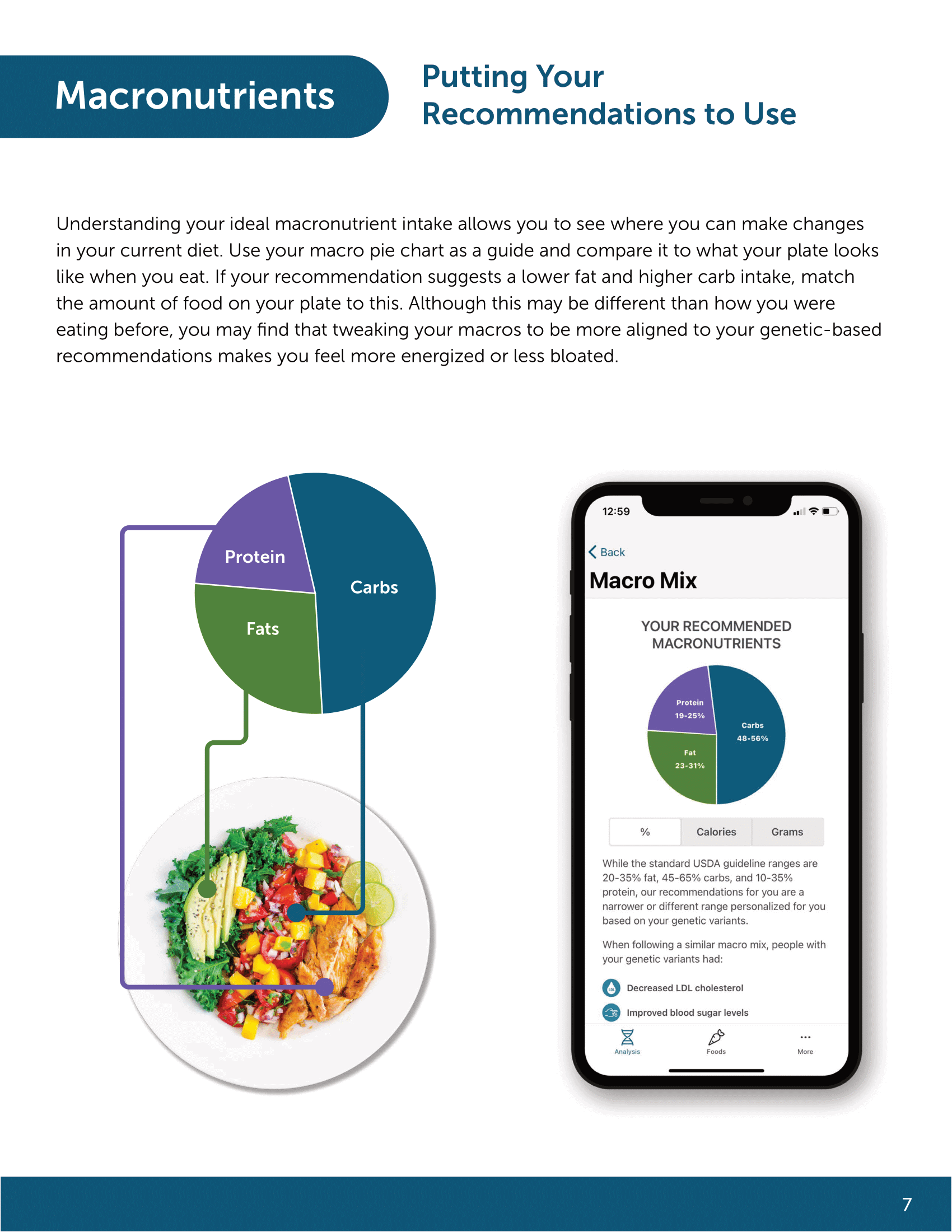
1. Macro breakup recommendations
2. Vitamin and mineral recommendations
3. Genetic risk for lactose and gluten sensitivity
4. Caffeine & alcohol metabolism analysis
5. Optimal food recommendations
Apart from this, you can also sign up for a complimentary 30-45 minute group orientation session with one of GenoPalate's registered dieticians.
Personalized Recipes
It is an add-on product that can be purchased along with the nutrition analysis. The DNA-approved recipes are based on your genetic profile and include:
- 5 recipe option 1 breakfast, 2 lunches, 2 dinners
- 10 recipe option 2 breakfasts, 4 lunches, 4 dinners
Personalized Supplements
This is also an add-on product. With this product, you get recommended dosages for 21 ingredients based on your genetic makeup.
The website does not require any prior registration. You can view the products available and asample reporthttps://www.genopalate.com/pages/genopalate-report-pdf-download on their website.
After completing the payment and check out, you can create an account on GenoPalate using your order number and the product code. The account registration process requires you to fill out a questionnaire to help personalize your report. You can access them via the GenoPalate account on the website or the app.
GenoPalate's nutrition analysis is offered at $159.
If you do not have your DNA raw data file, the price of the DNA kit, along with the analysis, comes up to $179.

Apart from this, you can add on the 'Personalized Recipes' product for $29.99 or $49.99, depending on the number of recipes.
This program allows you to meet with a registered dietitian to create a personalized nutrition plan that's unique to you, your needs, and your lifestyle. There are two products under this service:
GenoPalate lets users have control of how genetic information is used and with whom it is shared. GenoPalate assures that user data is never sold, rented, or leased for research purposes without explicit consent.
The company claims to have implemented appropriate security practices to protect user information, including industry-standard encryption methods.
The collected DNA sample is secure when users mail it to the lab, and the sample is de-identified upon reaching the lab. Users' personal information is stored separately from any genetic information.
For more information, read the company'sPrivacy Policyhttps://www.genopalate.com/pages/privacy-policy.
There seem to be only a few reviews about this company online.
You can readcustomer reviews and testimonialshttps://www.genopalate.com/pages/stories on the GenoPalate website.
Pros
- The app allows easy access anytime, anywhere
- Provides 20-page detailed nutritional report
- Personalized recipes and supplements options are available
- Both DNA upload and DNA kit purchase options are available
Cons
- Recipe and Supplement subscriptions are expensive
- The report does not include insight on food allergies
- Waiting time for the DNA test is 4-6 weeks
- You cannot download your DNA raw data file
- You can only upload your DNA raw data from 2 companies - 23andMe and AncestryDNA
GenoPalate offers personalized dietary recommendations based on your DNA for a reasonable price. However, their add ons are super expensive. There are other nutrition analyses from companies like Xcode Life that cover more traits for a cheaper price.
Light therapy is one of the effective treatments used for seasonal affective disorder (SAD), a type of depression related to changes in seasons.
A group of scientists from the University of Friborg used mouse models to investigate how light therapy affects mood.
Light therapy triggered the PER1 gene (circadian clock gene) in mice and showed an antidepressant effect.
SAD is a kind of depression that is triggered by a change in seasons. It happens around the same time every year and typically gets worse in the winter. Symptoms can last for approximately 40% of the year.
SAD is known to affect 11 million people in the U.S. every year.
Some symptoms of SAD are:
Light therapy is also called phototherapy. It is a treatment in which a person is exposed to an artificial light source of a specific wavelength. It is used to treat SAD, other types of depression, as well as sleep disorders.
Light therapy or phototherapy is a treatment in which a person is exposed to an artificial light source of a specific wavelength.
Light therapy is used to compensate for the lack of exposure to sunlight. The light seems to trigger the release of the feel-good hormone serotonin, which helps improve mood.
Research suggests that light therapy in the night activates the CLOCK gene PER1, which appears to improve symptoms of depression.
PER1 gene or Period 1 gene or circadian clock gene responsible for sleep-wake cycles and mood swings. The PER1 gene is found in the suprachiasmatic nucleus (SCN). The SCN is located in the hypothalamus of the brain and is the central pacemaker of the circadian timing system.
The PER1 gene is light-sensitive. Upon exposure to light, it switches the body to awake and alert mode with elevated energy levels.
Researchers exposed mice to a pulse of light at different points during the night and then tested them for depressive behavior. They found that light exposure at the end of the dark periods (2 hours before daytime) had an antidepressant effect on the mice.
The pulse of light, activated the PER1 gene in a region of the brain called lateral habenula, which plays a role in the mood. It also resulted in the resetting of the circadian rhythm. This caused a spike in energy levels, which in turn, brought about antidepressant effects.
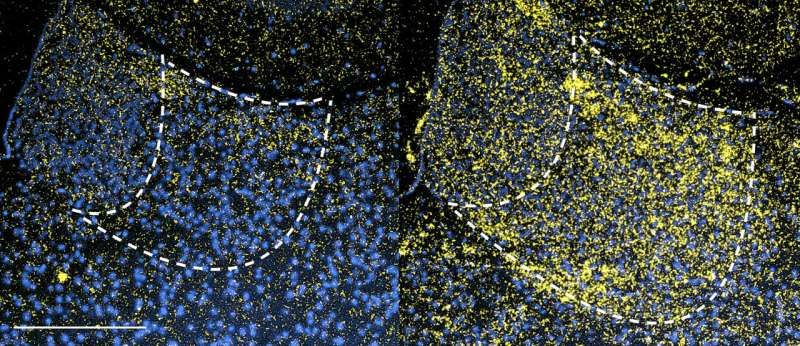
Image: PER1 gene expression before (left) and after (right) 15-minute light therapy
Light therapy at other times did not seem to have any effect. When the PER1 gene was deleted, the mice did not experience the antidepressant effect of light therapy.
Mice responding to light therapy during the early hours before daytime is similar to findings in humans - patients with SAD responded better to light therapy in the early morning than in the evening.
However, since mice are nocturnal creatures, scientists caution against making too many direct comparisons to humans.

CYP3A5 belongs to the CYP3A subfamily of genes of the cytochrome P450 family responsible for the processing and elimination (or clearance) of drugs.
The CYP3A subfamily is the most abundant CYP gene found in the liver and the intestines. This subfamily is associated with eliminating nearly 37% of 200 of the most commonly prescribed drugs.
Along with CYP3A4, the CYP3A5 gene makes up for around 30% of the cytochrome P450 activity in the liver.
Depending on the levels of the CYP3A5 enzyme, people can be classified into the following metabolizer groups:
20% of African-Americans and less than 1% of Europeans are found to be normal metabolizers of the CYP3A5 gene.
The CYP3A5 enzyme activity in these people is said to be lower than in normal metabolizers. In these individuals, the doctor may increase the medication dose.
Around 50% of African-Americans and 15% of people of European descent are said to be CYP3A5 intermediate metabolizers.
The medication dosage need not be altered for such people since most of the medications have been developed for poor metabolizers.
Around 30% African-Americans and 85% people of European descent are said to be poor metabolizers.
Normal and intermediate metabolizers are said to be a high-risk group and require a change in their medicine dosage based on their CYP3A5 gene.
However, poor metabolizers fall under a low-risk group and do not require any alteration in their existing medicine dosage.
Though the metabolism of this drug is primarily mediated by the CYP3A4 gene, the CYP3A5 gene participates in the process. Individuals having the normal variant (or type) of the CYP3A5 gene are said to be extensive metabolizers of this drug and require higher doses of tacrolimus for the desired effect.
Some drugs induce or increase the activity of the CYP3A5 gene, and these include:
Commonly prescribed drugs that inhibit CYP3A5 activity include:
The CYP3A5 gene is polymorphic, i.e., it has multiple variants. There are over 25 allelic variants of this gene.
| Haplotype | Effect |
| CYP3A5*3 | Inactive (non-functional variant) |
| CYP3A5*6 | Inactive (non-functional variant) |
| CYP3A5*8 | Decreased enzyme activity |
| CYP3A5*9 | Decreased enzyme activity |
| CYP3A5*10 | Decreased enzyme activity |
A haplotype is a group of gene changes that are inherited together. The *3, *4, *14, *41, etc., star alleles. Star alleles are used to name different haplotypes.
The normal functioning allele is numbered as CYP3A5*1. The *3 variant is the most common and frequently studied. The other most studied alleles include the *6 and *7.
CYP3A5*3 and CYP3A5*1
CYP3A5*3 is the most frequent and well-studied variant allele of CYP3A5. It is a non-functional variant.
Individuals with the *1/*1 or *1/*3 types can metabolize certain substrates of the CYP3A5 gene better than those with the *3/*3 type. This has been studied in relation to the drug Tacrolimus (used to prevent rejection following organ implantation).
Individuals having *1/*1 variant of the gene have a higher clearance of the drug than those having other variants. When tacrolimus is prescribed, its concentration must be high enough to prevent transplant rejection but low enough to avoid toxicity.
Though the relation between clearance of tacrolimus and activity of the CYP3A5 gene has been established, this link has not proved to play an active role in organ rejection following a transplant procedure.
Individuals with the *1/*3 variant show rapid clearance of saquinavir, an antiviral drug, compared to people with the *3/*3 allele.
In pediatric patients treated with vincristine for precursor B cell acute lymphoblastic leukemia, children with *1/*1 and *1/*3 showed lesser treatment-related neurotoxicity.
Another group of drugs that the CYP3A5 gene acts on is statins or lipid-lowering drugs. According to one study, statin drugs like lovastatin, simvastatin, and atorvastatin were less effective in people with *1/*1 and *1/*3 carriers than those with *3/*3.
In another study, individuals with *3/*3 developed myalgia and were more likely to suffer from muscle damage as a side-effect of statin treatment compared to the other two types *1/*1 and *1/*3.
The *3 variation in the CYP3A5 gene is also associated with an increased risk of developing certain diseases. According to a study, it was found that Asian Indians carrying the *3 variant of the gene showed an increased risk of developing CML or Chronic Myeloid Leukaemia.
In another study conducted on Japanese women, it was found that CYP3A5 expressors, i.e., those who are *1/*1 and *1/*3 carriers, had a higher risk of developing breast cancer as compared to those having the *3/*3 variant of the gene.
CYP3A5*6
This variant is more common in individuals with African-American lineage than Caucasians and Asians. The presence of this variant indicates no gene activity, making the individual a non-expressor of the gene.
A study was conducted to determine the level of tamoxifen (a drug used in the treatment of breast cancer) and side effects in people carrying the *3 and *6 variants.
Though there was no difference found in the clearance or effectiveness of the drug, there was a significant difference in the tumor size in women having the *6 variant as compared to those without this variant.
CYP3A5*7
This variant of the CYP3A5 gene is found in around 8% of the African population but has not been found in Caucasians. Since this variant reduces the activity of the CYP3A5 gene, it is called the non-functional variant. Similar to the *3 and *6 variants, having the *7 variant proved beneficial to Brazilian kidney transplant recipients. However, further research is required in this regard.
Individuals who require organ or bone marrow transplants must be advised to undergo genetic testing to determine the status of the CYP3A5 gene. This will help their healthcare provider adjust the immunosuppressant dosage to avoid organ rejection.
While prescribing tacrolimus in transplant patients, interactions with other drugs prescribed in these patients, like calcium channel blockers and azole antifungals, must be considered.
In individuals having the *1/*1 genotype, the interaction of tacrolimus with the azole antifungals was found to be less profound compared to other types.
The CYP2E1 enzyme is a part of the Cytochrome P450 family and plays a role in drug metabolism.
Drug metabolism is the process by which the body breaks down pharmaceutical drugs and other chemicals from the system using enzymatic systems. Drug metabolism can make the drug more active, inactive, or convert it into a more toxic metabolite (intermediary substance).
This enzyme makes up less than 1% of the total CYP450 enzymes and helps in clearing 2% of the total prescription drugs in the market.
CYP2E1 is mostly concentrated in the liver. It is also found in the lungs, brain, and kidney.
There are many variations (changes) in the CYP2E1 gene. These genetic variations create a difference in drug metabolism and increase/decrease the risk of different health conditions like diabetes, Non-Alcoholic Fatty Liver Disease (NAFLD), liver inflammation, and cancer.
The CYP2E1 enzyme can activate small, low molecular weight compounds. Some of them include:
Ethanol is a simple alcohol that is commonly used as a food additive. It is the basic ingredient in most types of alcohol like wine, beer, and brandy. It is also added in food colors to evenly distribute the color. Ethanol is added to varnish and household cleaning products too.
The CYP2E1 enzyme is responsible for ~20% of ethanol metabolism in the brain.
Acetone is a flammable colorless liquid that is commonly used as thinners and nail polish removers. Internally, acetone is produced as a result of various metabolic activities in the body. The CYP2E1 enzyme eliminates excess acetone from the body and prevents acetone toxicity.
Inhalational anesthetics are administered using a face mask. Such anesthetics are made stronger and safer by adding fluorine to them. Below are some fluorinated anesthetics.
The CYP2E1 enzyme plays a role in the metabolism of most of these fluorinated anesthetics.
Benzene is a sweet-smelling chemical that is flammable. Benzene is both man-made and naturally occurring. Naturally, benzene is released during forest fires and volcanic eruptions. Benzene is also a side-product released during the production of pesticides, lubricants, and rubber.
Over-exposure to benzene leads to anemia and certain types of cancers.
The CYP2E1 converts benzene into benzene dioxide and plays a role in clearing the toxin from the body.
N-nitrosodimethylaminen is also called dimethylnitrosamine (DMN), and this is produced as a result of chlorine water treatment. DMN is also found in cured meat and fish. Inhaling tobacco products increases the risk of DMN exposure too.
CYP2E1 metabolizes DMN in the body.
Acrylamide is a chemical released when food is roasted, baked, or fried at very high temperatures. The chemical is found more in starchy foods like potatoes. This chemical is highly toxic and can increase the risk of developing cancer.
CYP2E1 metabolizes acrylamide in the body and prevents its build-up in the body.
4-nitrophenol is a chemical used in the manufacturing of pesticides, fungicides, dyes, and leather. People who work in these manufacturing units are at high risk for 4-nitrophenol exposure. Exposure to this chemical can lead to nausea, drowsiness, and headaches. The long-term effects of exposure to this chemical are still being researched. The CYP2E1 enzyme metabolizes this chemical in the body.
Acetaminophen is a pain-reliever. It is also commonly called paracetamol. This drug is used in treating fever and mild body aches. The CYP2E1 enzyme metabolizes acetaminophen and converts it into a more toxic form called N-acetyl-p-benzoquinone imine (NAPQI).
Hepatotoxicity is also called toxic hepatitis and causes serious liver damage. CYP2E1 encourages acetaminophen hepatotoxicity. NAPQI, in large amounts in the body, can lead to cellular damage. NAPQI needs to be quickly removed from the body with the help of glutathione or converted back to acetaminophen.
Inducers are substances that increase the metabolic activity of the enzyme. Inhibitors are substances that bind to the enzyme to reduce its activity.
There are multiple variations in the CYP2E1 gene that influence the activity of the CYP2E1 enzyme.
| Haplotype | Effect |
| CYP2E1*2 | Decreased enzyme activity |
| CYP2E1*6/CYP2E1_marker9 | Increased enzyme activity |
| CYP2E1*7B | Increased enzyme activity |
| CYP2E1 *5B | Increased enzyme activity |
A haplotype is a group of gene changes that are inherited together. The *2, *6, *5B, and *7B are all star alleles. Star alleles are used to name different haplotypes.
Foods rich in omega-3 fatty acids induce CYP2E1 levels in the body.
Some food sources of omega-3 fatty acids are:
Here is a list of foods that inhibit CYP2E1 activity.
Both Vitamin C and vitamin E prevent oxidative stress and lipid peroxidation (free radicals damage the lipids in cell membranes, leading to cell damage) in the body. These vitamins also prevent a decrease in the CYP2E1 enzyme activity in the liver and improve CYP2E1 drug metabolism.
Genetic testing can help identify the metabolizer status of an individual for a gene (or group of genes) or a drug (or group of drugs). Depending on the genetic results, doctors can then plan drug dosages and opt for safer medications.
The CYP2D6 gene or the cytochrome P450 2D6 contains instructions for the production of the CYP2D6 enzyme. The enzyme production predominantly occurs in the liver. CYP2D6 is responsible for the metabolism and elimination of approximately 25% of clinically used drugs.
Drug metabolism is the process by which the body breaks down pharmaceutical drugs and other chemicals from the system using enzymatic systems. Drug metabolism can make the drug more active, inactive, or convert it into a more toxic metabolite (intermediary substance).
CYP2D6 belongs to the group of enzymes that are responsible for activating and metabolizing certain drugs. In some cases, the enzyme converts the inactive drug (called the prodrug) into its active form. Most ACE inhibitor drugs used to treat hypertension are prodrugs.
Amitriptyline, an antidepressant drug, on the other hand, is broken down and inactivated by the CYP2D6 in the liver.
Considerable differences exist in the efficiency and amount of CYP2D6 enzyme produced across individuals. Depending on this, they are categorized into one of the four metabolizer statuses:
Poor metabolizers (PM) - These are people who produce no or very little of the CYP2D6 enzyme. These individuals cannot process certain medicines well, and in some cases, drugs remain in the body for a longer time without getting cleared out. This increases the toxicity of the drug.
Intermediate metabolizers (IM) - These people can produce and process moderate amounts of the CYP2D6 enzyme. About 3 in 10 people are intermediate metabolizers.
Normal/extensive metabolizers (EM) - About 6 in 10 people are normal metabolizers. Their bodies produce normal levels of the CYP2D6 enzyme and activate and clear drugs at a normal rate.
Ultra-rapid metabolizers (UM) - These people have excess CYP2D6 enzyme activity. Drugs are metabolized very quickly and cleared from the body rapidly. This reduces the effectiveness of the drugs.
Codeine - Codeine is an opioid pain reliever commonly prescribed to treat chronic cough, pain, and diarrhea. It needs to be activated to morphine by the CYP2D6 enzyme for it to function efficiently.
PM have low CYP2D6 enzyme levels and may not convert codeine to morphine effectively. As a result, they may not experience the pain-relieving effect of morphine at normal codeine doses.
Tramadol - Tramadol is also an opioid pain reliever used to treat moderate to moderately severe pain. It is converted into O-desmethyltramadol (M1) in the liver, which produces the opioid pain-relieving effect. This conversion is facilitated by the CYP2D6 enzyme.
Amitriptyline - Amitriptyline helps treat anxiety and depression by preventing serotonin reuptake and thereby boosting serotonin levels in the body. CYP2D6 is involved in the metabolism of amitriptyline.
The FDA-approved drug label for amitriptyline states that CYP2D6 PM have higher than expected plasma concentrations of tricyclic antidepressants when given usual doses. In such cases, a lower starting dose or an alternative drug is recommended.
Metoprolol and propranolol - Both metoprolol and propranolol are beta-blockers. These are used in the treatment of heart diseases and hypertension.
They are primarily metabolized by CYP2D6. PM who lack CYP2D6 activity tend to have almost 5-fold higher levels of metoprolol and may be at an increased risk of side effects if administered the normal start dose.
Fluoxetine, Paroxetine - Both Fluoxetine and Paroxetine are Selective Serotonin Reuptake Inhibitors (SSRI) and are popular antidepressants.
The CYP2D6 enzyme helps convert the drugs into their active forms.
In PM, the drugs remain in the system for a longer time, risking overexposure. A lower starting dosage is recommended for such individuals.
Natural hormones and lipid - The CYP2D6 enzyme also metabolizes few naturally occurring substances in the body, including:
Inducers are substances that increase the metabolic activity of the enzyme. Inhibitors are substances that bind to the enzyme to reduce its activity.
Inducers speed up the metabolism of the drugs, resulting in lower concentrations for drugs that are metabolized to an inactive form. In the case of antibiotics, inducers make the enzymes quickly convert them into their inactive forms, not giving the drugs enough time to fight the bacterial infections.
Many drugs inhibit the activity of the CYP2D6 enzyme. Some of them include:
Estimates suggest that up to nearly a third of patients on tamoxifen are also taking antidepressants. Tamoxifen is a drug used to prevent breast cancer in women and treat breast cancer in women and men. Antidepressants like Fluoxetine (Prozac) and Paroxetine (Paxil) can substantially inhibit CYP2D6 and may reduce tamoxifen efficacy.
The CYP2D6 gene has a lot of variations (changes) that affect the efficiency of the CYP2D6 enzyme.
| Haplotype | Effect |
| CYP2D6*3 | Inactive enzyme |
| CYP2D6*4 | Inactive enzyme |
| CYP2D6*6 | Inactive enzyme |
| CYP2D6*7 | Inactive enzyme |
| CYP2D6*8 | Inactive enzyme |
| CYP2D6*9 | Decreased enzyme activity |
| CYP2D6*11 | Inactive enzyme |
| CYP2D6*12 | Inactive enzyme |
| CYP2D6*14 | Inactive enzyme |
| CYP2D6*41 | Decreased enzyme activity |
A haplotype is a group of gene changes that are inherited together. The *3, *4, *14, *41, etc., are star alleles. Star alleles are used to name different haplotypes.
The *4 allele is one of the most common mutations in Caucasians, resulting in a decrease in or complete lack of CYP2D6 enzyme activity. This allele accounts for 70% of all inactivating alleles that Caucasians are born with.
Genetic testing will help identify the metabolizer status of an individual for a gene (or group of genes) or a drug (or group of drugs). Depending on the genetic results, doctors can then plan drug dosages and opt for safer medications.
Even if you are not a poor metabolizer genetically, the use of CYP2D6 inhibitors will bring down the enzyme activity. This can cause over-exposure to drugs that the CYP2D6 enzyme acts on.
For CYP2D6 poor metabolizers, CPIC recommends using an alternative hormonal therapy instead of tamoxifen for postmenopausal women.
The CYP2A6 enzyme is a part of the Cytochrome P450 (CYPs) family. The CYP family is a group of enzymes that play a major role in detoxification in the body.
This enzyme helps in the metabolism and clearance of the various endogenous (produced internally) and exogenous (produced externally) substances.
The CYP2A6 enzyme is predominantly found in the liver cells and forms 4% of the total CYP family. This enzyme is also found in the lung, trachea, nasal mucosa, breast, and sex organs.
The CYP2A6 gene is said to be highly polymorphic, i.e., it has many variations (or types), and each variation affects enzyme activity.
There are over 40 known types of this gene including, CYP2A6*2, CYP2A6*4, and CYP2A6*6 (The *2, *4, and *6 are star alleles, which is the labeling method of haplotypes - a combination of multiple changes in a gene).
The activity of the CYP2A6 enzyme is influenced by genetics, drugs, and other environmental factors, which in turn affects the detoxification process in the body.
Slow or Poor Metabolizers – These are people who produce no or very little of the CYP2A6 enzyme. These individuals cannot process certain medicines well, and in some cases, drugs remain in the body for a longer time without getting cleared out. This increases the toxicity of the drug.
Individuals with CYP2A6 *2, *4, *9, and *12 are said to be slow metabolizers of nicotine. These individuals are less likely to be smokers, show lower levels of dependence, smoke fewer cigarettes per day, take smaller puff volumes, and are more likely to quit the habit. They are also more likely to benefit from nicotine replacement therapy.
Intermediate Metabolizers – These people produce moderate amounts of the CYP2A6 enzyme.
Rapid Metabolizers – These people have excess CYP2A6 enzyme activity. Drugs are metabolized very quickly and cleared from the body rapidly. This reduces the effectiveness of the drugs.
CYP2A6*1 type is associated with rapid metabolism. Rapid metabolizers tend to smoke more cigarettes per day. These individuals are also more dependent on nicotine compared to other groups having the *2, *4, and other alleles.
The CYP2A6 enzyme participates in Phase I of detoxification and is involved in the processing and clearance of many endogenous and exogenous compounds. These include:
Substances that can become cancer-causing agents after undergoing modification(s).
The effects produced by the CYP2A6 enzyme are substrate-specific, which means the gene activity and by-products vary for each substrate it acts on.
The CYP2A6 gene has been extensively studied in association with its nicotine metabolism as it is said to influence smoking behavior and addiction.
Approximately 80% of nicotine in the body is eliminated by the CYP2A6 enzyme. For this reason, there is a clear link between CYP2A6 genotypes, smoking behavior, and lung cancer risk. CYP2A6 participates in the two-step process, which converts nicotine to cotinine.
The rate at which nicotine is metabolized in the body is influenced by the CYP2A6 gene. This directly affects the nicotine levels in the blood.
Factors that inhibit (or hinder) the activity of CYP2A6 are important as they can supplement anti-smoking therapy. Individuals who have an inactivated CYP2A6 gene due to certain changes are slow at converting nicotine into cotinine and are called slow-metabolizers.
Due to the slow metabolism and clearance of nicotine, their blood nicotine levels are high, and they are less likely to be smokers. If they are smokers, they tend to smoke fewer cigarettes per day, take smaller puff volumes, have lower levels of dependence, are more able to quit, and benefit more from regular and extended nicotine patch replacement therapy compared to normal metabolizers.
Increased CYP2A6 activity increases the metabolism of nicotine, and these individuals are likely to smoke more cigarettes in a day.
Inducers are substances that increase the metabolic activity of the enzyme. Inhibitors are substances that bind to the enzyme to reduce its activity.
| Haplotype | Effect |
| CYP2A6*2 | Decreased enzyme activity |
| CYP2A6*5 | Decreased enzyme activity |
| CYP2A6*6 | Decreased enzyme activity |
| CYP2A6*7 | Decreased enzyme activity |
| CYP2A6*9 | Decreased enzyme activity |
| CYP2A6*17 | Decreased enzyme activity |
| CYP2A6*18 | Decreased enzyme activity |
| CYP2A6*23 | Decreased enzyme activity |
| CYP2A6*25 | Decreased enzyme activity |
| CYP2A6*26 | Decreased enzyme activity |
| CYP2A6*35 | Decreased enzyme activity |
| CYP2A6*39 | Decreased enzyme activity |
A haplotype is a group of gene changes that are inherited together. The *2, *5, *6, *7, etc., star alleles. Star alleles are used to name different haplotypes.
Reduced CYP2A6 enzyme levels are beneficial for smokers who are trying to quit the habit. But, consuming CYP2A6 inhibitor substances like grapefruit juice and cinnamon can further slow down CYP2A6 gene activity. When slow metabolizers consume these substances, it affects their ability to metabolize certain drugs. On the other hand, it can be helpful for fast metabolizers.
It is recommended to consume CYP2A6 inhibitors with caution and upon consulting a qualified medical practitioner.
Genetic testing for abnormal changes in the CYP2A6 gene is important as it can help prescribe appropriate smoking cessation drugs to smokers who are looking to quit the habit. Varenicline is a smoking cessation drug that is more effective in people with normal CYP2A6 function (and fast metabolizers). Similarly, the smoking cessation drug Bupropion is not recommended in slow metabolizers but is three times more effective.