
Estimated reading time: 17 minutes
Key Takeaways
- Melatonin is a hormone, not a sedative, and it signals sleep onset rather than forcing it, making it most effective for circadian rhythm disruptions like jet lag or shift work.
- Research suggests 0.3 mg to 1 mg is sufficient for most adults; the 5 mg to 10 mg doses commonly sold are higher than what evidence supports.
- Timing matters more than dose; taking melatonin 30 to 45 minutes before bed, consistently, produces better results than increasing the amount.
- Melatonin is generally safe for short-term use, but long-term nightly use lacks sufficient human safety data, and certain groups, pregnant women, children, and those with heart conditions, should consult a doctor first.
- Individual responses to melatonin vary significantly due to genetic differences in metabolism and receptor sensitivity, which is why the same dose works differently for different people.
First, What Exactly Is Melatonin?
Melatonin is a hormone.
The body produces it naturally to regulate the sleep-wake cycle, also called the circadian rhythm.
Levels typically rise in the evening, peak during the night, and fall toward morning.
As a supplement, melatonin is available over the counter in most countries.
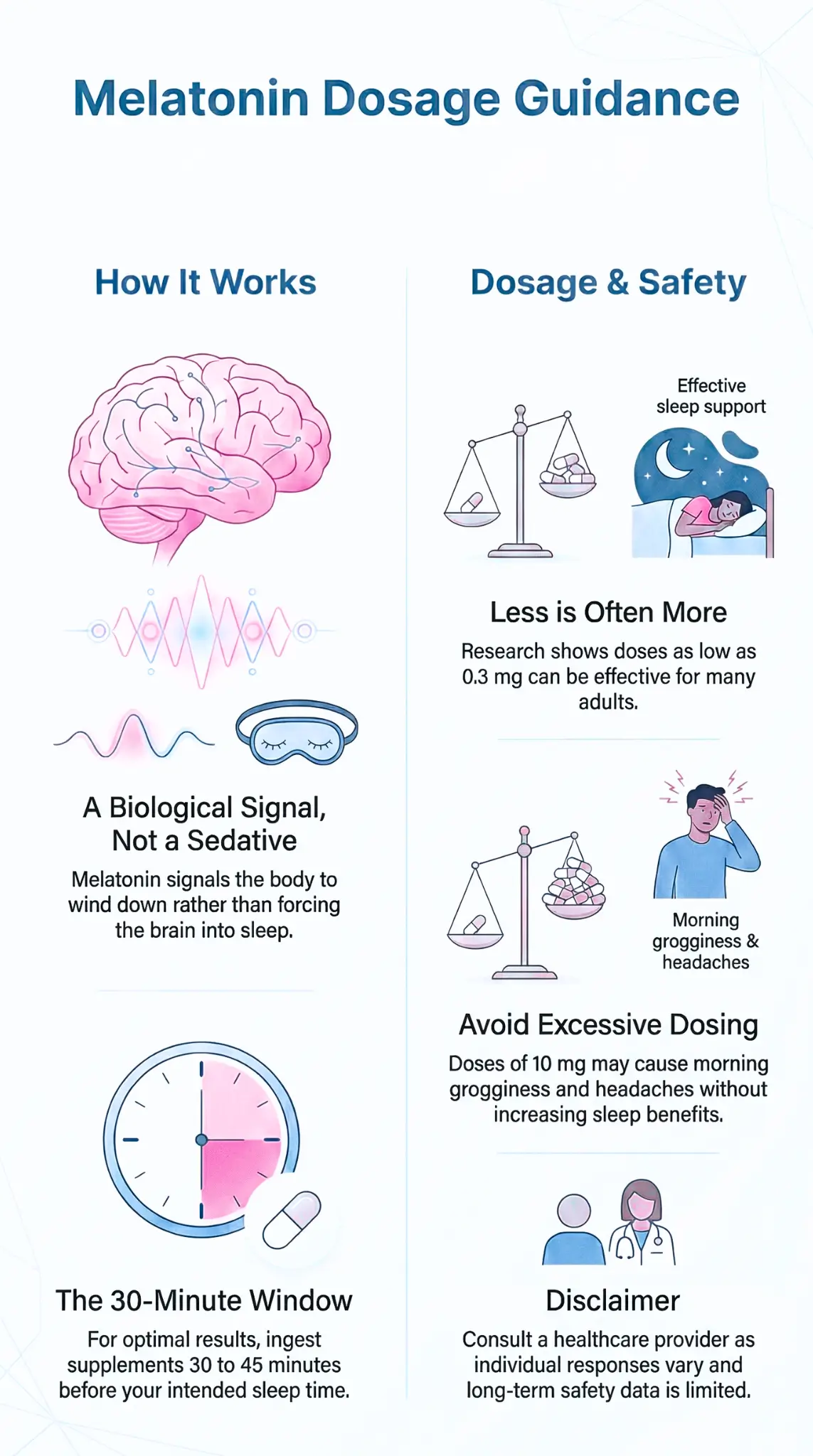
It is not a sedative. It does not force sleep. It signals to the body that it is time to wind down.
Where Is Melatonin Produced?
Melatonin is primarily produced in the pineal gland, a small pea-sized structure located deep in the brain.
Production is triggered by darkness and suppressed by light, which is why light exposure at night can interfere with sleep.
The retina, gut, and skin also produce small amounts of melatonin, though the pineal gland accounts for the majority of what enters the bloodstream.
Research published in the Journal of Pineal Research confirms that light-induced suppression of pineal melatonin is one of the primary mechanisms disrupting modern sleep patterns[1].
How Does Melatonin Work as a Sleep Aid?
Melatonin supplements work by mimicking the body's natural signal for sleep onset.
They shift the body's internal clock, making them most useful for circadian rhythm-related issues such as jet lag[2], shift work[3], or delayed sleep phase disorder[4].
For general insomnia, the evidence is more modest.
A 2013 meta-analysis in PLOS ONE found that melatonin reduced sleep onset latency by an average of about 7 minutes[5]. That is meaningful for some people, less so for others.
How Long Does Melatonin Take To Kick In?
Most formulations of melatonin begin to take effect within 30 to 60 minutes.
Peak blood concentration is typically reached within 1 to 2 hours after ingestion, depending on the formulation (immediate-release versus extended-release) and individual metabolism.
Genetic variation in CYP1A2, an enzyme involved in melatonin breakdown, can affect how quickly the body processes it[6].
Some individuals clear melatonin faster, which may shorten its window of effectiveness.
How Much Melatonin Should You Actually Take?
Supplement doses in the US commonly range from 1 mg to 10 mg, but research suggests the effective dose is much lower for most people[7].
A 2001 study by MIT researchers, published in Sleep, found that doses as low as 0.3 mg were effective at raising blood melatonin levels to physiological levels[8].
Higher doses produce supraphysiological levels, far above what the body naturally produces, without a proportional increase in benefit.
Can I Take 10 Mg Of Melatonin?
10 mg is significantly above the dose supported by most research[9]. Studies have not established that 10 mg of melatonin produces better sleep outcomes than lower doses.
What higher doses do produce is a longer duration of elevated melatonin in the blood, which may contribute to morning grogginess, headaches, or mood changes the following day.
Taking it every night without medical guidance is not recommended.
How Much Melatonin Is Equal To Ambien?
These two sleep aids work through entirely different mechanisms.
Ambien (zolpidem) is a sedative-hypnotic that acts on GABA receptors in the brain[10]. Melatonin is a hormone that signals circadian timing.
There is no equivalence in terms of sedative potency.
Melatonin is appropriate for circadian rhythm disruptions. Ambien is prescribed for more acute insomnia.
Attempting to use melatonin as a direct substitute for a prescription sleep aid may not address the underlying issue.
But What If Melatonin Is Not Working for You?
Melatonin not working is a common complaint.
The explanation is often one of three things: incorrect timing, too high a dose, or a sleep issue for which melatonin is not the right tool.
Why Doesn't Melatonin Work For Me?
Melatonin is most effective for circadian rhythm issues, not for all sleep problems. If the underlying issue is anxiety, pain, sleep apnea, or stress, melatonin is unlikely to help significantly.
Timing also matters. Taking melatonin too late, after the body has already begun its natural melatonin surge, may produce little additional effect.
Research suggests taking it 30 to 45 minutes before the desired sleep onset.
Individual variation is also a factor.
Genetic differences in melatonin receptor sensitivity (MTNR1A and MTNR1B gene variants)[11] and in melatonin metabolism (CYP1A2) can influence how a person responds.
What works at 1 mg for one person may require a different dose or timing for another.
Can You Take Melatonin With Other Things?
Melatonin is generally considered low-risk for interactions, but it is not entirely without them. Below are the most common combination questions.
Can You Take Melatonin With Nyquil?
NyQuil contains antihistamines (diphenhydramine or doxylamine) and often acetaminophen.
Both antihistamines and melatonin have sedative properties. Taking them together may amplify drowsiness.
NyQuil versions with alcohol add another layer of concern.
Central nervous system depression from multiple sedating agents can be unpredictable. This combination is best avoided without medical guidance.
Can You Take Magnesium And Melatonin Together?
There is no established harmful interaction between magnesium and melatonin. Some sleep supplements combine both.
The mechanisms are different enough that they can complement each other: melatonin for circadian signaling, magnesium for nervous system regulation.
Starting with lower doses of each and monitoring response is a reasonable approach.
Can You Take Tylenol And Melatonin?
There is no well-documented pharmacokinetic interaction between acetaminophen (Tylenol) and melatonin at standard doses[12]. They are processed through different pathways.
However, both can affect the liver in high doses or with chronic use. Taking either within normal recommended limits is generally considered safe for healthy adults. If there is an existing liver concern, a doctor should be consulted.
Can You Take Melatonin With Alcohol?
This combination is not recommended. Alcohol is a CNS depressant.
Melatonin, though not a sedative, also has CNS-modulating effects.
Together, they can increase drowsiness in an unpredictable way and may disrupt sleep, particularly REM sleep, more than alcohol alone[13].
Alcohol already suppresses melatonin production, according to research published in the Journal of Clinical Endocrinology and Metabolism[14].
Adding a supplement on top of that disruption does not clearly restore normal sleep quality.
| Expert picks: What To Read Next |
|---|
| What Is The Best Sleeping Position For Lower Back Pain? |
| The Top 3 Methods To Fall Asleep Faster |
| Why Do I Keep Waking Up At 4 AM |
What Are Some Melatonin-Rich Foods?
The body produces melatonin endogenously, but certain foods also contain it in measurable amounts.
Dietary melatonin is unlikely to match supplement doses, but may support natural melatonin activity[15].
Do Grapes And Kiwi Have Melatonin?
Yes. Both grapes and kiwi contain melatonin.
A 2011 study in the Journal of Pineal Research found that melatonin was present in various grape varieties, with the skin containing higher concentrations[16].
Kiwi has been studied for its effects on sleep.
A 2011 study in the Asia Pacific Journal of Clinical Nutrition found that eating 2 kiwifruits 1 hour before bedtime for 4 weeks was associated with improved sleep onset and duration[17].
Whether melatonin specifically or other compounds in kiwi were responsible for the effect remains under investigation.
Do Cherries Have Melatonin?
Tart cherries are among the most studied dietary sources of melatonin.
A 2012 study in the European Journal of Nutrition found that Montmorency tart cherry juice increased urinary melatonin levels and was associated with modest improvements in sleep duration and quality[18].
Melatonin content varies across cherry types, with tart varieties generally containing higher concentrations than sweet cherries.
Do Pistachios Have Melatonin?
Pistachios contain melatonin in comparatively high amounts relative to other foods.
A research article published in the Journal of Clinical Research and Reports mentions that melatonin is present in pistachio nuts[19].
But the amount found is 500-1000 times lower than that found in medicinal products or supplements containing melatonin, and therefore cannot exert any biological effects.
Is It Safe to Take Melatonin Every Night?
Short-term use, days to a few weeks, is generally considered safe for most healthy adults.
Long-term nightly use is less studied, which makes it harder to give a confident answer about extended daily use[20].
How Long Before Bed Should You Take Melatonin?
Most research suggests taking melatonin 30 to 45 minutes before the intended sleep time.
For circadian phase shifting, such as adjusting to a new time zone, some protocols recommend taking it even earlier, 1 to 2 hours before target bedtime.
Timing is arguably more important than dose for melatonin to work as intended.
Is Melatonin Addictive?
Melatonin does not appear to be addictive in the pharmacological sense.
It does not bind to receptors associated with dependence, and withdrawal symptoms have not been documented in the clinical literature[21].
The difficulty of sleeping without it is possible for any sleep aid over time, including non-addictive ones.
Sleep hygiene practices, along with supplementation, may reduce this risk.
Does Melatonin Expire?
Yes. Like all supplements, melatonin degrades over time. Expired melatonin may be less potent, but it is not typically considered dangerous.
Storing supplements in a cool, dry place away from light extends shelf life.
Most melatonin supplements have expiration dates of 1 to 3 years from the date of manufacture.
Using a product past its expiry date is not recommended, primarily because its efficacy is reduced.
Is It Safe To Take Melatonin Every Night Long-Term?
The honest answer is that long-term safety data on nightly melatonin use in healthy adults is limited.
Short-term use across weeks to a few months has a reasonably established safety profile.
One concern raised, primarily in animal studies, is whether exogenous melatonin could suppress the body's endogenous production over time.
Evidence in humans for this is not conclusive.
Studies have noted that melatonin has a favorable short-term safety profile, but called for more long-term human trials[22].
What Are the Side Effects Of Melatonin?
Melatonin is generally well tolerated. Most people who take it at appropriate doses report no side effects at all[23].
When side effects do occur, they tend to be mild, short-lived, and dose-dependent.
They are more commonly higher doses which is another reason researchers suggest starting low.
The most commonly reported side effects include:
- Daytime drowsiness or grogginess
- Headaches
- Dizziness
- Nausea
- Vivid dreams or nightmares
Less frequently, some people report mood changes, irritability, or gastrointestinal discomfort such as diarrhea or constipation.
The sections below address each of these in more detail.
Why Does Melatonin Give Me Nightmares?
Research indicates that melatonin promotes the release of vasotocin, a substance linked to memory processing during REM sleep[24].
Vasotocin helps the brain erase certain memories while you dream, allowing for clear differentiation between dreams and reality upon waking.
Supplemental melatonin can increase vasotocin levels, potentially extending or intensifying REM sleep periods.
This enhanced REM activity often leads to more vivid and intense dreams, which some people may interpret as nightmares.
In some cases, the changes melatonin causes in the sleep cycle can disrupt normal brain processes related to dream regulation, triggering more frightening or disturbing dream content.
Overall, while melatonin supplements generally improve sleep quality, their influence on REM sleep and memory-related brain chemicals can lead to vivid or unsettling dreams in susceptible individuals.
More research is needed to fully understand the mechanisms behind melatonin-induced nightmares.
Does Melatonin Cause Headaches?
Headache is one of the more commonly reported side effects in clinical studies[25].
If headaches occur consistently after taking melatonin, reducing the dose or discontinuing use is a reasonable step.
Can Melatonin Cause Anxiety?
Melatonin is more often studied as a potential anxiolytic, meaning it may reduce anxiety in some contexts, particularly preoperative anxiety, according to several small clinical trials[26].
That said, some individuals report feeling more anxious or restless after taking it.
Can Melatonin Cause Diarrhea Or Constipation?
Gastrointestinal complaints, including nausea, diarrhea, and constipation, are occasionally reported.
The gut contains melatonin receptors, and melatonin plays a role in gastrointestinal motility, which may explain why some people experience GI effects[27].
Does Melatonin Cause Weight Gain?
There is no strong evidence that melatonin at standard supplement doses causes weight gain in humans.
Some research, primarily animal studies, has explored melatonin's role in metabolic regulation and fat distribution, but the direction of effects is complex and not consistently translated to humans[28].
A 2012 study in the Journal of Pineal Research found melatonin associated with reduced adiposity in certain animal models, suggesting the relationship is not straightforward[29].
More Than 50% Of Sleep Issues Are Rooted In Genetics
Sleep isn't just about your circadian rhythm. Your nutrition affects melatonin production. Caffeine metabolism impacts sleep quality. Underlying health risks like diabetes and heart disease disrupt rest. The Xcode Life Genome Pack analyzes all interconnected factors and health risks, so you can finally understand and fix your sleep issues from every angle.
What About More Serious Concerns?
Some questions about melatonin touch on more significant health concerns. The research on most of these is either reassuring or still emerging.
Is Melatonin Bad For Your Heart? Does It Cause Heart Failure?
The relationship between melatonin and heart health is an area of emerging concern.
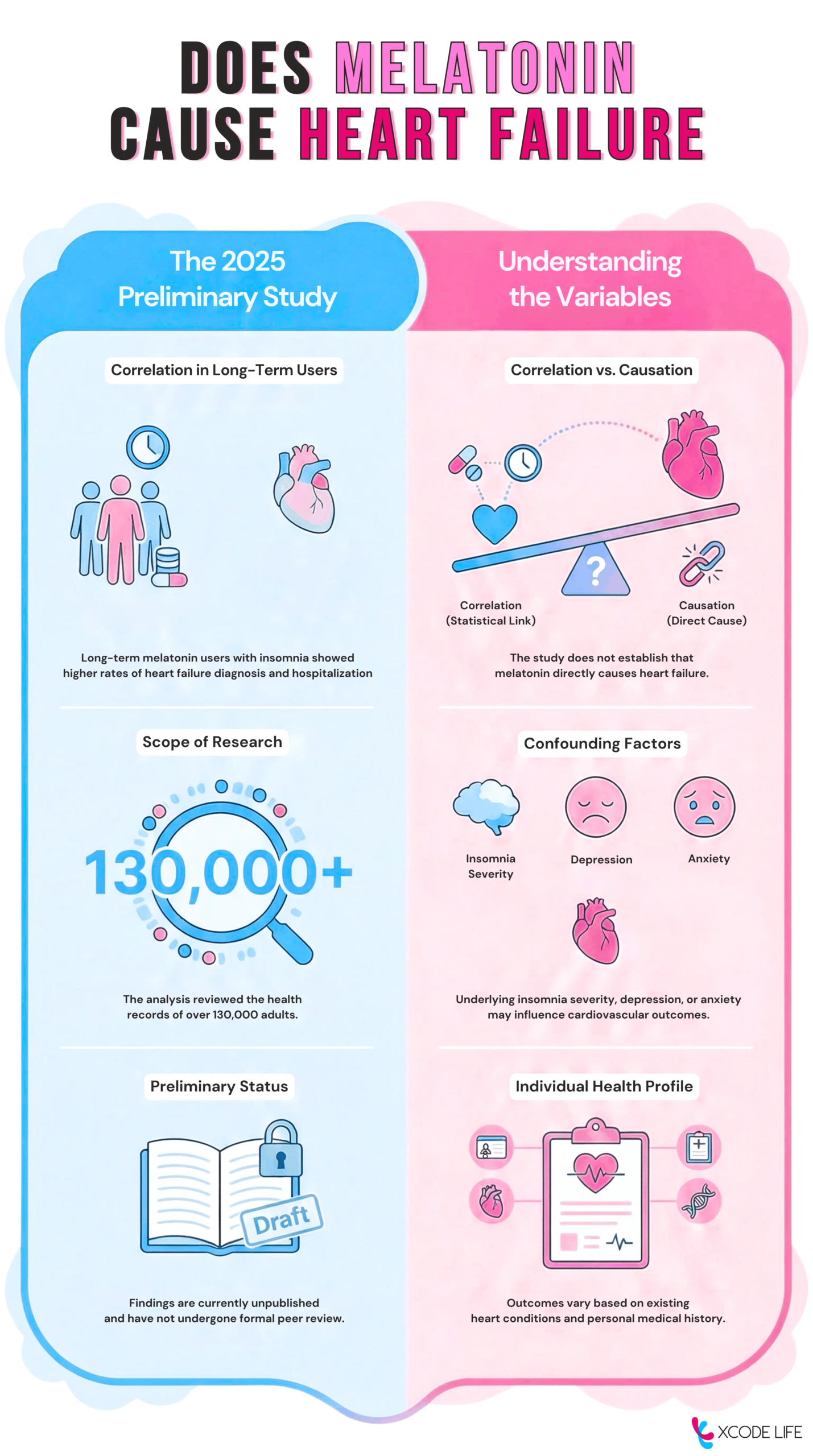
A 2025 preliminary study presented at the American Heart Association's Scientific Sessions, which reviewed health records of over 130,000 adults with insomnia, found that long-term melatonin users had a significantly higher rate of heart failure diagnosis and hospitalization compared to non-users[30].
However, the study has important limitations. It has not yet been peer-reviewed or published in a full scientific journal.
It also could not establish cause and effect.
It is possible that the underlying severity of insomnia, or related conditions such as depression and anxiety, contributed to both melatonin use and cardiovascular risk.
The researchers themselves noted that more research is needed.
People with existing heart conditions should discuss melatonin use with their cardiologist. For otherwise healthy adults, this study warrants attention but does not yet constitute definitive evidence of harm.
Does Melatonin Lower Blood Pressure?
Research indicates melatonin may have a modest blood pressure-lowering effect.
A 2019 meta-analysis of randomized controlled trials published in the Journal of Hormone and Metabolic Research found statistically significant reductions in both systolic and diastolic blood pressure with melatonin supplementation[31].
However, subsequent analyses suggest this effect may be specific to controlled-release formulations; standard fast-release supplements appear to have little impact on blood pressure.
For most healthy individuals, this effect is unlikely to be clinically significant. For people taking antihypertensives, the combination could theoretically enhance blood pressure reduction[32] and warrants medical supervision.
Does Melatonin Cause Dementia?
There is no established evidence that melatonin causes dementia.
The relationship, where it exists in the research, tends to go in the opposite direction[33].
Melatonin levels naturally decline with age, and some studies have explored whether this decline is linked to increased dementia risk.
Research in Frontiers in Aging Neuroscience has examined melatonin's neuroprotective potential, though this remains an area of active study[34]. No current evidence indicates supplemental melatonin is harmful to cognitive health.
Is Melatonin Bad For You Overall?
For most healthy adults, melatonin taken at appropriate doses and for appropriate durations is not harmful. The key qualifiers are dose (lower is generally better), duration (short-term use has more established safety data), and individual health context.
It is worth noting that melatonin supplements are not regulated with the same rigor as prescription drugs. Independent testing has shown significant variation between labeled and actual melatonin content across products.
A 2017 study in the Journal of Clinical Sleep Medicine found that actual melatonin content varied from -83% to 478% above the stated amount[35].
What If You Take Too Much Melatonin?
Melatonin has a wide safety margin.
Documented cases of serious toxicity from melatonin overdose are extremely rare.
That said, taking more than necessary is not without consequences.
What Happens If You Take Too Much Melatonin?
Symptoms of taking too much melatonin can include excessive drowsiness, headache, nausea, dizziness, and irritability.
These tend to be self-limiting and resolve as the supplement clears the system.
More significantly, very high doses can disrupt the circadian rhythm rather than support it, effectively defeating the purpose of taking melatonin in the first place.
Can You Overdose On Melatonin Gummies?
A life-threatening overdose from melatonin gummies specifically has not been well-documented in adults.
However, gummies present a practical risk, particularly for children, because they are palatable and easy to consume in excess.
Poison Control data in the US has recorded a significant increase in pediatric melatonin ingestion incidents in recent years.
A 2022 report in Pediatrics documented over 260,000 pediatric melatonin ingestion cases between 2012 and 2021, with hospitalizations increasing in more recent years[36].
Gummies should be stored out of reach of children.
Who Should Be Careful With Melatonin?
Melatonin is not appropriate for everyone at standard supplement doses. Certain populations require more caution.
For most healthy adults using melatonin short-term and at low doses, the risk profile is generally considered acceptable.
But "generally safe" is not the same as "safe for everyone." Age, hormonal status, underlying health conditions, and concurrent medications can all influence how melatonin behaves in the body.
Because it interacts with the endocrine system, populations with developing or hormonally sensitive physiology, such as children and adolescents and those who are pregnant, warrant particular consideration. The sections below cover the groups where caution is most warranted based on available evidence.
Can You Take Melatonin While Pregnant?
There is insufficient human research on melatonin supplementation during pregnancy to establish safety.
Melatonin crosses the placenta and may influence fetal circadian development.
Animal studies suggest melatonin plays a role in fetal programming, though the implications for human supplementation are not well understood[37].
Most healthcare guidelines recommend avoiding melatonin supplements during pregnancy unless specifically advised by an obstetrician.
Melatonin For Kids and Infants
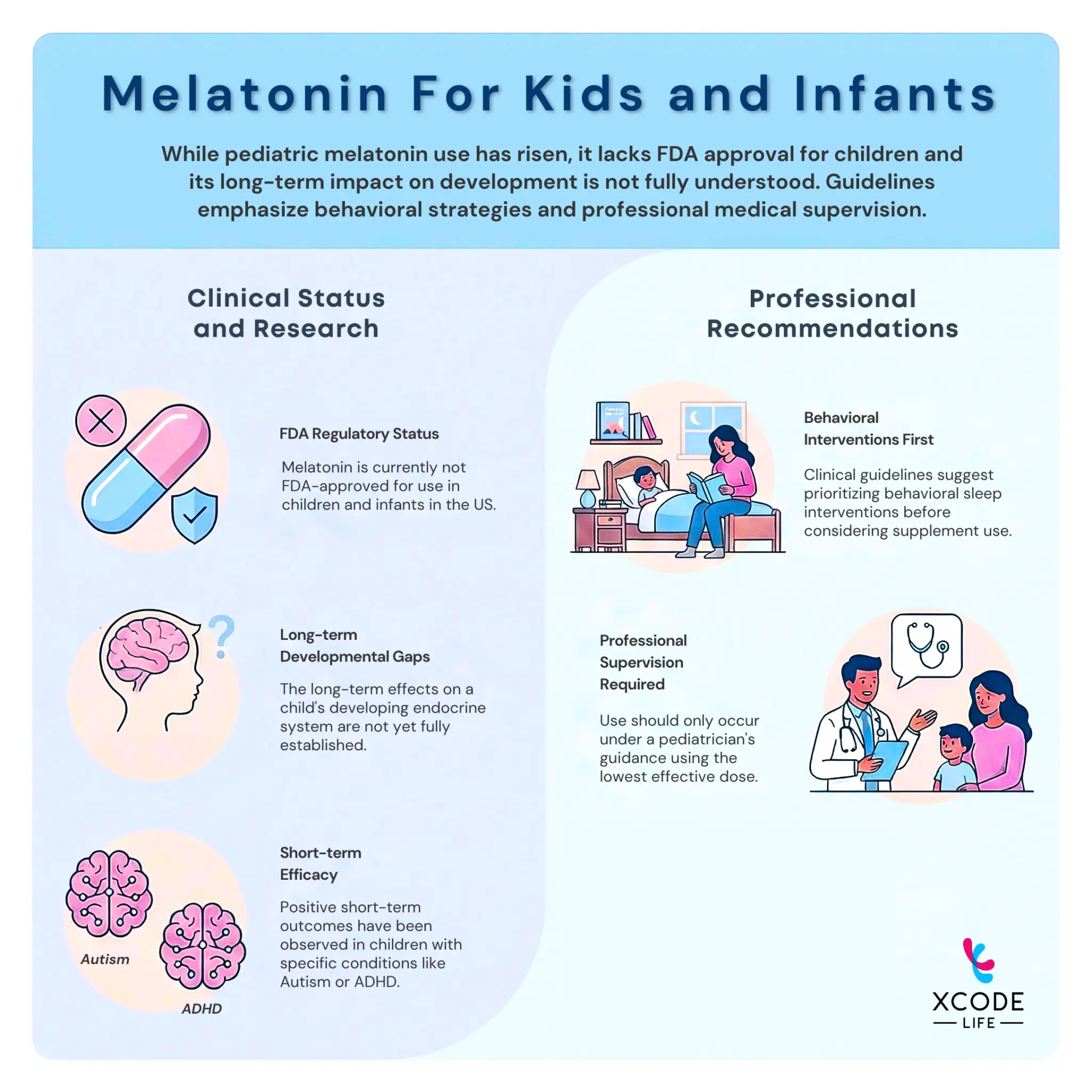
Pediatric melatonin use has increased significantly over the past decade, but it is not approved for children by the FDA in the US, and the long-term effects on the developing endocrine system are not fully established[38].
Short-term use in children with specific conditions such as autism spectrum disorder or ADHD, where sleep disturbances are common, has been studied with generally positive short-term outcomes[39].
The American Academy of Sleep Medicine suggests that behavioral sleep interventions should be tried first. If melatonin is considered, it should be under pediatric supervision with the lowest effective dose[40].
Melatonin For Pets
Pet owners frequently search melatonin questions for their animals. The answers here differ from human guidance.
Can Dogs Have Melatonin?
Melatonin is used in veterinary practice for dogs, primarily for anxiety, noise phobias, and certain hormonal conditions[41].
It is generally considered safe for dogs at appropriate doses, which are body-weight dependent.
The critical warning: many human melatonin supplements, particularly gummies, contain xylitol as a sweetener. Xylitol is toxic to dogs and can cause severe hypoglycemia[42].
Any melatonin given to a dog must be xylitol-free. A veterinarian should be consulted before use.
Can Cats Have Melatonin?
Melatonin use in cats is less studied than in dogs. Some veterinarians use it off-label for anxiety and sleep regulation.
However, cats metabolize many compounds differently from humans and dogs, and there is less clinical data available.
Melatonin should not be given to cats without veterinary guidance.
The dose, formulation, and appropriateness for the individual animal's health status all require professional evaluation.
The Bottom Line On Melatonin
Melatonin is one of the most widely used supplements in the world, and for good reason. It is generally well tolerated, accessible, and supported by evidence for specific uses such as jet lag and circadian disruption.
But it is not a universal sleep fix, and it is not without nuance. Dose matters more than most people realize.
Individual biology, including genetic variation in how melatonin is metabolized and how sensitive a person's receptors are, means that what works well for one person may do little for another.
If melatonin has not worked for you, or if you have questions about whether it is appropriate for your health situation, a conversation with a healthcare provider is the most reliable next step.
References
- https://onlinelibrary.wiley.com/doi/10.1111/jpi.12930
- https://pmc.ncbi.nlm.nih.gov/articles/PMC8958662/
- https://jcircadianrhythms.com/articles/1740-3391-6-10
- https://academic.oup.com/sleep/article-abstract/33/12/1605/2433770?redirectedFrom=fulltext
- https://journals.plos.org/plosone/article?id=10.1371/journal.pone.0063773
- https://www.sciencedirect.com/science/article/abs/pii/S0031938414002078
- https://pmc.ncbi.nlm.nih.gov/articles/PMC9571539/
- https://academic.oup.com/jcem/article-abstract/86/10/4727/2849013?redirectedFrom=fulltext
- https://www.sleepfoundation.org/melatonin/melatonin-overdose
- https://www.ncbi.nlm.nih.gov/books/NBK442008/
- https://pmc.ncbi.nlm.nih.gov/articles/PMC10054309/
- https://www.drugs.com/drug-interactions/melatonin-with-tylenol-1548-0-11-12.html
- https://www.sleepfoundation.org/melatonin/melatonin-and-alcohol
- https://academic.oup.com/jcem/article-abstract/77/3/780/2649845
- https://pmc.ncbi.nlm.nih.gov/articles/PMC3402070/
- https://onlinelibrary.wiley.com/doi/abs/10.1111/j.1600-079X.2011.00893
- https://pubmed.ncbi.nlm.nih.gov/21669584/
- https://pubmed.ncbi.nlm.nih.gov/22038497/
- https://www.researchgate.net/publication/396664277_Can_Pistachio_Nuts_Replace_Melatonin_Tablets
- https://www.nccih.nih.gov/health/melatonin-what-you-need-to-know
- https://health.clevelandclinic.org/melatonin-dependency
- https://health.ucdavis.edu/blog/cultivating-health/melatonin-and-your-sleep-is-it-safe-what-are-the-side-effects-and-how-does-it-work/2025/02
- https://www.nhs.uk/medicines/melatonin/side-effects-of-melatonin/
- https://pubmed.ncbi.nlm.nih.gov/3657622/
- https://pmc.ncbi.nlm.nih.gov/articles/PMC1490287/
- https://pmc.ncbi.nlm.nih.gov/articles/PMC6464333/
- https://pmc.ncbi.nlm.nih.gov/articles/PMC8959415/#:~:text=Melatonin%20and%20Gastrointestinal%20Motility
- https://pubmed.ncbi.nlm.nih.gov/24654916/
- https://pubmed.ncbi.nlm.nih.gov/24007241/
- https://www.ahajournals.org/doi/10.1161/circ.152.suppl_3.4371606
- https://pubmed.ncbi.nlm.nih.gov/30861561/
- https://www.ncbi.nlm.nih.gov/books/NBK97955/
- https://www.nature.com/articles/s41380-024-02691-6
- https://www.frontiersin.org/journals/endocrinology/articles/10.3389/fendo.2019.00480/full
- https://pubmed.ncbi.nlm.nih.gov/27855744/
- https://pubmed.ncbi.nlm.nih.gov/35653284/
- https://pubmed.ncbi.nlm.nih.gov/31766163/
- https://pubmed.ncbi.nlm.nih.gov/38539358/
- https://publications.aap.org/pediatricsinreview/article/47/1/15/206017/Pediatric-Insomnia
- https://pmc.ncbi.nlm.nih.gov/articles/PMC9892750/
- https://pmc.ncbi.nlm.nih.gov/articles/PMC9405278/
- https://pubmed.ncbi.nlm.nih.gov/22381181/