Acetylcholine is a parasympathomimetic drug that is used for ophthalmological applications. Parasympathomimetic drugs are also called cholinomimetic drugs, and these activate the parasympathetic nervous system (PSNS).
The sympathetic nervous system is a part of the brain that is involved in the "fight or flight" response, and the PSNS is the "rest and digest" side.
The PSNS uses acetylcholine, a neurotransmitter (chemical messenger) that helps in brain-body coordination. Cholinomimetic drugs delay the breakdown or promote the release of acetylcholine.
Acetylcholine in drug form is available as eye drops. It is used to create rapid miosis (shrinking of the pupil) during cataract surgery after the lens is placed or during general eye surgery.
This drug has no value when intravenously administered as it is quickly deactivated by a group of enzymes in the Central Nervous System called cholinesterase. The eye drop form, however, helps quicken recovery after eye surgery.
When administered inside the eyes, Acetylcholine controls nerve impulse transmission and causes rapid shrinking of the pupil.
A nerve impulse is the way nerve cells (neurons) communicate with one another. Nerve impulses are mostly electrical signals.
About 0.5-2 ml of the 1% solution is introduced into the eyes, and miosis occurs (pupil shrinks to less than 2mm). Miosis lasts for about 10 minutes
Some common side effects of acetylcholine are:
Rarer side effects of acetylcholine are:
Acetylcholine can interact with certain drugs and lower the efficiency of the drug or cause extreme side effects. Therefore, make sure to notify your doctor if you are on any of the following drugs.
The ACE gene (angiotensin-converting gene) helps produce the ACE enzyme.
The ACE enzyme regulates blood pressure and fluid balance in the body by constricting the blood vessels.
In a study, researchers introduced enalaprilat, an ACE inhibitor drug, to 56 patients with atherosclerosis (a condition caused by the build-up of fat and cholesterol).
ACE inhibitor drugs interfere with the ACE enzyme activity and relax the blood vessels.
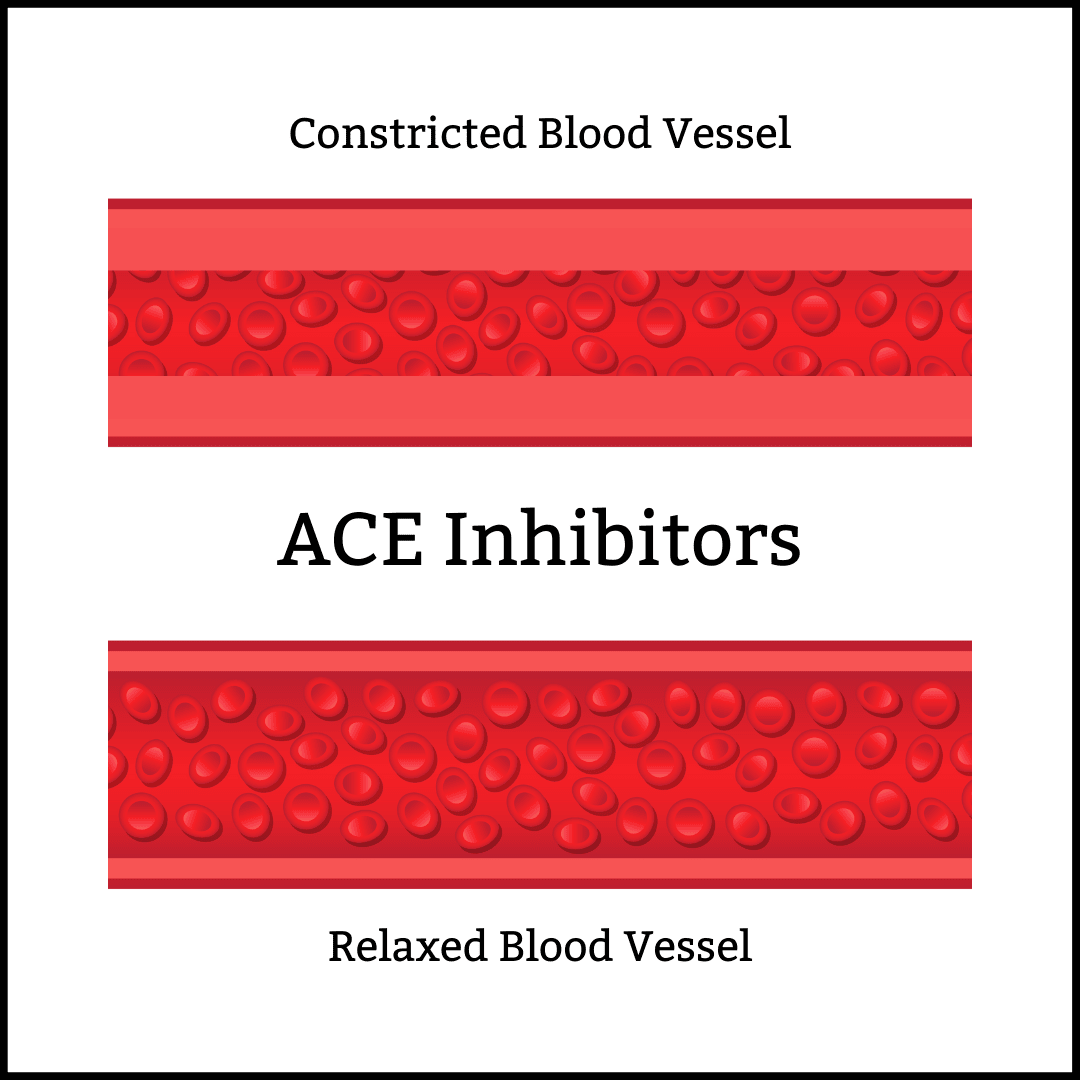
Image: Action of ACE Inhibitors
These patients were then administered acetylcholine. Changes in the coronary blood flow, vascular resistance, and epicardial diameter were then measured.
People with the DD and ID types of the ACE gene had a better blood flow and relaxation of blood vessels than those with the II type.
| Genotype | Implications |
| DD | Increased coronary blood flow |
| ID | Increased coronary blood flow |
| II | Lowered coronary blood flow |
As a topical eye solution, acetylcholine is very unstable. Therefore, the solution has to be prepared and used immediately.
Acetylcholine overdose can lead to cardiovascular complications or constriction of the airways. Drugs that can counteract this constriction effect have to be kept ready while administering acetylcholine.
Rarely, some people can have an allergic response to acetylcholine and develop the below symptoms.
If you experience any of the above-mentioned symptoms when treated with acetylcholine, notify your doctor immediately.
Genetic testing can help understand how your body responds to acetylcholine. This can enable your doctor to administer the drug at correct dosages with proper precautions.
Analyze Your Genetic Response to Acetylcholine

Breast cancer is the most common cancer in women in the developed and developing world. Breast cancer cases have a good prognosis if detected and treated early.
Prognosis refers to the outlook or chance of recovery from a disease. It is an estimate of the likely course and outcome of a disease - breast cancer, in this case. This includes the likelihood of recurrence and life expectancy.
Breast cancer prognosis is based on observing large groups of people affected by the condition over the years. It can be qualitative and described as excellent, good, or poor. It can also be quantitative in the form of survival rates or hazard ratios.
The survival rate is determined by observing several people affected with breast cancer for many years, usually five or ten years. Survival rates are a key part of cancer prognosis. It indicates the percentage of people alive after a certain period of time, usually five years, after they were diagnosed.
Survival rates can help give you a better understanding of how successful your treatment may be. Two main survival rates used in breast cancer cases include
According to the National Cancer Institute, 90 percent of women with breast cancer survive five years after diagnosis, regardless of the stage. This indicates a 90% five-year survival rate - 90 out of 100 people diagnosed with breast cancer are likely to be alive after five years.
Another parameter used to determine prognosis in cancer patients is the hazard ratio. Hazard ratios are used to measure survival in a group of patients who have been given a specific treatment in a clinical trial setting.
The patient group is compared with the control group, who are given a placebo, a treatment with no therapeutic value.
Hazard ratio can either be equal to, lesser than, or greater than one.
No difference in survival between the two groups receiving different treatment is denoted by a hazard ratio of 1.
A value greater than or lesser than one indicates better survival in one of the treatment groups.
Prognosis in terms of survival rates or hazard ratio is just an estimate based on previous outcomes of large groups of people with specific cancer. Every case is unique, and the survival rate is not a very accurate prediction of a specific person’s prognosis.
The statistics can be confusing and alarming in some cases. Talk to your doctor about these statistics, how they apply in your case, and what you can do about it for better clarity.
The prognosis for breast cancer survivors and their survival depends on many factors. This can be assessed only by a qualified physician familiar with the medical history, response to treatment, type and stage of cancer, and cancer-specific characteristics.
A family history of breast cancer increases the individual’s risk of developing breast cancer. Genetics also influences breast cancer prognosis. Changes in certain genes may be responsible for the considerable differences in survival among breast cancer patients.
The RAD51B gene contains instructions for the production of a protein involved in DNA repair. Along with other proteins of this family, the RAD51B protein is involved in repairing damaged DNA. Changes in this gene can disrupt the DNA repair process and influence breast cancer prognosis.
rs3784099
rs3784099 is a single nucleotide polymorphism or SNP in the RAD51B gene. Carriers of the A allele are found to have lesser survival time and unfavorable prognosis.
Apart from genetic factors, your doctor will consider several other factors to determine prognosis, including:
The statistics, survival rates, and hazard ratio values can be confusing. A doctor familiar with your medical history can help interpret breast cancer prognosis based on genetic and non-genetic factors. Certain ways to improve the prognosis of breast cancer include
Getting sufficient sleep: Breast cancer survivors need about 7 to 9 hours of sleep every night. In a study conducted by researchers from Fred Hutchinson Cancer Research Center, Seattle, women who slept for a period of 5 hours or less every night before being diagnosed with breast cancer had a 1.5 times higher likelihood of poor prognosis when compared with women who slept for 7 to 9 hours every night.
Regular exercise: Regular exercise improves prognosis; however, it might not be possible for everyone to exercise daily during the treatment. According to a study conducted by researchers at The University of California-San Diego Moores Cancer Center, a 12-week exercise program increased information processing speed by 2 times. This indicates cognitive benefits of exercise; however, the benefit is obtained only when the exercise program starts within 2 years of being diagnosed with breast cancer.
Alternate or Complementary Therapy: In North America, nearly 80% of breast cancer survivors depend on complementary therapy to cope with breast cancer. The most sought-after therapy is yoga.
Yoga has been shown to reduce fatigue, improve sleep quality, physical functioning, and overall quality of life.
Lifestyle: Try to moderate or avoid smoking and alcohol consumption as these are risk factors for many types of cancer and may result in an unfavorable prognosis. Eat a healthy and balanced diet to maintain a healthy weight.

Estrogen is the female sex hormone responsible for the growth, development, and regulation of the female reproductive system and secondary sex organs.
The cells that respond to this hormone contain proteins that bind to it and bring about the required effect. These proteins are known as estrogen receptors and are found in female reproductive tissues and cancer cells.
Breast cancers that grow in response to estrogen due to the presence of estrogen receptors are known as estrogen receptor-positive or ER-positive breast cancer.
These cancers grow slower than ER-negative cancers and account for 80% of all breast cancers.
They also have better treatment outcomes in the short term but tend to relapse after years of treatment.
In ER-positive cancers, the growth of cancer cells is estrogen-dependent.
So, hormone therapy drugs can be used to lower estrogen levels in the body or prevent estrogen from affecting breast cancer cells.
Knowing the hormone receptor status of breast cancers can help doctors figure out the ideal treatment plan for the patient.
Women who are carriers of the BRCA1 gene mutations are more likely to develop ER-positive breast cancer as they age.
10-36% of breast cancer cases in people with BRCA1 gene mutations are ER-positive breast cancers.
According to a study, most women with BRCA2 mutations develop ER-positive breast cancer and the treatment outcome for these women may be poorer than BRCA2 carriers having ER-negative breast cancer.
Estrogen exposure plays a significant role in breast cancer. The CYP19A1 or Cytochrome P-450, family 19, subfamily A, contains instructions for the production of aromatase, an enzyme that regulates the final step in the production of estrogen in the body.
Abnormal changes in the CYP19A1 gene are significantly associated with different levels of circulating estrogens
Treatment with Aromatase inhibitor drugs that suppress estrogen production yield better outcomes in ER-positive breast cancer patients with mutations in their CYP19A1 gene.
The ESR1 gene contains instructions for the production of estrogen receptor alpha (a type of estrogen receptor).
Certain changes in the ESR1 gene increase the resistance of cancer cells to hormonal therapy, the standard treatment plan for ER-positive cancers.
- Age: Older women tend to have a higher amount of estrogen receptors, increasing their risk for ER-positive breast cancer.
- Lifetime exposure to estrogen: Women who begin menstruating early, attain menopause late, or do not have children are at a higher risk of ER-positive breast cancer due to longer lifetime exposure to estrogen.
- Alcohol consumption: Alcohol can increase the levels of estrogen and other hormones associated with ER-positive breast cancer. It increases the likelihood of developing ER-positive breast cancer.
- Hormone treatment post-menopause: Women who take hormone therapy after menopause are more likely to develop ER-positive breast cancer.
- Higher BMI (Body Mass Index): Obesity amplifies the risk for ER-positive breast cancer because adipose tissue acts as the major reservoir for estrogen production after menopause.
- History of Breast Lesions: Women with a history of benign growing breast lesions have an increased risk of ER-positive breast cancer.
Some foods like soya, red meat, and dairy have chemicals that function like estrogens.
For this reason, individuals with a high risk of ER-positive breast cancer must avoid them.
They can instead include cancer-fighting foods such as fresh fruits and vegetables (apples, blueberries, asparagus, carrots, tomatoes, etc.), foods rich in fiber (whole grains, oats, etc.), and healthy fats like omega-3 and omega-6 fatty acids.
If you are at high risk of developing ER-positive breast cancer, you must reduce your body fat and limit or completely avoid saturated fats, alcohol, and red meat.
Physical activity and regular exercise reduce ER-positive breast cancer risk.
Aromatase-inhibitor drugs are effective in preventing ER-positive breast cancer.
Note: Aromatase inhibitors should be consumed only upon your medical practitioner's advice.
A BRCA genetic test can help find out your risk for ER-positive breast cancer. Routine breast cancer screening is recommended for those found to be at high risk based on their genetic profile.
Receptors are proteins inside the target cell or on its surface that receive a chemical signal.
Estrogen is an important hormone responsible for various female characteristics in the body, including the growth and development of breasts (or mammary glands).
Estrogen Receptors (ERs) are a type of steroid receptors that attach to estrogen in the blood and regulate the growth and multiplication of cells in the breast. These receptors pick up signals from the hormones and encourage cell growth.
In the case of breast cancer, this growth is uncontrollable and eventually becomes cancerous.
Based on the presence or absence of estrogen receptors in breast cancer cells, there are two types of breast cancers:
A cancer is called estrogen-receptor-positive (or ER-positive) if it has receptors for estrogen. The cancer cells receive signals from estrogen and grow in response to it.
ER-positive is the most common form of breast cancer - around 80% of breast cancers are ER-positive.
Anti-estrogen medications can prevent the growth of these cancer cells.
Breast cancer cells that do not have estrogen receptors are known as estrogen-receptor-negative (or ER-negative) cancers.
ER-negative breast cancer is less common and more challenging to treat. It also often has poor treatment outcomes.
Knowing whether breast cancer is ER-positive or ER-negative helps doctors plan the appropriate treatment.
Every patient with a breast cancer diagnosis undergoes a hormone receptor evaluation that helps determine if the cancer cells have receptors for estrogen and progesterone.
About 2 out of every 3 breast cancer cases test positive for hormone receptors.
Testing breast cancer cells for hormone receptors is important to decide whether hormonal therapy will be an effective course of treatment.
Hormone therapy involves reducing the estrogen levels in the body or blocking the cells from responding to estrogen.
Only if the cancer is ER-positive, hormone therapy will work.
This makes ER-negative cancers difficult to treat; non-hormonal treatments are used for these cancers.
The BRCA2 gene provides instructions for producing a protein that acts as a tumor suppressor (proteins that prevent cells from dividing uncontrollably and rapidly).
The BRCA2 gene is also involved in repairing damaged DNA.
Changes in the BRCA2 gene can increase the risk of different types of cancers, including breast cancer.
Most women with BRCA2 mutations tend to develop ER-positive breast cancer. However, the prognosis may be worse for these women than for those with ER-negative breast cancer carrying BRCA2 mutations.
The MDM4 gene is located on chromosome 1 and produces the MDM4 protein, which regulates a tumor suppressor protein called the p53.
Changes in this gene can affect the protein produced, which in turn interferes with the tumor suppressor activity of p53.
When this happens, it can lead to uncontrolled cell growth resulting in cancer cell formation.
The ZNF365 gene contains instructions to produce the Zinc Finger Protein 365. This protein plays a role in repairing DNA damage. Changes in this gene increase the risk of breast cancer.
A change in the ZNF365 gene, called 19p13.1, has been linked to ER-negative breast cancer in individuals with changes in their BRCA1 and BRCA2 genes.
Race: There is a higher incidence of ER-negative breast cancers in women of African ancestry.
Obesity: Pre-menopausal and menopausal women who are overweight or obese are at an increased risk of developing ER-negative breast cancer.
Alcohol consumption: Increased alcohol intake increases the risk of ER-negative breast cancer.
Younger Age: Hormone receptor-negative cancer is more commonly seen in women around 40 years of age who haven’t attained menopause
Physically active women who have a healthy weight and lead a healthy lifestyle have a reduced risk of developing ER-negative breast cancer.
Even low levels of alcohol intake can increase the risk of breast cancer. The ideal upper limit for alcohol consumption to lower breast cancer risk is one drink a day (12-14 grams of alcohol).
Plant-based diets are packed with fiber, vitamins, and minerals. Fiber helps eliminate excess estrogen (a risk factor for breast cancer). Vitamin C, A, and selenium also play a role in lowering cancer risk.
A 2013 study that followed approximately 30,000 post-menopausal women with no history of breast cancer for 7 years showed that following these three recommendations resulted in a 62% decreased risk of breast cancer.
The BRCA genetic test is a blood test that analyses DNA to detect the presence of harmful changes (mutations) in the BRCA1 and BRCA2 genes. Individuals with these mutations are at a high risk of developing breast cancer. Routine testing for these genes in individuals at high risk is recommended.
Breast cancer is one of the most common types of cancer affecting women. According to the World Health Organization (WHO), 2.3 million women were diagnosed with breast cancer, and 685,000 lost their lives globally in 2020.
As of 2020, 7.8 million women have been diagnosed with breast cancer and are alive in the last five years.
Breast cancer survivors are at risk for different health conditions - fatigue, mental health issues, and breast cancer recurrence - to name a few. They must also be aware of the higher risk they carry for developing a second non-breast cancer.
People who have had breast cancer in the past are at higher risk for developing other types of cancers, including:
A 2006 study collected data from 13 different cancer registries in places like Singapore, Canada, Australia, and Europe. The study analyzed the data of 525,527 women and followed them for 10+ years.
According to the study, when compared to women who did not have a history of breast cancer, women with past or present breast cancer had:
Another study analyzed the risk of Secondary Non Breast Cancers (SNBCs) in 58,068 Dutch women diagnosed with breast cancer between 1989 and 2003. According to the study, women who had breast cancer in the past had a small but significant risk for developing esophageal cancer, stomach cancer, colon cancer, rectum cancer, uterus cancer, ovarian cancer, soft tissue sarcoma, acute myeloid leukemia (AML), and non-Hodgkin’s lymphoma.
The BRCA1 gene (BRCA1, DNA repair associated gene) produces a tumor suppressor protein. This protein is considered beneficial as it hinders uncontrolled cell division, thereby lowering cancer risk.
Abnormal changes (or variations) in this gene can lead to low or no production of the tumor suppressor protein and increase one’s risk for developing cancers.
A study reported that BRCA1 variations lead to breast and ovarian cancers and also increase the risk of other cancers like colon cancer (11.1%), pancreatic cancer (3.6%), and gastric cancer (5.5%).
The BRIP1 gene (BRCA1 interacting protein C-terminal helicase 1) contains instructions for producing a protein that repairs double-strand breaks in DNA.
Abnormal changes in this gene result in lower production of this protein, which increases the risk of many types of cancers. Cancers associated with variations in this gene are:
The PALB2 gene (Partner And Localizer Of BRCA2 gene) contains instructions for producing a protein that works with the BRCA2 protein to repair damaged DNA and suppress tumor growth. Abnormal changes in this gene affect the ability of the BRCA2 gene to prevent tumor cell formation.
Apart from breast cancer, this gene is associated with the risk for:
The CHEK2 gene (Checkpoint kinase 2) is also a tumor suppressor gene and produces a kinase enzyme protein called CHK2.
Abnormal changes in this gene increase the risk of developing breast cancer by two times. It also increases the risk of:
The PTEN gene produces an enzyme that acts as a tumor suppressor. Almost all tissues in the body have this enzyme in specific quantities. This enzyme prevents the abnormal division of cells by encouraging self-destruction (a process called apoptosis) of these cells. In people with past or present breast cancer diagnoses, variations in this gene can result in an increased risk of:
One of the main non-genetic factors that increase a person’s risk of developing other cancers is radiation exposure.
There are three basic radiotherapy treatment solutions for breast cancer.
1. Three-dimensional Conformal Radiotherapy (3D-CRT)
2. Intensity-Modulated Radiotherapy (IMRT)
3. Volumetric Modulated Arc Therapy (VMAT)
Many studies report a higher risk of second cancer because of radiation exposure.
A large study analyzed the risk of second cancers in 46,176 breast cancer survivors. According to the study, one out of 200 women who had received radiation therapy for breast cancer had a higher risk of being diagnosed with other cancers.
Chemotherapy is a treatment that uses various drugs to kill abnormally growing tumor cells in the body. It is the most common treatment option for cancer.
Some types of chemo drugs given during breast cancer treatment are associated with an increased risk for developing other types of cancers.
Chemo agents that are linked with second cancer risks are:
Patients who go through chemotherapy for a longer time or get treated with higher doses of drugs are at a higher risk of developing other cancers.
While patients who had exposure to radiation therapy and chemotherapy were at higher risk for developing second non-breast cancers, people under the age of 40 who received these treatments were at more risk than the elderly who received treatment.
Smoking increases the risk of breast cancer and all other cancers. Smokers diagnosed with breast cancer are at higher risk for developing other cancers in the future when compared to non-smokers.
A 1994 study tried to find the relationship between smoking, breast cancer, radiation therapy, and the risk of second cancers. According to the study, radiation therapy for breast cancer increased the risk of developing other cancers in smokers and non-smokers. However, in smokers, this risk was much higher.
Genetic testing can be a good aid for treatment planning and risk management if:
Genetic testing will look for specific genes that can increase your risk for breast and other cancers. It will tell you if you are at higher risk for second cancer. In case you belong to the high-risk category, regular screening can help you.
Talk to your doctor about the dosage and type of chemotherapy and radiation treatment you will be receiving for your breast cancer. Some treatments may increase your risk for breast cancer than others.
Some lifestyle changes can lower your risk of developing cancer.
The fear of breast cancer recurrence and the fear of developing second cancers can lead to high stress. Stress causes abnormal changes in the cells and can be a cause for cancer recurrence. Fear and stress lead to unwanted behaviors like alcohol abuse, smoking, and excessive eating. All these also increase the risk of developing other cancers. Practicing mindfulness and talking to a mental health expert might help you in controlling stress.

Radiation is the transmission of energy through space or a medium. The transmission is in the form of waves or particles. Some radiation is naturally created, while others are artificially made.
There are two types of radiation depending on how they affect other atoms and molecules.
Non-ionizing radiation: This is the type of radiation that human beings are regularly exposed to. The radiation is not strong enough to affect atoms and molecules in the body.
Types of non-ionizing radiation
Ionizing radiation - This radiation is strong enough to ionize atoms and molecules. Ionization is the process of removing an electron from an atom and making it positively charged. Ionization causes electron/proton imbalance in the atoms, and this affects the cells in the body.
| Types of ionizing radiation | |
| Alpha radiation | It consists of two protons and two neutrons. It cannot penetrate past the outer skin and causes no damage |
| Beta Radiation | It consists of fast-moving electrons. It can penetrate the outer skin and is used to treat superficial tumors. |
| Gamma Radiation | It consists of protons that have neither electric charge nor mass. As a result, the radiation penetrates through the skin and leads to cell damage. |
| X-rays | X-rays are man-made electromagnetic radiation. X-rays are similar to gamma rays and can penetrate the human body. |
| Neutron radiation | It consists of free neutrons produced in large numbers due to nuclear fission or fusion reactions. |
There are two categories of ionizing radiation sources - natural and artificial.
Natural Sources Of Ionizing Radiation
According to the United Nations Scientific Committee on the Effects of Atomic Radiation (UNSCEAR), there are four natural sources of ionizing radiation.
Artificial Sources Of Ionizing Radiation
Radiation exposure can cause breast cancer in different ways.
Researchers studied the effect of radiation exposure on Japanese women who survived the atomic bombing of 1945. The study identified 807 first-time breast cancer cases and 20 second-time breast cancer cases in the survivors. The study reported the following:
Mammography is a diagnostic procedure that uses X-rays to check for breast cancers. In a diagnostic mammogram, a minimum of two X-ray films of the breasts is taken at two different angles. On average, the dose of radiation for these two pictures is 0.42 mSv (millisieverts). Dosage is the amount of ionization that occurs due to radiation exposure.
According to the National Breast Cancer Foundation, women over 40 years are advised to get their annual mammographic screening done. In addition, doctors may recommend more frequent screening in the following cases.
According to a study, women with large, dense breasts who undergo repeated mammography may be at higher risk for radiation-induced breast cancer and breast cancer death.
The researchers projected that "annual digital mammographic screening of 100,000 women (aged 40 to 74) would induce 125 cases (~0.1%) of breast cancer, and that there would be 16 deaths (0.016%)."
However, this number appears to be almost negligent when compared to the 968 breast cancer deaths (9.7%) that would have been averted by early detection from screening.
The H19 gene helps produce a molecule called the non-coding RNA. The non-coding RNA is considered to be a tumor suppressor and is protective against different kinds of cancers. Certain changes in this gene can encourage the growth and multiplication of radiation-damaged cells. This can lead to tumors.
rs2107425 is a single nucleotide polymorphism or SNP in the H19 gene. A particular study reports that people with the A allele of this SNP, are at a higher risk for developing breast cancer when exposed to high doses of radiation.
The ERCC2 gene helps make a protein called XPD (Xeroderma Pigmentosum complementation group D). It plays a role in repairing damaged DNA.
rs13181 is an SNP in the ERCC2 gene. In people with the wild AA genotype of this SNP, there is an association between occupational radiation exposure and breast cancer.
However, this association is not seen in the AC and CC genotypes.
| Genotype | Implications |
| AA | Association between occupational radiation exposure and breast cancer |
| AC | No association between occupational radiation exposure and breast cancer |
| CC | No association between occupational radiation exposure and breast cancer |
Studies show that women under 20 are at the highest risk for developing breast cancer due to radiation exposure. According to these studies, women above 50 years have minimal or no recorded risk for radiation-induced breast cancer.
Few women may have undergone radiation therapy in the past, increasing the risk of breast cancer. Some women who are in the high-risk category include:
The periods of pregnancy bring down the risk of radiation-induced breast cancer. Women who have an early full-term pregnancy are more protected against breast cancer.
According to some studies, during pregnancy and breastfeeding, the number of weak breast cells affected by radiation is lesser, bringing down breast cancer risk.
Family history affects the relationship between radiation exposure and breast cancer. The Family history affects the relationship between radiation exposure and breast cancer. The BRCA1 and BRCA2 gene changes lead to inherited breast cancer.
Women with changes in these genes are already at a higher risk of developing breast cancer. Radiation exposure can increase the risk.
According to the American Cancer Society, women between the ages of 40 and 44 can start screening for breast cancer but don’t have to get mammograms unless their doctors instruct. Women between 45 and 54 need to get one mammogram a year. Women older than 55 should get two mammograms done a year.
If you are younger than 40, talk to your doctor and only get a mammogram if necessary. While mammogram screening helps identify tumors early and treat breast cancer early, getting unnecessary mammograms may trigger breast cancer in a few.
Occupational radiation exposure happens in workplaces when the person handles radioactive sources or works with equipment generating radiation.
Lifestyle habits like smoking and drinking, excessive weight gain, the types of food you choose, and exposure to other environmental carcinogens can all lead to breast cancer.
Unhealthy lifestyle choices, along with radiation exposure, increases breast cancer risk drastically.
Genetic testing will help identify how harmful radiation exposure is for your breast cells. You can also know if you are at risk for developing inherited breast cancer because of the abnormal functioning of the BRCA1 and BRCA2 genes.